
Which is more ‘important’ reading material for a budding writer, classics or contemporary fiction? It’s a matter of more debate than I expected because I thought the answer was obvious; the classics. I was a book buyer for a small book shop and I’m now a writer, I can’t help seeing it this way.
This isn’t because the classics are objectively ‘better written’. It isn’t even to do with gaining an understanding of more ‘traditional’ narrative structures (as an apprentice carpenter might start with more simplistic wood joins and carving techniques). Though the latter is definitely worth mentioning.
For me the reason that the classics are, by far, a better use of reading time for an aspiring author comes down to natural selection.
Won’t knowing what’s ‘in’ help you get published?

Contemporary fiction is the driving operation of modern publishing. It characterises who we currently are (or at least it captures our contemporary literary culture). If an aspiring author wants to aim at being published then getting a feel for the current zeitgeist from contemporary fiction feels like the way to go.
However, maybe aiming to get published is less important than telling a good story. Connecting to the zeitgeist is great but what is it that you want to say? What place is your take on the world coming from?
About a decade back vampires became the ‘in thing’ for teen readers. I lost count of the number of vampire tales available in the ‘teen reads’ section of our book traders magazines. This went on for a few years.
However, if you were a teen author at this time there was no way for you to know how long this trend would last. To be frank it crashed hard after the release of the last Twilight book.
Wasting time being ‘trendy’
Imagine you were a ‘teen reads’ author in 2008 (the year that ‘Twilight: Breaking Dawn’ was published). You are so excited about your new book. You had the idea to jump on the vampire love train and write a great new twist on this where the girl is the vampire (breaking from Twilight, Buffy the Vampire Slayer, and Vampire Diaries).

It can easily take two to three years to get a book into a ready state and by 2010/2011 the catalogues looked very different. The vampire bubble had burst.
The writer with the vampire story in hand was me and I had put so little thought into what I was actually doing (focusing on the goal rather than my book) that my creativity suffered.
I’ve since gone back and fixed this manuscript and one day it may see the light of day. However, the thing that helped me was not reading more contemporary work, it was returning to the core works in the genre (the classics).
It was only by knowing the typical format that I could hope to rearrange it for my own purposes. It was only by becoming more aware of the expectations of this sort of book that I could hope to usurp them. In short, I needed to see what vampires really were in our culture in order to play with the concept properly.
Fiction by Natural Selection
I feel that every creative work creates forks in the literary road. The classics aren’t necessarily ‘classic’ because they’re good (though a lot of them are thoroughly engaging, well crafted works). Instead they are examples of where our literary culture has travelled.
With some degree of certainty, you can still reference great works of the past and know that the reference will make sense to a contemporary audience. Shakespeare, Austen, Dickens, even ‘newer’ works by the likes of Arthur C. Clark, Stephen King, or JRR Tolkein have reached this stage of cultural significance. Reading their work helps a writer hone in on where we’ve been and experiment with where our literary world may go next.
Contemporary fiction just doesn’t ‘fit in’ yet
Contemporary fiction hasn’t had time to catch the public consciousness. Long term success isn’t even something we can predict with awards or other honours placed on these works by peers. Contemporary fiction, by its very nature, is still in the throws of cultural natural selection.

Take the Harry Potter series for example. These books are still wildly popular. We might assume that they will go on to become markers to the culture we’ll come to be part of, but they have also received backlash from two very vocal cultural camps.
On the liberal side JK Rowling has received backlash for her views on trans women. On the conservative side (small ‘c’, small ‘l’ for both, these aren’t necessarily political concepts, more ideological) the Harry Potter books have received criticism and hatred because they depict sorcery, witches, and wizards in a positive light. This can be extremely concerning for those with a belief system that regards these things as ‘sinful’ or ‘the devil’s work’. To put books like these in the hands of children must seem truly abhorrent to those who feel this way.
We don’t yet know if there will be an ideological ‘winner’ in regards to these (not exactly overlapping) groups. If one or the other takes a leading role in the direction our literary culture may go, then there’s a chance that the Harry Potter books may be pushed aside in favour of something else when that new generation is choosing books for their children.
Instead of being cemented in cultural significance, they could slowly disappear into the margins in the same way that Enid Blyton’s Famous Five and Secret Seven books have.
Admittedly some children may still know the names of Enid Blyton’s (arguably) most famous books (including her ‘Noddy’ series). However, as someone who bought books for an independant toy/book shop for over ten years, children just aren’t reading them any more.
In another generation I find it highly unlikely that the Famous Five and their antics catching smugglers and other ‘criminal sorts’ in and around Cornwall and beyond will be remembered or known. As much as I enjoyed them as a child it’s when watching my own children read them that I see how culturally removed the Famous Five have become. Enid Blyton’s works have become too distant from modern culture to become ‘classics’.
The ‘classics’ are the works that are left once the culturally insignificant is worn away. This process is as unintentional and unpredictable as biological evolution (though it happens much more quickly). We don’t choose which things become culturally significant, history will decide that for us.
Contemporary fiction can be extremely enjoyable. It can also, obviously, teach us a great deal about the craft of writing. However, from a writer’s perspective, at best, it may help us see which things are currently proving popular with publishers.
That’s the blessing and the curse of concentrating solely on contemporary fiction; all it takes is a tidal shift and we hear things like ‘no one is reading vampire books any more’ or ‘post-apocalyptic wasteland has been overdone’.
Contemporary fiction is modern craft at it’s best (sometimes) but it hasn’t yet felt the harsh winds of cultural change. The very same winds which have tested the mettle of the classics and shown them as pillars and markers of who we are and where we’ve been.
I would never suggest skipping over contemporary fiction. There’s a lot to be gained from seeing writers rearrange expectations and norms to create something new. However, if any reading experience is to be truly useful to an aspiring author then it will come from the works that show them where our writing culture comes from.
Please feel free to debate this out in the comments below. I welcome any and all takes on this topic.
As always, thanks for reading, all the best, John
Discover more from Jack Reusen
Subscribe to get the latest posts sent to your email.

For developing craft and storytelling ability, I’d say read broadly. Yes, the classics are a great place to start. Still, if you do want to publish contemporary fiction, then you must know what is being published–not so you can follow a trend but to be familiar with what teens are reading today and what publishers are buying. There are some wonderful contemporary writers that can serve as models for both craft and imagination. In your query letter, you are often expected to provided “comps”: examples of recently published novels that are like yours in style.the, or plot. Agents/Editors need to be able to say: readers of Xbook will love this one. If you write a novel today in the style of Dickens, you probably won’t get it published or you may be asked to cut and revise, but by reading Dickens you’ll master storytelling.
LikeLiked by 1 person
Completely see your point, especially for writers who are at the stage of trying to engage with publishers and/or agents. I would never suggest replicating the styles of classic literature (and least not completely) but as you say they have a terrific capacity for providing an education storytelling. On top of this they may help a new writer to discern things that they want to adapt and modify within that form. If they did something similar with a contemporary author there’s a risk of it coming across as more theft/copying than inspiration.
LikeLike
Delightful post, John.
I do agree with you that Enid Blyton is dated, even the faraway tree books. I loved those books.
Did a lot of book browsing in second hand book shops in my youth. Whenever I saw those brightly coloured spines, I knew they were Penguins and that I was in luck. Penguins were colour coded, but whatever the genre, I wasn’t thinking classic, I just knew it was safe to dip into my pocket money. They were going to be a darn good read. You can analyse things to death and not come up with how to write a classic. Budding authors should stick to writing a good yarn.
ps, I’ve been re reading James Thurber’s fables.
LikeLike
Thanks Mary 🙂 It certainly doesn’t fill me with joy to admit that the Famous Five are passing from public consciousness but can’t deny the facts and figures. The smell of a second hand book still fills me with a really specific sense of nostalgia 😁
Had a look for James Thurber on Google. As a Brit/Scot I haven’t really encountered them. What format do they take? Like Aesop, Brer Rabbit, or Kipling, or something different?
LikeLiked by 1 person
James Thurber’s fables have been described as parodies of Aesop. I love the smell of second hand books and book shops too. Unfortunately there aren’t as many around as there used to be.(down under) Less, post pandemic.if you want paperback, you can get a copy through Amazon. Otherwise, Apple Books has some Thurber titles. None of that second hand book smell, but dust free.
At my age, that counts 🤭
LikeLike
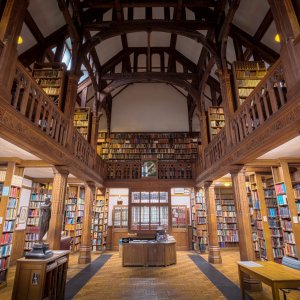
Recently took a trip to Scotland’s largest second hand book shop. It’s a place called Leakey’s in Inverness. It was absolutely brilliant (smelled amazing too 😉). Hoping this image link lets you see: https://images.app.goo.gl/tHwnCWCUaAw6GbmR7
LikeLiked by 1 person
That’s marvellous, John. Just love it. Thanks for sharing the link. Going to save and print it. In his travelling days, a friend would do the rounds of the bookshops and post his finds back home by sea. What about you?
LikeLike
Found a few good titles but my wishlist books to track down are currently compilation books. Basically the sort that contain short stories etc. from favourite authors.
I recently managed to track down a book called ‘The Wizards of Odd’ that (as far as I know) is the only place to find a particular short story by Terry Pratchett. For the first time since he died I got to read something ‘new’ by him. It was lovely (if brief).
The book also has stories by Douglas Adams, Asimov, and Arthur C. Clarke so looking forward to reading the others in the volume.
LikeLiked by 1 person
A Terry Pratchett short story. Lucky you. Shame about the Alzheimer’s. what a cruel fate for a wordsmith. My sister bought me a copy of Zenna Henderson’s short stories: Ingathering. It had one story I haven’t read yet. I’m saving it for a rainy day.
If you’re reading Asimov, Douglas Adams and Arthur C Clark for the first time, I envy you. Either way, enjoy.
LikeLiked by 1 person
Read a lot by the others but don’t think I’ve read these particular stories so it is a bit of a treat.
LikeLiked by 1 person
Nice.
LikeLike
Personally, I think the best thing to do is read a mix of both. I learn a lot about the craft of writing by reading classics, and I agree with many of your points here, but I think it’s also important to be a part of the modern world.
It’s not just about publishing trends, which certainly do come and go, but also about broader cultural trends that are more long lasting. There are many writing styles and techniques that were much more popular with readers of the past than they are with modern readers, and readers of the past were also accepting of themes and character depictions that wouldn’t fly today and unaccepting of many types of violent or sexual content that are acceptable today. If you write exactly like authors of the past, you might end up with something that would have been a smash hit in another time period but that modern readers find too wordy or overly sentimental or weak on the horror elements or with way too many female characters who do nothing but faint at mildly upsetting occurrences. Beyond that, it is important to not write a book that’s exactly like something another modern writer has already written!
I think you have to both write well and be aware of the current state of the literary world. And reading books by modern authors also allows one to find comps for querying and helps with such things as networking. 🙂
LikeLiked by 1 person
Definitely valid points, and in terms of network building and publishing awareness contemporary reading is vital. I was primarily thinking of a case I saw on Twitter where writers were depicting this as an either/or debate (and themselves advocating dropping classics in favour of contemporary fiction).
Maybe there’s an element of my own prejudice here, as a few more modern books seem too brief to me. As you say contemporary fiction is a bit more punchy but I sometimes feel like I lack time getting to know the main characters. Maybe it’s simply a case of the writer following the old advice of leaving us wanting more 😉
LikeLiked by 1 person
There are definitely things I like about older books that aren’t as often found in newer ones as well. Maybe some of those aspects can be incorporated in modern fiction if done skillfully enough. We can only hope!
As for it being an either/or, I think this is definitely a false dichotomy. The modern internet sure loves those. Especially on Twitter!
LikeLiked by 1 person
Definitely! I even fell into the dichotomy trap with this post 😉
LikeLike
Pingback: Fantasy and Adventure FREE on any device | Jack Reusen