

For the past few weeks, I’ve been adding a podcast to my range of content. This post is directly linked to this week’s episode titled “Story Ideas: Places”, where we look at a quick and easy way to jump-start your creative juices.
By the end of the activity, you should have a full story written up, and we’re also encouraging pupils to submit their stories to be read on the podcast (details on how to do that will be available below). With this in mind, I hope you enjoy this writing activity and read to the bottom to find details on how to submit your story to be read on the podcast.
Writing Activity Resources
Teachers
 This week’s writing activity is pretty simple, but it should prove useful for those moments when a story simply isn’t coming to you. There are classroom sheets to go along with this activity. You can click here for a direct link to the Canva presentation, or download a PowerPoint version here.
Pupils/ Students
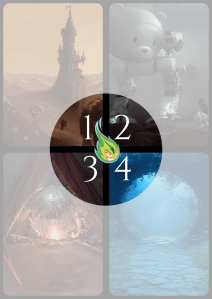 The activity sheets for this writing activity are pretty simple, and are designed with the expectation that there will be additional jotter or digital writing as well. A black and white version is available here, a colour one is available here, or you can get access to a Canva project edition (that you can edit) here.
Play along podcast episode (if you prefer)
 You can play the accompanying podcast episode alongside the classroom presentation. I’ll call out the next section so you know when to change slides. (In future episodes, I’ll try to be more direct about this with something like ‘turn to the next slide’ after each section).
You can also pause at the end of the prompt on each slide to leave time for writing. All in, this will probably add up to about a 1-hour classroom activity. You’ll find the Spotify version of the podcast below, and links to it on other podcast platforms in this linktree.
On With the Activity (From here on out, this will match the content of the podcast)
Today, we’ll be looking at a writing exercise that focuses on setting and place in your storytelling. With this in mind, I thought I’d try something a bit different and begin the episode by reading the first chapter of my first book, “Jack Reusen and the Fey Flame”.
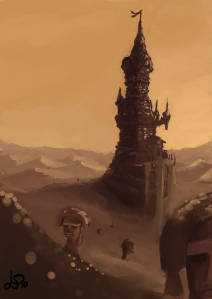 In this chapter, I played with the idea of setting. First, we look at how familiar places can become uncomfortable when we notice things that we don’t remember seeing before. Then, we look at what it feels like to feel lost, truly lost, and what our reactions to this feeling can tell us about ourselves.
You’ll see the meaning of the setting change a few times in this chapter. I hope you enjoy listening to the sample chapter, but whilst you listen, keep an eye (or ear) out for any times where the setting is moving the story forward.
(You’ll get the full chapter reading in the podcast episode. If you’d like to read the rest of the story with your class, you can also pick up a Kindle copy by following the links at the bottom of the page for purchasing, or reading for free through Kindle Unlimited, on Kindle in your country.)
The Writing Challenge
You’ll have seen a lot of focus on setting in the little excerpt I’ve just read, and now it’s your turn to experiment with a story setting.
You’ll have a full story by the end of this activity, but the direction we take may be a little different from the way you normally set up a story and I hope you enjoy it.
Story Ideas: Places
Being creative is a really useful skill in life (not just for storytelling) so learning tricks and techniques to get your creative side working is never a bad thing.
Today, we’re going to look at a quick technique that I use. It should help switch on that creative part of your brain and prepare you to create a fantastic story.
We’ll start with place as it’s sometimes neglected a little in storytelling. Starting with the place can sometimes launch you into a new story in unexpected ways.
Part 1: Somewhere different
Think of where you’re writing right now. Is there a place that could be the most opposite you could possibly imagine? Somewhere absolutely nothing like where you are sitting at this moment?
What is that place like?
What’s the weather like there?
Is it a safe place, or is it somewhere perilous?
If you were to sit down and write in this new place, what would you be writing with?
Would it be a scroll of paper with a feather quill and a bottle of ink, or would you be writing on a futuristic tablet with an AI that talks to you as though they’re the cleverest being in the galaxy?
Part 2: A stranger
 OK, now you know a lot about this new place, so let’s take a look around and see if there’s anyone there.
Who are they? Are they a human/ an animal/ an alien/ or something else?
What are they doing?
What mood are they in?
You now should have a setting and your main character. This isn’t everything you need for a story, but it’s a good start.
Part 3: Getting to know people
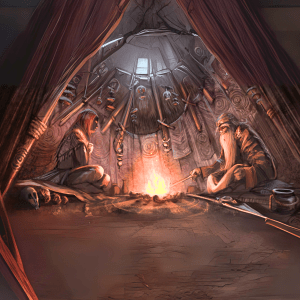 Now ask your character a few questions. What are their interests? What are their skills? What are their main fears? What would they like to be doing this time tomorrow?
Take your time with your character. Ask weird questions, but even ‘boring’ questions can give you ideas for your story. What might your character eat for breakfast? Where do they sleep? You might be surprised at the direction their story takes.
Part 4: Go and write
 You now have two out of the three basic parts of a story; the last one is called ‘plot’.
What will happen to your character next?
Will something surprising happen to them?
What will they do as a result?
Will they be happy in the end?
Write your story in a digital format, or in your best handwriting, or draw some amazing pictures to make up a ‘comic book’.
When you feel your story has reached a natural end, please be sure to share your stories on the Celebrating Stories portal.
 As the weeks go on, we’ll start reading one or two of your stories on the podcast each week.
You’ll find links to share your story on the classroom slideshow, which you can download over on the website. Alternatively, you’ll find a link to it in the episode notes for this podcast episode.
Your story could be the next one we read on the podcast!
Go here for the Google Form to submit your story (click this link). You can share handwritten stories, digital text versions, or even pictures.
Thanks for popping by
As always, thanks for tuning in to listen to this week’s episode of Lit Up With Green Flame, and for coming here to read the more extended version on the website. If you haven’t already, please don’t forget to subscribe on your favourite podcast platform.
We’re on Spotify, Apple Podcasts, Audible, Amazon Music, YouTube Podcasts, and many more. Just go to your favourite podcast app and search for ‘Lit Up With Green Flame’ (click here for the linktree that lists how to find us on your favourite podcast platform, just click on ‘Lit Up With Green Flame Books Podcast’ button to find the link). Subscribing is free, and you’ll be sure to catch the newest episode as soon as it’s live.
I hope you pop back next week when we’ll be looking at the strange world, and wild life of Roald Dahl (since it’ll be his Birthday in just a couple of weeks, he would have been 109 years old this year on the 13th September).
Also, if you’d like another writing activity to try, you could look at the one we did on Magical Realism a few weeks ago. You’ll find a link to that here.
Thanks again for listening in, and I hope you don’t mind the slightly longer episode this week.
All the best, John
