Camp NaNoWriMo has been on the go for three days now, and from day one I decided to try and hit the ground running. I’m happy to announce that chapter 1 is written and as of last night the third book in Jack’s adventure is sitting at about 3,000 words long.
The Wishmaster is back, Jack has some tough decisions to make, Fynn is off for a cross-country adventure with Mick and Ryan, and Alyssa, Borrin (and Jack) have their hands full teaching Borrin’s apprentices (and Thea) some very important lessons about the Reusen power.
I’m in my element, this is my favourite part of the job. A whole new story to tell and even I don’t know exactly how it will go. I want to push on and make as much progress as I can. Sadly this might mean that blog posts might be shorter (and possibly less frequent) for a while as I concentrate my spare time on writing. I’ll try and keep the page updated as often as I can with details on the newest book, and I’ll keep you up to date regarding the release of ‘the Spark of Dreams‘ in paperback.
If you ever want to ask questions about the books, the characters, or writing in general I’m more than happy to talk about it here, over on facebook, or on the Jack Reusen twitter account. Plus I have to add that Camp NaNoWriMo is only in it’s first few days and I’d love to hear from anyone in the Perthshire area (or nearby) who would like to meet up for a writing session. Thanks as always for reading and I’ll try and be back on here as soon as possible, all the best, John
The proofs for ‘Jack Reusen and the Spark of Dreams’ have been approved and sent to the printers (there were a couple of technical issues but I’ve cleared them up). Unusual things happen to almost every main character in this book and I’m looking forward to hearing what readers have to say about it.
I’ve given hints about what the Spark of Dreams will be like at least a few times so I won’t repeat myself here, though I will hint at one little bit of information from the very end of the book. After a quiet few weeks sorting books and helping library patrons, Bob the librarian will meet Granny Reusen. If you haven’t read the first book that won’t much sense, and might sound a lot less interesting than it is, but trust me, it spurs on a really cool story line that I’m writing right now for book three.
I know this wait has been a lot longer than I promised, I just wanted to make sure the story would work properly and I feel like it’s there now. I really hope you enjoy it. I’ll keep you up to date on where the books are and when they’re likely to arrive, and if you want to pre-order a copy you can do that by clicking this link.
I’ll hopefully have more news for you very soon, thanks for being patient with me, all the best, John
Here’s a quick wee glimpse into a place that will be very important in book three. I hope you enjoy it:
These caves were his. It’s not like he actually owned them or anything, but in the same way that a town, a school, or a stadium can ‘belong’ to someone, these caves belonged to Magus Hypologismos (people called him Logi for short, you can see why).
Logi was no stranger to the outside world. As a young man he had toured the globe with a group of Lutin traders (we might call them leprechauns). They exchanged exotic wares from one country to the next, and Logi saw more of the world than he had ever expected. He had three favourite memories. There was the time he had been invited to hunt with centaurs in Laconia, riding onto their horsey backs and gripping onto their broad human shoulders for support.
Further east he had eaten a feast of spiced meats and rice with a genie, sitting in the desert sands around the fire-pits of Mishan. After the meal the genie had entertained him with displays of incredible magic making the sky dance with light and the moon change its colour to shine like a giant gold coin hovering in the sky.
Possibly Logi’s greatest memory was in fact the moment that began his adventure back home to the caves. Whilst sitting in a sanctuary in on the mysterious island castle of Por-Bajin, he was invited by a jadatski (rain master) to a modest dinner of pickled cabbage. They debated into the night, and right through to dawn about whether the golden scrolls of Kubai-Khotim were real.
The scrolls were said to be able to tell the future, and Logi had made it his mission to find them. Sadly in all the centuries that followed he had still never found them.
Logi had enjoyed a colourful life, but his travelling was over, and now these ancient caverns were his home. Books and scrolls weighed down the shelves that lined every wall. Orange lanterns added their flickering light, making the ancient texts appear to dance and move, almost as though they were alive. Logi often wondered if some of the movements really were just a trick of the light.
Logi took the stairs down to the deeper chambers, where the most ancient and powerful texts were housed. No one but the Magus (Logi himself) was allowed down here and he hadn’t had a request for any of these texts in centuries. All the same it was one of the most comfortable places available to him, and he often sneaked down here to sit in the huge throne-like chair and enjoy the peace.
Thick books with gilted spines surrounded him like dusty jewels, their leather dyed in all manner of colours. Logi sat back in the quiet, enjoying the rainbow of books flickering by the light of the lanterns. Then something moved, it didn’t just look like it moved; it really moved.
Logi stepped closer to inspect. It couldn’t be a creature of any sort; the enchantments protecting the library wouldn’t even let a dust mite down here without permission. All the same Logi knew what he saw, something had definitely moved.
In the silence Logi could even hear his shoes creak. A sudden ‘thwap’ echoed around the chamber as a thick scroll dropped onto the hard stone floor and began unravelling. Logi leaned in closer and was astounded to see fresh words appearing on the paper, as though being written from inside:
“The families are reunited. The children of fate grow closer to learning their heritage but dark days are ahead and they may have to pay for the mistakes of their ancestors. One will return to claim these scrolls, and once again wield the knowledge of what is to come. He prepares even now.”
The writing stopped.
Logi sat down cross-legged on the polished stone floor and lifted the scroll, allowing a simple ‘Hmmm’ to escape his lips. All those years and the scroll had been right here under his nose the whole time. Whatever it had been up to seemed to be over for now. In the several hundred years that Logi had patrolled these tunnels (aside from the odd holiday), he had never once witnessed a book, or scroll, write itself. He didn’t have anything else planned that day, so he relaxed into a big leather chair, rolled out the scroll, and waited.
Hours passed, but Logi had centuries of experience in patience. The writing began again, it looked like some kind of heading this time:
“What has come before…“
After that the writing came quicker, Logi’s eyes struggling to keep up. As the story poured out in front of him, words escaped his lips: “What is a ‘TV’?” “Who is Tam?” and “This ‘macaroni cheese’ sounds amazing, I wonder where I might get some…”
Logi read on and on, getting more involved still. Perched on the edge of his seat he actually yelled out “Run Sparky! Run!”. He relaxed, things seemed better now, the characters appeared to be safe. He settled in and read on.
The writing slowed, the last few lines had been about three men getting on ‘motor-bikes’ (whatever they were), and heading for an underground library. Logi got the feeling he might find himself a lot more involved in the story very soon.
Not a real post here (too busy editing), just sharing this word-jumble (from wordle) that features all the most popular words in ‘Jack Reusen and the Spark of Dreams’ (size=frequency). It might give you an idea about some of the content.
Running tally of progress: final edit=p132 of 275 (don’t worry this bit doesn’t take that long), cover is done (thanks to Karen) but I’ve got a couple of minor tweeks to do once I have finalised page numbers (matching spine to book width). Once these are done the book will be good to go. I’ll pop a wee update after tonight’s editing session to keep you posted. Off to edit now, wish me luck, John
As you all know the book is progressing; it’s on final draft, lined up for printers, and just being amended for corrections from proofreaders. I’ve been freaking out recently at the realisation that I’m creating a book series rather than just an individual story.
When I first started out writing the Jack Reusen books I had the most basic plan, intended to turn in to just one book, but as ‘Jack Reusen and the Fey Flame’ come together I realised that I’d gathered together a lot of information in the background that translated into other stories.
Having an entire world to create is obviously a lot of fun, however it’s also huge challenge. I hadn’t realised when I started how much I was going to have to know about my own world. Even at this stage I’m having to think ahead by quite a bit, to make sure I don’t make a mistake that closes off a good story later on. It’s hard leaving room for something to happen in future books without feeling vague or, worse still, leaving readers with too many unanswered questions.
Book one came with a few big questions but by the end of it most of them seem to have been answered. Book two is definitely a different animal as Jack’s world expands and we start to learn more about how the various kinds of magic he encounters work, a lot of questions arise that might not be answered for another two or three books.
When I think about it I realise just how many of the plots for later books rest on what happens in this book; not only am I leaving seeds for ‘Jack Reusen and the Children of Fate’, I’m coming to realise that ‘Jack Reusen and the Spark of Dreams’ has become something of a launching platform for an entire book series.
The formatting is done, some key issues are being debated over with my proofreaders, and the book is already in the kind of shape it needs to be to be send off to the Printers. It’s almost time and I’m sorry that you’ve all had to wait for so long, please bare with me, there really isn’t much left to do.
If you have any questions about the books, or about the writing process in general feel free to leave a wee message in the comments below. All the best, John
There are two big reveals to share tonight: a sneak-peak of the cover for ‘Jack Reusen and The Spark of Dreams’, and on top of that I’m sharing the title of the very last chapter, it’s that close to completion!
I’m so sorry for the long wait, editing has been a tough run this time round. I did something with one of the main characters that I wasn’t 100% happy with, unfortunately it was quite early on in the book so changing it has had a ripple effect. ‘Jack Reusen and the Spark of Dreams’ is looking to be ready around a month later than the April release promised at the back of ‘Jack Reusen and the Fey Flame’. To everyone who has been asking about it, I am so sorry for the delay, and thank you for all the support you have all shown so far.
As for the book cover I hope you like the wee snippets shared in this post. I put out a call for an illustrator a few weeks ago and an illustrator called Karen MacAllister came forward (pop over to her illustrator website and her blog to find out more about her work). She showed me some great wee preliminary sketches and we took it from there and, thanks to Karen we now have a really dynamic and intriguing cover.
To be slightly annoying (building anticipation a bit), I’ve decided to only show small portions of Karen’s finished work. I thought it’d be more fun to share the finished article once the book is out.
I need to point out that Karen’s advice and knowledge were almost as valuable as her artistic skills in creating this cover. She really knows her stuff and de-cluttered my original plans to produce something that catches the eye and draws you in and I absolutely love the colour and tone she’s put into it.
I’m going to edit like a lunatic over the next couple of days, the book is all but done but I want to really do this justice (it isn’t easy getting the balance right in zombie scenes for kids). So many readers have been so supportive of this next leg of Jack’s adventure that I don’t want to let them down. Hopefully the story within will have the same draw as Karen’s fantastic cover.
As always thanks for reading, I’ll try and visit here more frequently over the next few days with updates so you should hopefully hear more soon. All the best, John
Looking for a fresh way to spark creativity in writing? Whether you’re a writer trying to shake off some cobwebs or a teacher hoping to add a new twist to class activities, whatever brought you to this post, I hope you’ll find something useful in it.
TLDR… There’s a Podcast?
The world is a busy place so I’ve recorded a vlog/podcast of this post so you can listen as you do other things. You can listen to the podcast episode, or watch it as a YouTube video at the end of the post. You’ll also find links to teacher resources that you can use with your class as well
Magical Realism
If you’re sharing this with a class, it helps to start with a clear idea of what a ‘genre’ is. For what we’ll be working on today, it’ll be sufficient to say that a genre is a category of story. Book genres include categories like fantasy, sci-fi, mystery, and many more.
‘Literary fiction’ is a genre often found on university reading lists. It can sometimes be seen as the more ‘serious’ side of storytelling. One of its sub-genres, magical realism, mixes everyday life with magical moments in a way that is fascinating and quite different from typical fantasy books. The magic is subtle, unspoken, and completely mixed in with the ordinary and everyday.
‘Genre fiction’ is a term typically used for all the books that live in their own worlds outside of ‘literary fiction’.
‘Genre fiction’ tends to dominate bookshop shelves. These are the books readers seek out because they already love that type of story, whether it’s crime, romance, fantasy, or horror. ‘Genre fiction’ is easy to advertise and fairly easy to describe.
Unlike a ‘genre fiction’ category like fantasy, magical realism isn’t about big, magical worlds or epic quests. Instead, it features magic that’s accepted as part of daily life, whilst never being fully explained. The magic isn’t the focus. It’s just part of the world.
I first came across magical realism thanks to a high school teacher (Mr Johnstone), and I was hooked. Some fantasy authors, like Terry Pratchett, have poked fun at it. In fact, Terry Pratchett once joked that saying you write magical realism is “…a polite way of saying you write fantasy…” I can see what he means, but there is a clear difference between the two.
But what is Magical Realism?
Magical Realism is a literary style famously associated with Latin American writers like Gabriel García Márquez, Jorge Luis Borges, and Isabel Allende.
The most notable element of the genre is that when magical or fantastical events occur in an otherwise ordinary setting, no one within the story takes much notice (including the narrator).
In magical realism, the magic is ordinary. It’s not questioned. Characters don’t wonder how it works. They don’t even point it out. The narrator treats it like toast popping out of a toaster—normal and unremarkable.
The focus is always on the human experience. Even if there’s a ghost living in a tree or someone floating into the sky, it’s all part of the background, not the point of the story.
Take “One Hundred Years of Solitude” by Gabriel García Márquez. It includes flying grandmothers, ghosts, and prophetic scrolls—all treated as normal parts of life. That’s magical realism.
So, is it just ‘literary fantasy’?
So, is it just ‘literary fantasy’? It can feel that way. Books like “The Watchmaker of Filigree Street” by Natasha Pulley or “Before the Coffee Gets Cold” by Toshikazu Kawaguchi clearly feature magic. However, they focus on people, relationships, and daily life, not magic systems or worldbuilding.
That’s also probably why they’re considered literary fiction; they treat the magic as background, not plot.
Even Terry Pratchett, who joked around about magical realism, often blurred the lines himself.
Pratchett’s Discworld books sometimes let magical elements go significantly unexplained. What’s more, every single Pratchett book I’ve ever read gives a deep and clear connection to the human (or troll, or dwarf, or golem, or even lowly goblin) components of the story. All of this lets some of Pratchett’s own work edge ever so closely into magical realist territory.
Other books for younger readers do this too. Philip Pullman’s “His Dark Materials” and Garth Nix’s “Keys to the Kingdom” series both dip into this space. They sometimes avoid explaining how the magic works, letting the mystery remain.
Is Magical Realism a genre that would work for Kids?
All of this said, magical realism in children’s books is rare. Why? Kids are still figuring out how the real world works. They need some explanation about almost everything that happens in a story, whether it’s ‘real’ or magical. Plus, learning how magic works can be a fun part of the story in itself.
In my own books, Jack starts out in our world and learns about magic bit by bit. Some things are left unexplained, but I explain enough to keep younger readers clued in. That much explanation is definitely more like traditional fantasy than magical realism.
So are there any magical realist children’s books?
The one exception to the seeming rule about the difficulties of creating magical realism for kids is Roald Dahl. His stories often treat magic as normal, but his gritty, sometimes unpleasant real-world details make his stories feel oddly grounded as well.
Roald Dahl’s writing is so distinctive that I’ll be exploring it in more detail in a later post.
Fantastical stories lift us out of the everyday, but they do it in a way that helps us see human behaviour more clearly.
Whether we’re worried about a basilisk in the basement of the school, a ghoulish creature hiding in our garden, a dog that somehow switches off all devices nearby, or if we’re gingerly climbing the slopes of Mount Doom, all of these experiences make their own sort of sense. We can see the real human parts all the clearer when everything else seems strange.
Magical realism, in contrast to fantasy, holds on tight to the mystery of how the magic works. For some young readers, that might feel unsatisfying. However, it’s still strange enough to make the feelings of the characters stand out all the stronger.
With this in mind, we can write magical realism with considerably less explanation than a fantasy story. You can basically jump straight into the strangeness and show the real human emotions all the more clearly.
Here’s a writing activity to try:
The Magical Object Writing Challenge
PART 1: The Magical Object
Give your main character a magical object. It can be weird, strange, or subtle (it doesn’t even have to be an object; it could be a creature of some sort like my story).
Here’s a tip for part 1: To imagine how to use your magical object, it can help to think about how we might describe something more ordinary. Think of a phone. Most of us don’t fully understand how it works, but a single phone can have some fairly big effects in a story.
PART 2: As Ordinary as a Pen
The character doesn’t know their object is magical. They’ve always had it, and they’re so used to what it does that they think it’s as ordinary as a pen or a pair of shoes. No one explains it. Not even the narrator.
Here’s a tip for part 2: To make this easier for yourself, avoid naming the object in the title. Avoid describing it early. Let it blend into the story naturally.
PART 3: Real Life Drama
Write a story about an ordinary day. Come up with something dramatic (yet ordinary) that could be going on. Show the object doing something unusual, but don’t explain how or why.
Here’s a tip for part 3: Your magical object can be part of the solution, but be sure to look at the feelings of the people in the story more than you talk about the object.
PART 4: Emotions
Focus on how it affects people. What are all the main characters feeling at the end?
Here’s a tip for part 4: A story’s conclusion is often when there’s an emotional change. The more dramatic the change, the more dramatic the ending. Anger to joy, sadness to humour, you can decide what feelings you’d like to see your characters show.
EXTRA NOTE
The quadrants on the worksheet don’t have to be the order your story goes in. Once you have notes in 1, 2, 3, and 4, you could grab a separate piece of paper (or a jotter) and write up a story there.
This way, notes from 3 could be your beginning, followed by the object ideas you noted in 1, you can use notes from 2 to help you move the story along, whilst remembering to keep the magic subtle, and then finish your story using notes from part 4.
The order in which you use your four sets of notes is up to you.
A Simpler Choice for Quicker Storytelling
It can feel strange to restrict your writing a bit. One of the amazing things about writing fiction is how wild and open it can feel. With a blank page in front of you, you could take the story anywhere.
However, sometimes, when you have too many choices, just making a single choice can feel like the hard part.
Cutting your options down can force you to sharpen up what you want to say, and the sort of story you want to tell. This can also tell you a little bit about how you felt when you were writing too.
What did your story teach you about yourself?
It can feel strange to restrict your writing a bit. One of the amazing things about writing fiction is how wild and open it can feel. With a blank page in front of you, you could take the story anywhere.
However, sometimes that freedom can be a bit of a problem. When you have too many choices, just making a single choice can feel like the hard part.
Cutting your options down with something like the writing challenge we’ve just looked at can force you to sharpen up what you want to say, and the sort of story you want to tell. This can tell you a little bit about how you felt when you were writing too.
If you chose something creepy, maybe you needed a little jump scare to wake up your brain a bit. Perhaps your story had a little sadness in it, so maybe you needed a chance to let out something upsetting. Maybe you went for a humorous story, so you might have needed a laugh.
Writing fiction lets you deal with real emotions in imaginary ways, and magical realism offers a slightly different way to do that than more traditional genres.
I hope you enjoyed the activity, and sometime soon I’ll be adding a portion to the podcast where I showcase listeners’ stories, so feel free to share your story using the contact links that you’ll find on social media and on the website.
Final Thoughts & Questions
How did you (or your class) get on with the writing activity? I’d love your feedback.
Do you know of any children’s books that feel truly magical realist?
Which book genre translates well to children’s books, and which doesn’t?
Let me know in the comments or message me on Instagram.
As always, thanks for reading, and don’t forget you can buy a copy (paperback or Kindle edition) of my own Fantasy book ‘Jack Reusen and the Fey Flame’ over on this page, or you can see all of my books on my Amazon Author page here.
You can also follow this link to download classroom printouts in either black and white, or colour.
If you can’t access the Canva version, you can also download either a PowerPoint or PDF copy of the presentation for your smartboard to accompany the sheets using the Google Drive link above.
Watch or Listen to this post instead
Below are YouTube and Spotify versions of the vlog/podcast so you can listen to it as you do other things:
Who doesn’t like a sample of the next book at the end of a book they’ve just enjoyed reading? I know I like a wee taster, if for no other reason than it tends to prompt me to pre-order the next instalment so I don’t miss out.
Well I decided in “Fey Flame” to do just that, it was an easy move since I’d already written the first four chapters of the next book before I published ‘Fey Flame’ (NaNoWriMo needed me to get an extra 15,000 words done before I’d be able to submit).
Well roll around ‘Spark of Dreams’ and we get a wee dilemma: book three doesn’t (/didn’t) have a title, let alone a few chapters to work from. Aside from a fairly detailed idea of what will be happening in the next book, up until tonight, there wasn’t really any substance to it.
Well now there is, I now have some actual, solid, story writing down for it and I’m pretty excited to see how this one plays out.
Anyway, without further ado, may I present to you the working title of book three…
“Jack Reusen and the Children of Fate”
I say ‘working title’ and it is just that, I’d love feedback on what people think of it, especially if you have views on what children might think to it.
I’ll be asking my eldest son in the morning but it’d be great to get a wider perspective on what people think. The story will centre around the families of Fynn, Alyssa, and Granny Reusen and will tell us more about these characters and the magic they wield. What’s more we’ll also get a revisit from the ‘Wishmaster’ (though he may be less nasty in this book).
Anyway, it feels great to have that dealt with. I now have a complete book (along with epilogue and taster) to edit, some artwork to figure out to show off the books and hold them together, plus I’ve got book three taking shape before my eyes. All in all it’s great having a sense of where I’m going next.
Also, don’t forget there’s still the option of getting to appear in ‘the Spark of Dreams’ as a ‘zombie’ (plus some of these characters might get the chance to follow on into book three). There’s not much time so if you’d like to see your name appear in the book I’ll need to know in the next couple of weeks. As always, thanks for reading, all the best, John
So the spark of dreams is finished, over a cup of tea at about 6:30 this morning I sat down and completed it. I’m currently writing up the epilogue and the taster of the (as yet unnamed) third book. I can’t believe that I have another book under my belt and it’s not even half a year since this all started.
There are a few things that I’m going to have to figure out pretty soon and the one that keeps jumping out at me is the cover. I want it to be subtle and intriguing, with just one symbol of what the book is about and a solid framing effect that I’ll duplicate (with a variance of colour) in future copies of ‘…the Fey Flame’ as well.
This sounds like a simple task but coming up with a universally recognised symbol for dreaming (apart from perhaps a cloud) is not as easy as you might think. So for the next wee while I’ll be editing (which I’m pretty comfortable with) and designing covers (which is a little intimidating).
The big issue is that if I make a mistake with either then it’s on every copy I get printed, so I want to be sure about what I send to the printers. I’d actually welcome any suggestions that people might have for the cover so if you’ve got your thinking cap on pop your suggestion below. The two concepts I’m playing with at the moment are a lumbering outline of a sleepwalker, or a picture of a small torch hidden under a pillow (yes Jack’s torch makes an extra appearance in ‘…the Spark of Dreams’).
More and more people seem to be hearing about ‘…the Fey Flame’ which is just brilliant and has given me the much needed boost I needed for the last leg of ‘the Spark of Dreams’. Book three is a very skeletal plan at the moment and books four to six (Thea’s stories) are coming to me like distant little smoke signals but the great thing is that it really feels like this series could keep on going (if people keep on reading).
Anyway for now I’ll sign off, I’m away to a ceilidh tonight with the family, should be fun. I’ll post again soon with updates on ‘the Spark of Dreams’ (and hopefully some sketch ideas for the cover. Thanks for reading, all the best John
The polar-bear-girl seems to be a favourite among many readers. In a weird way I feel like a fan too, I know that in reality I created her and that she lives in my mind but I still can’t help but feel that I’m not entirely in control of her (and at least a few of my other characters as well).
This strange sensation is responsible for my change in story arc, not that anyone but me knows what I was planning for the books but suffice to say that what is currently in the works is very different from my original idea for the book series. In many ways I liken it to when I became a parent: I had expectations of what it would be like, what my relationship with my children would be like etc. and in some ways I was right but in many, many, unpredictable ways I was way off the mark.
It’s the same with my characters, I put them together in my head, trying different combinations of personality traits, tastes, etc. to see what functioned well for the story but perhaps because of the pace of writing that Nanowrimo requires of a writer I somehow ended up with some very independent characters. Perhaps the most noticeable of these has been Thea.
Originally I wanted a girl who would not be subordinate, I distinctly wanted to avoid anything damsel-like, I wanted her to have a degree of authority on what was going on so I made her older than Jack and way more informed about Fey. At the same time I didn’t want a mini adult so I tried to ensure that, emotionally, she is still able to be affected by events. The result (I hope) is a very human girl with some very inhuman/non-human traits. This combination is a lot of fun to write and I’ve already decided that the non-human part of her needs its own story arc.
Books four through to six will now be themed around Thea and the first of them will be out early next year. I’m still deciding whether to simply call Thea’s books ‘Thea Icebärvolk and the…’ or to stick to something snappier like ‘Thea’s … (a Jack Reusen Adventure)’. Part of me wants to hold on to the Jack Reusen link since the books are set in the same world (and we’ve already got this lovely web site fixed as jackreausen.co.uk to show the books off) but there’s plenty time to think about that.
What do you think to giving Thea her own trilogy? In general what female characters in children’s literature do you see as good role models for young girls? Feel free to jump into discussion in the comments below, all the best, John
 Camp NaNoWriMo has been on the go for three days now, and from day one I decided to try and hit the ground running. I’m happy to announce that chapter 1 is written and as of last night the third book in Jack’s adventure is sitting at about 3,000 words long.


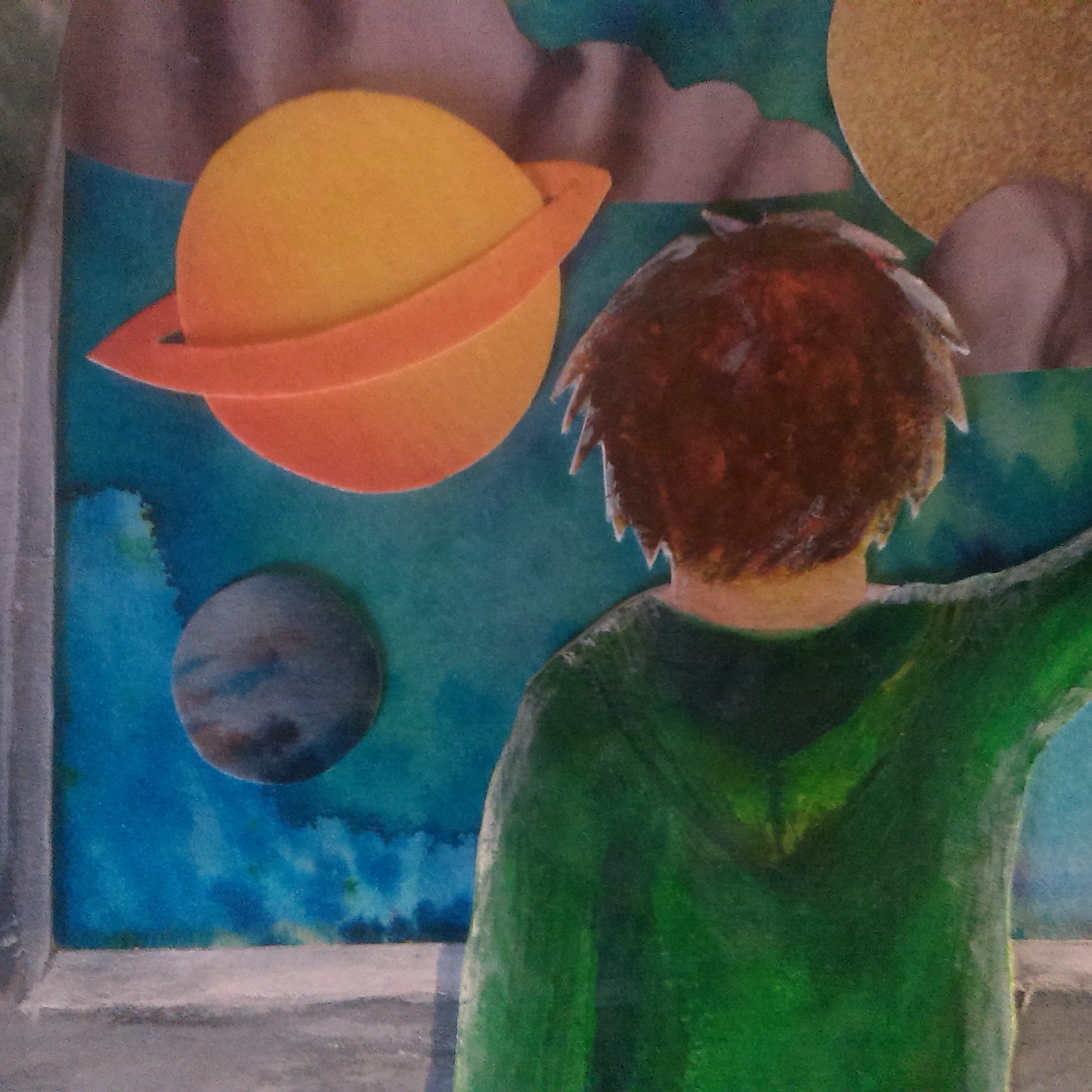

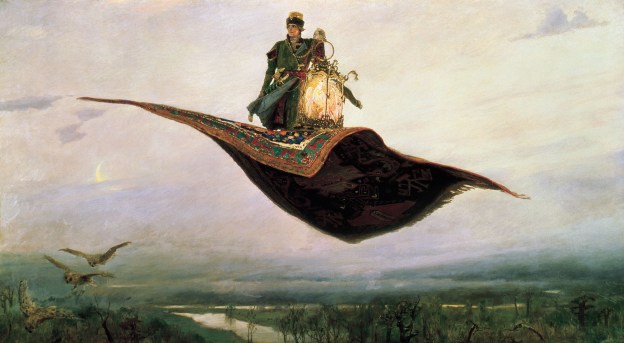

 ‘Literary fiction’ is a genre often found on university reading lists. It can sometimes be seen as the more ‘serious’ side of storytelling. One of its sub-genres, magical realism, mixes everyday life with magical moments in a way that is fascinating and quite different from typical fantasy books. The magic is subtle, unspoken, and completely mixed in with the ordinary and everyday.
 The most notable element of the genre is that when magical or fantastical events occur in an otherwise ordinary setting, no one within the story takes much notice (including the narrator).
 That’s also probably why they’re considered literary fiction; they treat the magic as background, not plot.
 Roald Dahl’s writing is so distinctive that I’ll be exploring it in more detail in a later post.
 Write a story about an ordinary day. Come up with something dramatic (yet ordinary) that could be going on. Show the object doing something unusual, but don’t explain how or why.
 Focus on how it affects people. What are all the main characters feeling at the end?
 The quadrants on the worksheet don’t have to be the order your story goes in. Once you have notes in 1, 2, 3, and 4, you could grab a separate piece of paper (or a jotter) and write up a story there.
 However, sometimes that freedom can be a bit of a problem. When you have too many choices, just making a single choice can feel like the hard part.
 Here’s a Canva link to access the presentation file