Not a real post here (too busy editing), just sharing this word-jumble (from wordle) that features all the most popular words in ‘Jack Reusen and the Spark of Dreams’ (size=frequency). It might give you an idea about some of the content.
Running tally of progress: final edit=p132 of 275 (don’t worry this bit doesn’t take that long), cover is done (thanks to Karen) but I’ve got a couple of minor tweeks to do once I have finalised page numbers (matching spine to book width). Once these are done the book will be good to go. I’ll pop a wee update after tonight’s editing session to keep you posted. Off to edit now, wish me luck, John
Looking for a fresh way to spark creativity in writing? Whether you’re a writer trying to shake off some cobwebs or a teacher hoping to add a new twist to class activities, whatever brought you to this post, I hope you’ll find something useful in it.
TLDR… There’s a Podcast?
The world is a busy place so I’ve recorded a vlog/podcast of this post so you can listen as you do other things. You can listen to the podcast episode, or watch it as a YouTube video at the end of the post. You’ll also find links to teacher resources that you can use with your class as well
Magical Realism
If you’re sharing this with a class, it helps to start with a clear idea of what a ‘genre’ is. For what we’ll be working on today, it’ll be sufficient to say that a genre is a category of story. Book genres include categories like fantasy, sci-fi, mystery, and many more.
‘Literary fiction’ is a genre often found on university reading lists. It can sometimes be seen as the more ‘serious’ side of storytelling. One of its sub-genres, magical realism, mixes everyday life with magical moments in a way that is fascinating and quite different from typical fantasy books. The magic is subtle, unspoken, and completely mixed in with the ordinary and everyday.
‘Genre fiction’ is a term typically used for all the books that live in their own worlds outside of ‘literary fiction’.
‘Genre fiction’ tends to dominate bookshop shelves. These are the books readers seek out because they already love that type of story, whether it’s crime, romance, fantasy, or horror. ‘Genre fiction’ is easy to advertise and fairly easy to describe.
Unlike a ‘genre fiction’ category like fantasy, magical realism isn’t about big, magical worlds or epic quests. Instead, it features magic that’s accepted as part of daily life, whilst never being fully explained. The magic isn’t the focus. It’s just part of the world.
I first came across magical realism thanks to a high school teacher (Mr Johnstone), and I was hooked. Some fantasy authors, like Terry Pratchett, have poked fun at it. In fact, Terry Pratchett once joked that saying you write magical realism is “…a polite way of saying you write fantasy…” I can see what he means, but there is a clear difference between the two.
But what is Magical Realism?
Magical Realism is a literary style famously associated with Latin American writers like Gabriel García Márquez, Jorge Luis Borges, and Isabel Allende.
The most notable element of the genre is that when magical or fantastical events occur in an otherwise ordinary setting, no one within the story takes much notice (including the narrator).
In magical realism, the magic is ordinary. It’s not questioned. Characters don’t wonder how it works. They don’t even point it out. The narrator treats it like toast popping out of a toaster—normal and unremarkable.
The focus is always on the human experience. Even if there’s a ghost living in a tree or someone floating into the sky, it’s all part of the background, not the point of the story.
Take “One Hundred Years of Solitude” by Gabriel García Márquez. It includes flying grandmothers, ghosts, and prophetic scrolls—all treated as normal parts of life. That’s magical realism.
So, is it just ‘literary fantasy’?
So, is it just ‘literary fantasy’? It can feel that way. Books like “The Watchmaker of Filigree Street” by Natasha Pulley or “Before the Coffee Gets Cold” by Toshikazu Kawaguchi clearly feature magic. However, they focus on people, relationships, and daily life, not magic systems or worldbuilding.
That’s also probably why they’re considered literary fiction; they treat the magic as background, not plot.
Even Terry Pratchett, who joked around about magical realism, often blurred the lines himself.
Pratchett’s Discworld books sometimes let magical elements go significantly unexplained. What’s more, every single Pratchett book I’ve ever read gives a deep and clear connection to the human (or troll, or dwarf, or golem, or even lowly goblin) components of the story. All of this lets some of Pratchett’s own work edge ever so closely into magical realist territory.
Other books for younger readers do this too. Philip Pullman’s “His Dark Materials” and Garth Nix’s “Keys to the Kingdom” series both dip into this space. They sometimes avoid explaining how the magic works, letting the mystery remain.
Is Magical Realism a genre that would work for Kids?
All of this said, magical realism in children’s books is rare. Why? Kids are still figuring out how the real world works. They need some explanation about almost everything that happens in a story, whether it’s ‘real’ or magical. Plus, learning how magic works can be a fun part of the story in itself.
In my own books, Jack starts out in our world and learns about magic bit by bit. Some things are left unexplained, but I explain enough to keep younger readers clued in. That much explanation is definitely more like traditional fantasy than magical realism.
So are there any magical realist children’s books?
The one exception to the seeming rule about the difficulties of creating magical realism for kids is Roald Dahl. His stories often treat magic as normal, but his gritty, sometimes unpleasant real-world details make his stories feel oddly grounded as well.
Roald Dahl’s writing is so distinctive that I’ll be exploring it in more detail in a later post.
Fantastical stories lift us out of the everyday, but they do it in a way that helps us see human behaviour more clearly.
Whether we’re worried about a basilisk in the basement of the school, a ghoulish creature hiding in our garden, a dog that somehow switches off all devices nearby, or if we’re gingerly climbing the slopes of Mount Doom, all of these experiences make their own sort of sense. We can see the real human parts all the clearer when everything else seems strange.
Magical realism, in contrast to fantasy, holds on tight to the mystery of how the magic works. For some young readers, that might feel unsatisfying. However, it’s still strange enough to make the feelings of the characters stand out all the stronger.
With this in mind, we can write magical realism with considerably less explanation than a fantasy story. You can basically jump straight into the strangeness and show the real human emotions all the more clearly.
Here’s a writing activity to try:
The Magical Object Writing Challenge
PART 1: The Magical Object
Give your main character a magical object. It can be weird, strange, or subtle (it doesn’t even have to be an object; it could be a creature of some sort like my story).
Here’s a tip for part 1: To imagine how to use your magical object, it can help to think about how we might describe something more ordinary. Think of a phone. Most of us don’t fully understand how it works, but a single phone can have some fairly big effects in a story.
PART 2: As Ordinary as a Pen
The character doesn’t know their object is magical. They’ve always had it, and they’re so used to what it does that they think it’s as ordinary as a pen or a pair of shoes. No one explains it. Not even the narrator.
Here’s a tip for part 2: To make this easier for yourself, avoid naming the object in the title. Avoid describing it early. Let it blend into the story naturally.
PART 3: Real Life Drama
Write a story about an ordinary day. Come up with something dramatic (yet ordinary) that could be going on. Show the object doing something unusual, but don’t explain how or why.
Here’s a tip for part 3: Your magical object can be part of the solution, but be sure to look at the feelings of the people in the story more than you talk about the object.
PART 4: Emotions
Focus on how it affects people. What are all the main characters feeling at the end?
Here’s a tip for part 4: A story’s conclusion is often when there’s an emotional change. The more dramatic the change, the more dramatic the ending. Anger to joy, sadness to humour, you can decide what feelings you’d like to see your characters show.
EXTRA NOTE
The quadrants on the worksheet don’t have to be the order your story goes in. Once you have notes in 1, 2, 3, and 4, you could grab a separate piece of paper (or a jotter) and write up a story there.
This way, notes from 3 could be your beginning, followed by the object ideas you noted in 1, you can use notes from 2 to help you move the story along, whilst remembering to keep the magic subtle, and then finish your story using notes from part 4.
The order in which you use your four sets of notes is up to you.
A Simpler Choice for Quicker Storytelling
It can feel strange to restrict your writing a bit. One of the amazing things about writing fiction is how wild and open it can feel. With a blank page in front of you, you could take the story anywhere.
However, sometimes, when you have too many choices, just making a single choice can feel like the hard part.
Cutting your options down can force you to sharpen up what you want to say, and the sort of story you want to tell. This can also tell you a little bit about how you felt when you were writing too.
What did your story teach you about yourself?
It can feel strange to restrict your writing a bit. One of the amazing things about writing fiction is how wild and open it can feel. With a blank page in front of you, you could take the story anywhere.
However, sometimes that freedom can be a bit of a problem. When you have too many choices, just making a single choice can feel like the hard part.
Cutting your options down with something like the writing challenge we’ve just looked at can force you to sharpen up what you want to say, and the sort of story you want to tell. This can tell you a little bit about how you felt when you were writing too.
If you chose something creepy, maybe you needed a little jump scare to wake up your brain a bit. Perhaps your story had a little sadness in it, so maybe you needed a chance to let out something upsetting. Maybe you went for a humorous story, so you might have needed a laugh.
Writing fiction lets you deal with real emotions in imaginary ways, and magical realism offers a slightly different way to do that than more traditional genres.
I hope you enjoyed the activity, and sometime soon I’ll be adding a portion to the podcast where I showcase listeners’ stories, so feel free to share your story using the contact links that you’ll find on social media and on the website.
Final Thoughts & Questions
How did you (or your class) get on with the writing activity? I’d love your feedback.
Do you know of any children’s books that feel truly magical realist?
Which book genre translates well to children’s books, and which doesn’t?
Let me know in the comments or message me on Instagram.
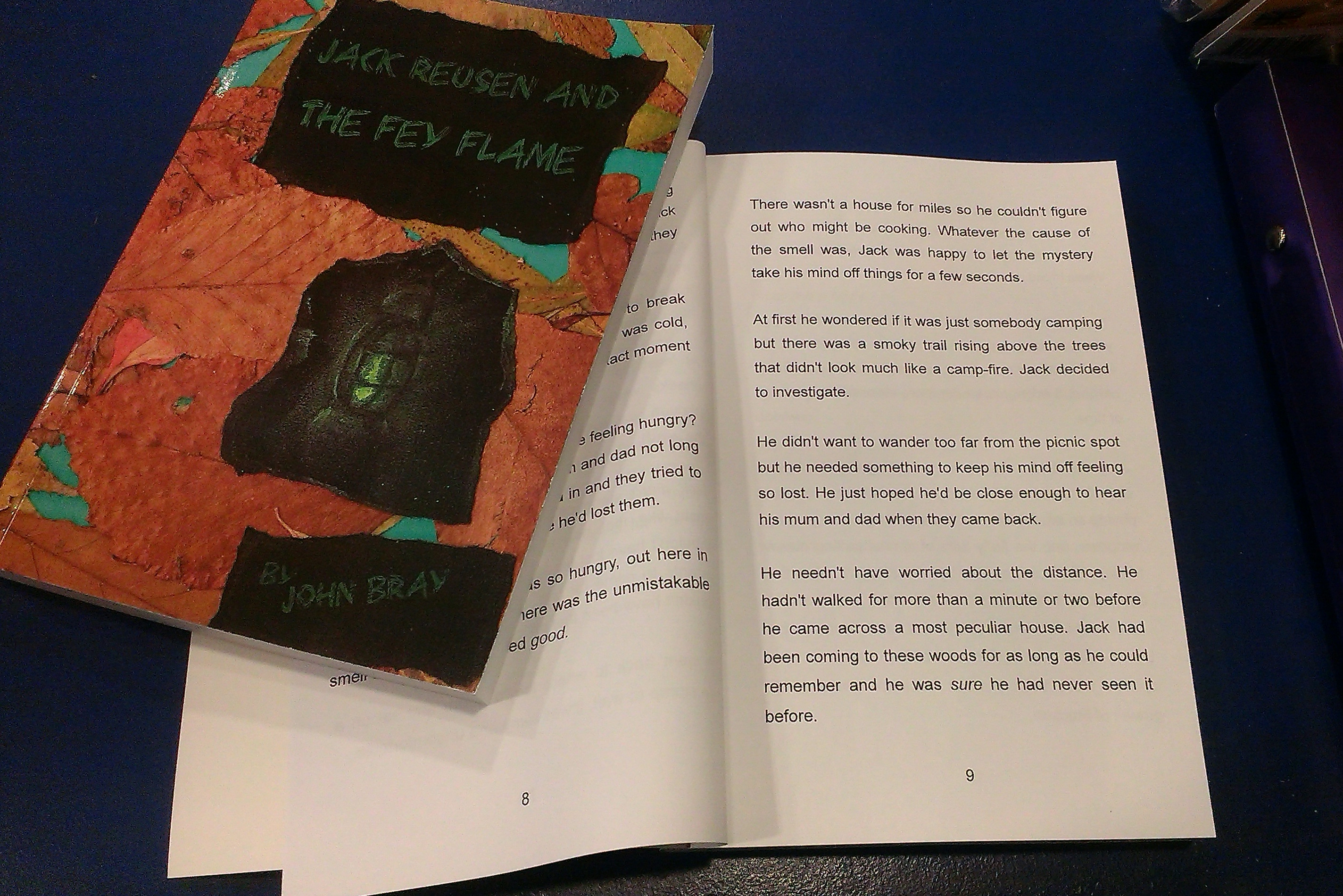
As always, thanks for reading, and don’t forget you can buy a copy (paperback or Kindle edition) of my own Fantasy book ‘Jack Reusen and the Fey Flame’ over on this page, or you can see all of my books on my Amazon Author page here.
You can also follow this link to download classroom printouts in either black and white, or colour.
If you can’t access the Canva version, you can also download either a PowerPoint or PDF copy of the presentation for your smartboard to accompany the sheets using the Google Drive link above.
Watch or Listen to this post instead
Below are YouTube and Spotify versions of the vlog/podcast so you can listen to it as you do other things:
Who doesn’t like a sample of the next book at the end of a book they’ve just enjoyed reading? I know I like a wee taster, if for no other reason than it tends to prompt me to pre-order the next instalment so I don’t miss out.
Well I decided in “Fey Flame” to do just that, it was an easy move since I’d already written the first four chapters of the next book before I published ‘Fey Flame’ (NaNoWriMo needed me to get an extra 15,000 words done before I’d be able to submit).
Well roll around ‘Spark of Dreams’ and we get a wee dilemma: book three doesn’t (/didn’t) have a title, let alone a few chapters to work from. Aside from a fairly detailed idea of what will be happening in the next book, up until tonight, there wasn’t really any substance to it.
Well now there is, I now have some actual, solid, story writing down for it and I’m pretty excited to see how this one plays out.
Anyway, without further ado, may I present to you the working title of book three…
“Jack Reusen and the Children of Fate”
I say ‘working title’ and it is just that, I’d love feedback on what people think of it, especially if you have views on what children might think to it.
I’ll be asking my eldest son in the morning but it’d be great to get a wider perspective on what people think. The story will centre around the families of Fynn, Alyssa, and Granny Reusen and will tell us more about these characters and the magic they wield. What’s more we’ll also get a revisit from the ‘Wishmaster’ (though he may be less nasty in this book).
Anyway, it feels great to have that dealt with. I now have a complete book (along with epilogue and taster) to edit, some artwork to figure out to show off the books and hold them together, plus I’ve got book three taking shape before my eyes. All in all it’s great having a sense of where I’m going next.
Also, don’t forget there’s still the option of getting to appear in ‘the Spark of Dreams’ as a ‘zombie’ (plus some of these characters might get the chance to follow on into book three). There’s not much time so if you’d like to see your name appear in the book I’ll need to know in the next couple of weeks. As always, thanks for reading, all the best, John
So the spark of dreams is finished, over a cup of tea at about 6:30 this morning I sat down and completed it. I’m currently writing up the epilogue and the taster of the (as yet unnamed) third book. I can’t believe that I have another book under my belt and it’s not even half a year since this all started.
There are a few things that I’m going to have to figure out pretty soon and the one that keeps jumping out at me is the cover. I want it to be subtle and intriguing, with just one symbol of what the book is about and a solid framing effect that I’ll duplicate (with a variance of colour) in future copies of ‘…the Fey Flame’ as well.
This sounds like a simple task but coming up with a universally recognised symbol for dreaming (apart from perhaps a cloud) is not as easy as you might think. So for the next wee while I’ll be editing (which I’m pretty comfortable with) and designing covers (which is a little intimidating).
The big issue is that if I make a mistake with either then it’s on every copy I get printed, so I want to be sure about what I send to the printers. I’d actually welcome any suggestions that people might have for the cover so if you’ve got your thinking cap on pop your suggestion below. The two concepts I’m playing with at the moment are a lumbering outline of a sleepwalker, or a picture of a small torch hidden under a pillow (yes Jack’s torch makes an extra appearance in ‘…the Spark of Dreams’).
More and more people seem to be hearing about ‘…the Fey Flame’ which is just brilliant and has given me the much needed boost I needed for the last leg of ‘the Spark of Dreams’. Book three is a very skeletal plan at the moment and books four to six (Thea’s stories) are coming to me like distant little smoke signals but the great thing is that it really feels like this series could keep on going (if people keep on reading).
Anyway for now I’ll sign off, I’m away to a ceilidh tonight with the family, should be fun. I’ll post again soon with updates on ‘the Spark of Dreams’ (and hopefully some sketch ideas for the cover. Thanks for reading, all the best John
The polar-bear-girl seems to be a favourite among many readers. In a weird way I feel like a fan too, I know that in reality I created her and that she lives in my mind but I still can’t help but feel that I’m not entirely in control of her (and at least a few of my other characters as well).
This strange sensation is responsible for my change in story arc, not that anyone but me knows what I was planning for the books but suffice to say that what is currently in the works is very different from my original idea for the book series. In many ways I liken it to when I became a parent: I had expectations of what it would be like, what my relationship with my children would be like etc. and in some ways I was right but in many, many, unpredictable ways I was way off the mark.
It’s the same with my characters, I put them together in my head, trying different combinations of personality traits, tastes, etc. to see what functioned well for the story but perhaps because of the pace of writing that Nanowrimo requires of a writer I somehow ended up with some very independent characters. Perhaps the most noticeable of these has been Thea.
Originally I wanted a girl who would not be subordinate, I distinctly wanted to avoid anything damsel-like, I wanted her to have a degree of authority on what was going on so I made her older than Jack and way more informed about Fey. At the same time I didn’t want a mini adult so I tried to ensure that, emotionally, she is still able to be affected by events. The result (I hope) is a very human girl with some very inhuman/non-human traits. This combination is a lot of fun to write and I’ve already decided that the non-human part of her needs its own story arc.
Books four through to six will now be themed around Thea and the first of them will be out early next year. I’m still deciding whether to simply call Thea’s books ‘Thea Icebärvolk and the…’ or to stick to something snappier like ‘Thea’s … (a Jack Reusen Adventure)’. Part of me wants to hold on to the Jack Reusen link since the books are set in the same world (and we’ve already got this lovely web site fixed as jackreausen.co.uk to show the books off) but there’s plenty time to think about that.
What do you think to giving Thea her own trilogy? In general what female characters in children’s literature do you see as good role models for young girls? Feel free to jump into discussion in the comments below, all the best, John
This is just a quick wee update. I just started writing the final chapter, we’ve had zombies, a race against time, heroism, and some big revelations about Jack’s world. To be honest I’m pretty pleased about how this book has gone there are obviously some kinks to be ironed out but that’s what editing is for.
I expect that tonight my first draft of ‘Jack Reusen and the Spark of Dreams’ will be complete. I’ve made the decision this time to do the first edit run before I hand it over to my beta testers, that way I’ll (hopefully) avoid wasting their time with typos etc. and instead they can focus on the story and tell me about continuity errors and the more glaring problems in plot that I might not have noticed.
Book three is also an issue for me now as I want to put a preview at the end of book two just as I did with book one. With this in mind I’m going to have to set some facts in stone about a book that’s only in planning at the moment. The alternative (and the option I’m warming to) is that I start work on book three whilst book two is getting beta tested. That way I’ll know what’s coming next and I’ll even have time to add some tiny hints inside book two before it goes to press.
Another issue I now have to deal with is cover design. Now that there will be two Jack Reusen books sitting side by side on the shelf I want to be sure that they look unified in some way. With that in mind I think I’ll be putting together a overarching theme to the cover art for the Jack Reusen books.
Once its decided I’ll get book two’s artwork finalised and once that’s off to the printers I’ll rework ‘Jack Reusen and the Fey Flame’ to have a fancy new cover. I’ll also take that opportunity to deal with the odd wee typo that has come to light since it went to print.
Once again I’m in the strange little window at the end of writing a book where I feel less and less like I have any say in what happens. The characters and the plot have taken me to a point, and if I try to fight against it the book will sound convoluted. Right now I’m fully caught in the flow and I wouldn’t have it any other way.
If you’ve finished reading ‘Jack Reusen and the Fey Flame’ yourself please feel free to contact me in the comments on here, I’d love to hear what you thought to it. All the best, John
There are characters that stretch across the globe: Harry Potter, Mickey Mouse, Elsa but where are they? That might seem an odd question but think about it. What makes these characters so big? It could be the fact that they’re available on almost any type of media you could want (that clearly helps). However the thing that I personally think makes these characters so absolutely huge is that, in a way, they live inside the minds of a huge portion of the world’s population.
We’ve all had that moment when we’ve watched a film adaptation of a book and thought that the actor playing a character is nothing like the person we pictured. We already have an idea about that character, we’re connected to our imagined image of them, and we can even feel a little annoyed at the casting people for making such a wrong call.
This goes to show that as soon as we’ve encountered a character we develop our own version of them and when millions of people know a character that makes for a huge multi-layered version of them spread over our planet.
OK so Jack and his friends aren’t in the same league as these characters, currently there are just a few dozen copies of ‘Jack Reusen and the Fey Flame‘ out there in the world but I am starting to get feedback trickling in about the book and one thing is becoming quite clear: I’m coming to the strange realisation that I have very little control now over the way that readers think about my characters.
In many ways they all kind of have a life of their own now. As the adventures of the book play out readers will inevitably be picturing Jack, Thea, Fynn, Sparky, Connor, Alyssa, Granny Reusen, and even Harold in ways I had never imagined.
It’s both amazing and very intimidating to be told that someone likes one of the characters because I’m still writing them and people might not agree with the direction some of the characters go in. I have to walk a fine line between character development and straying so far that people will feel cheated.
I made the decision from the very start to let my characters age, more than that I wanted them to develop, I want the events of each book to matter to them, in light of that each story will change them irrevocably. I can’t even imagine what this process feels like for big authors like Rowling and Landy (Skulduggery Pleasant).
For these authors there are literally millions of versions of their characters out there in the world. They must have to have nerves of steel when making changes and developing their characters. The only other alternative would be to play it safe like Disney did with Mickey and not develop their character at all over the course of nearly ninety years (considering Mickey’s success I guess there’s something to be said for ‘if it aint broke don’t fix it).
Personally I want my characters to feel human and a big part of that involves letting them develop but that doesn’t stop it from being intimidating when in the back of your mind you know that some readers might not be entirely happy with the changes you make.
Do you have any favourite characters who were spoiled by a writer/author? Are there some un-aging characters that bug you (personally I’d love to see the Simpsons grow up)? Feel free to comment below, all the best, John
The books have arrived! The official book launch for ‘Jack Reusen and the Fey Flame’ will be in Fun Junction in Perth this Saturday (21st February). I’ll be reading excerpts from the book and talking about stories and writing. There are three sessions scheduled, at 1pm, 2pm, and 3pm and they’ll go on for as long as kids look interested.
My last few nights have been spent reading through the book to find the best, most exciting parts to share with those of you who can make it to the launch. I can’t wait to see what kinds of reactions I’ll get on Saturday.
I’ve also been working on book two (while not chasing up book deliveries etc.) and I’m fairly happy with the book’s progress, though I’ll need to knuckle down on Sunday if I want to meet my deadline of the end of the month. Provided I can get it done by then, I’ll have four to six weeks to edit it and neaten it up (and beta test it a little/lot) before sending ‘Jack Reusen and the Spark of Dreams’ off to the printers.
I look forward to seeing you on Saturday in Perth (if you can make it along), all the best, John
This time last week ‘Jack Reusen and the Fey Flame’ went live on kindle, since then I’ve sold a lot more copies than I expected to in Jack’s first week. I’ve also had a few people reserve copies of the print edition which should be on the shelves soon (printers’ schedule permitting).
The response to Jack’s world has really surprised me and I’m really touched that so many people have shown support for my wee book series either by buying a copy, or simply by liking the facebook page and following on twitter.
On top of this I now have two book talks booked for the coming weeks. One of these might be expected (for those of you that know me anyway), as it’s a book reading/talk and signing at Fun Junction in Perth.
The other event came as a real surprise as a teacher that I know who works in a Stirling school asked if I could join in with their World Book Day event which draws in three schools. Needless to say I jumped at the chance.
However, of all the brilliant things that have happened this week I have to say my favourite is the fact that one of my son’s friends at school came up to him and told him that his dad’s book was ‘awesome’. He’s six and he’s been reading it himself after his mum bought a kindle copy this week.
That was the whole point of writing this and I hope he’s still enjoying it. It still feels kind of odd knowing that there are people out there who know Jack, and Fynn, and all the others. Part of me still feels as though the characters just live inside my head, it’s lovely to think that they’re now alive in a bundle of other people’s heads too. That probably sounds a bit weird but you know what I mean.
Anyway thanks as always for reading, if you’ve had a read of ‘…the Fey Flame’ I’d love to hear what you thought of it in the comments below, Cheers, John
The drafting is complete, visual edits are done, main preliminary work on the cover is finished (though still not finalised). The process that began with National Novel writing Month is almost complete. I’ll be at work today so there’s less time for me to finalise things but I’m pretty sure we’ll be ready to launch the kindle edition this evening/ later tonight.
This has been a strange process, editing a fiction book is new to me (I’ve written non-fiction before). The main issue, surprisingly, came from my main ‘beta tester’. I’d joked about it, but actually having a six year old listen to the story was one of the most important editing decisions I made.
Characters that I didn’t think were all that significant gained a special place in my son’s heart, while scenes that I thought offered comfort and stability made him yearn for the excitement of the action scenes.
I really feel that the balance is right now but if it hadn’t been for Logan, giving me input with an honesty only a six year old could deliver, the book would have looked very different.
As I said, the digital edition of ‘Jack Reusen and the Fey Flame’ should be live tonight and I’m really excited to see how people feel about it. Work on the next two books has already begun but as my previous post said, February will see my writing go into overdrive.
I hope you all enjoy the book and I welcome any feedback that people have. Jack’s adventures are an ongoing project and I want to make the books the best they can be. All the best, thanks for reading, Cheers, John


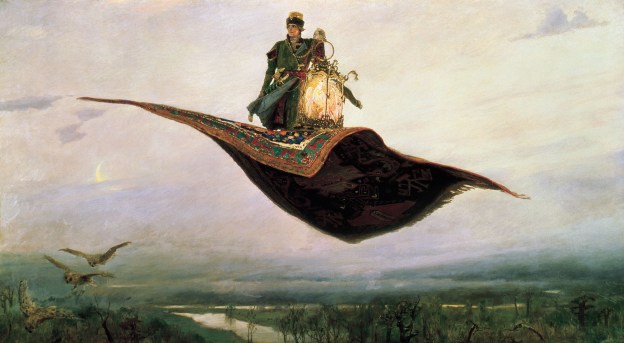

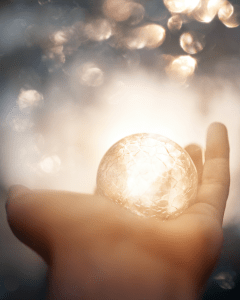 ‘Literary fiction’ is a genre often found on university reading lists. It can sometimes be seen as the more ‘serious’ side of storytelling. One of its sub-genres, magical realism, mixes everyday life with magical moments in a way that is fascinating and quite different from typical fantasy books. The magic is subtle, unspoken, and completely mixed in with the ordinary and everyday.
 The most notable element of the genre is that when magical or fantastical events occur in an otherwise ordinary setting, no one within the story takes much notice (including the narrator).
 That’s also probably why they’re considered literary fiction; they treat the magic as background, not plot.
 Roald Dahl’s writing is so distinctive that I’ll be exploring it in more detail in a later post.
 Write a story about an ordinary day. Come up with something dramatic (yet ordinary) that could be going on. Show the object doing something unusual, but don’t explain how or why.
 Focus on how it affects people. What are all the main characters feeling at the end?
 The quadrants on the worksheet don’t have to be the order your story goes in. Once you have notes in 1, 2, 3, and 4, you could grab a separate piece of paper (or a jotter) and write up a story there.
 However, sometimes that freedom can be a bit of a problem. When you have too many choices, just making a single choice can feel like the hard part.
 Here’s a Canva link to access the presentation file