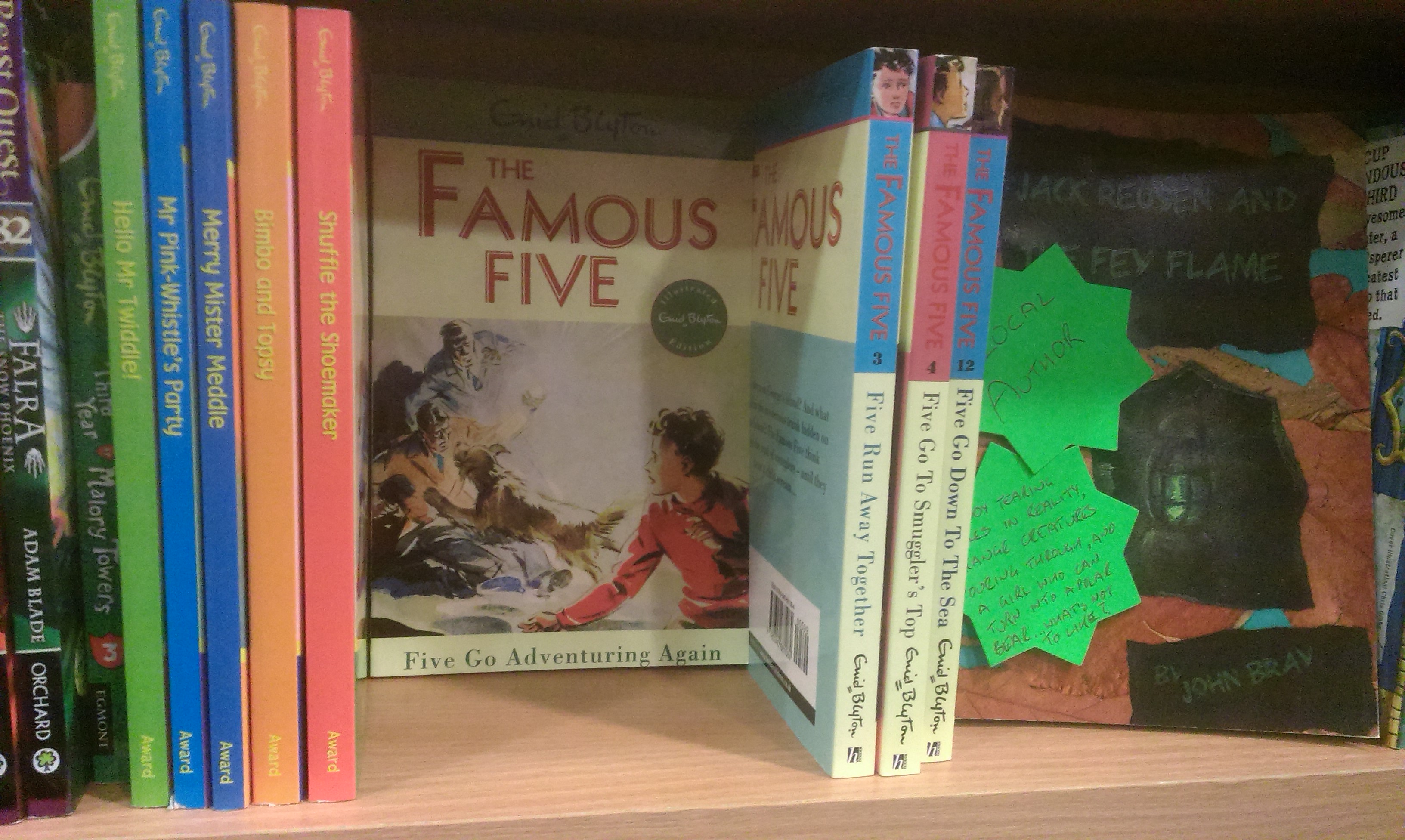
Think of classic kids books (pre Harry Potter) and we find an even mix of two kinds of series. On one hand we get authors writing seemingly endless collections of books, on the other we get relatively short collections with a fixed end point.
Enid Blyton, Beatrix Potter, and Rev. W. Awdry wrote in a way that left the reader with no sense that any one book was to be the ‘last book’. We see a big difference between these and books like the Narnia series, ‘the Lord of the Rings trilogy/quadrilogy’ (though not exactly children’s books), ‘Little Women’ (and its sequels), and ‘Alice in Wonderland’ (and ‘Through the Looking Glass…’).
Maybe the thing that makes the biggest difference is the fact that characters in these continuous book series don’t seem to age (or they at least age at an extremely slowed rate), the other books noted guide the reader through a journey with the main character that often looks like a coming of age story. This leaves me stuck, I want to let my characters age and develop but I really don’t see myself closing off the series at any point.
I’ve got a world growing around Jack and his friends and family that shows no sign of shrinking. Ideas for books far into the future, when Jack and Thea are teenagers, and even adults, are already taking shape in my mind, but how do I let them grow without limiting myself to some future ‘end point’?
Thankfully Terry Pratchett has shown me the way. His Discworld series went on as long as he did and it’s open nature somehow lets it live on in the minds of readers. Commander Vimes, Lord Vetinari, and Tiffany Aching are still doing their own thing in my mind and in the minds of millions of Pratchett readers. Despite leaving things open Pratchett managed to allow his characters to grow and develop (and age) as the series went on. It’s comforting to know that I was never forced to see these characters ‘end’.
J. K. Rowling has basically said that she won’t write any more harry Potter books. She has absolutely every right to decide what she writes and when she writes, but I can’t help but feel saddened by this fact (I’m sure a lot of people do too). I like to hope that if Jack Reusen manages even 1% of the fandom Harry Potter has seen I’ll be able to keep his world alive and running.
There is no one big bad guy in Jack’s world, no clear obstacle that he’ll eventually one day overcome. I plan on putting my characters through all kinds of conflict, danger, adventure, discovery, and excitement for as long as I can. Perhaps some book series should end, there’s sometimes a natural point that feels like the time to say goodbye to the characters, but I don’t think authors have to write like this.
What’s your favourite type of book series? Do you like a clear and concrete close to the story, or do you prefer to feel as though there might be another chance to revisit the world just around the corner? Feel free to discuss your favourite book series, and what you like about them in the comments section below. As always thanks for reading, all the best, John
My teachers were fantastic but there were limits to what we could do in the old curriculum. Things have changed a lot since I was a kid and, though I might be in the minority, I’m happy to see it.
There’s a lot more creative expression and personal engagement between children and their work. I’ve seen this at my son’s school and at my book talk at Our Lady’s in Stirling too. Across the board children are being encouraged to interact with their subjects on a personal level.
Not only are kids producing class demonstrations and talks but they’re also engaging with media via technology which offers a broadening of knowledge of their subject.
I have never been the biggest advocate of ‘three Rs’ learning (reading, writing, and arithmetic). For starters, whoever named the program clearly didn’t know how to spell (it’s r, w, and a, anyone with a basic capacity for anagrams could get ‘RAW’ from that).
Anyway, I think ‘RAW’ should be taught in the way that it’s used, viz. in the act of expressing ideas and investigating the world. Every time a new challenge arises that highlights concepts in maths or English this provides an opportunity for a deeper learning experience with much higher chance of retention.
Probably more important is the function that education is supposed to perform. Most people agree that education is intended to provide a degree of preparation for adult life.
The new skill set needed in the world our children are going to is radically different than it was when I was in school. Presentation and information processing skills are becoming vital components of so many careers, if we tried to teach this on top of the three Rs then they’d be on an eight hour day. Something had to go.
What do you think? Would solely concentrating on the three Rs in this new information orientated world be misguided? or do you stand by the more rigid education methods of the past?
It’s my birthday today so in a reverse of the norm I thought I’d do a wee ‘birthday present’ for my readers.
This is a story set in Fey, the castle in it will feature in the early chapters of ‘The Spark of Dreams’ but the characters probably won’t make an appearance until ‘The Children of Fate’. It’s aimed at an age group that’s a little younger than a normal Jack Reusen story but hopefully you’ll enjoy it. Happy ‘my birthday!’ Allow me to introduce you to Drip:
Part one: Drip’s sitting stone
Drip was an ogre, he hadn’t had much choice in that. The people of the town of Dundrove didn’t care whether Drip wanted to be an ogre or not. It wasn’t always easy to understand what they were saying about him but Drip knew it wasn’t good.
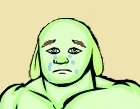
Drip was always a little sad. His eyes always had had a sort of shiny look and his nose seemed to run all the time. The local children (being children) called him ‘Drip’. They had been doing it for so long he couldn’t even remember his old name any more.
One day the nastiness got worse. A group of boys chased him, throwing rocks whilst shouting: “Drip the bogey ogre, Drip the bogey ogre!”
Drip ran. He ran till his throat stung. He stopped high in the mountains, where he found a cave. Drip hid in that cave for a days. In fact he didn’t venture back to the road for a very long time. As months went by and the boys were nowhere to be found Drip got lonely enough to venture back down to the road more often.
Eventually it became a daily routine. Drip would shuffle his greenish-white body down the hill from his cave every morning at dawn to sit at his ‘sitting rock’; a little place nestled in the woods where the trees gave him enough shelter for him to peak through the branches and watch the people that passed by.
Drip still liked to be nearpeople. The sound of their voices helped stop him from feeling so lonely. Months and years went by with Drip hiding in the forest, sitting on his rock, listening to the people laughing and talking as they walked or rode along the little forest road.
On one particular morning though, Drip was not woken by the sound of birds but instead by a loud clinking and clunking noise from the woods below. Drip hauled himself up as fast as he could and shuffled his fastest shuffle down the well-worn path, only to find his sitting stone smashed to pieces. Standing beside it was a very shocked, very sweaty, old man holding a pickaxe.
As soon as he saw the rage in the ogre’s eyes he lept for the road, untethered his horse from his big heavy cart, leapt on it’s back, and rode off at top speed. Drip was more angry than he had ever been in his life and before he knew what he was doing he picked up the old man’s cart and threw it up into a tree. It broke the top branches and crashed to the ground. Pieces of cart cascaded from the trees like giant wooden snowflakes.
Some of the guards from the castle were out on patrol and hurried towards the noise. When they saw Drip standing in the middle of the ruins they got an idea about what had happened. The head of the group walked carefully over to Drip:
“What happened here Drip? Did you do this?”
Drip’s nose was dripping and his eyes were filled with big, wet ogre tears:
“He smasheded up my sitting rock! He just smashed it all up! I didn’t mean to smash his cart.”
The guardsman put his hand on Drip’s huge, soft shoulder:
“OK Drip I think it’d be best if you come with us to the castle.”
Drip was shocked at this, he wondered if they were going to put him in the dungeon or something. Drip didn’t want to fight the guardsmen, he had never hurt anyone in his life, so he nodded his big lumpy head and followed behind their horses.
When they got to the castle the head guardsman got off his horse and ran inside to explain why they had an ogre with them. Drip took a second look at the other guards and he didn’t like what he saw. He recognised them all instantly: the rock-throwing boys. All grown up. One of them leaned down from his horse and whispered: “Drip the bogey ogre!”
Drip ran. he had to get away from the horrible boys. Big men now. Big men with swords. Drip was sure they would lock him in the dungeons for ever. He could hear the men jumping off their horses to run after him and he tried to move even faster. Finally he reached a door that looked big enough even for him and leapt inside.
The room behind was huge and smelled like sweet, juicy berries and of the bread and pastries that families sometimes ate at picnics out in the forest. Drip had really enjoyed hearing families playing and having fun from the comfort of his sitting rock, he started snuffling again at the thought of it lying in pieces.
He was still nervous of being found but when he heard the guardsmen’s heavy footsteps running past the door he knew he was safe. Well he thought he was anyway. Out of nowhere a big, loud, high pitched voice echoed around the room:
“And who said you could come into my kitchen?!”
Part 2: A bowl of Soup
Drip’s tears became big and splodgy as a huge lady with arms almost as big as his, and legs like tree trunks, marched towards him. He hung his head:
“I’m so sorry, I was just hiding, I didn’t know what was behind the door.”
Mrs Bunt (the castle cook) calmed down a little and went to give Drip a handkerchief, though when she looked at his huge, bulbous ogre nose she changed her mind and handed him a towel instead. Once he’d blown his nose Mrs Bunt grabbed a big mixing bowl from a shelf and filled it up with soup from a big cauldron bubbling by the fire:
“There you are. Have a seat and get that in your belly. You’ll feel better on a full stomach.”
Drip had never been treated so nicely and nearly started crying again. Stopping himself, he pulled out a bench near the big table and sat down. The bench creaked loudly under Drip’s bulk and as he wiggled his bottom to get comfortable the bench gave up completely, collapsing into a heap of broken twigs.
Mrs Bunt didn’t even blink, she simply beaconed Drip to sit on the floor beside the fire and handed him his bowl of soup. He didn’t use a spoon and just slurped up big mouthfuls. The fire beside him and the soup in his belly made him feel better than he ever had. Drip stopped his constant sniffling and even noticed his skin changing to a much healthier deep green. Mrs Bunt took his empty bowl from him:
“Well that should sort you out a bit. Now, if you don’t have anywhere to be, I could do with a hand. We’ve got a big feast to prepare for Lord Borrin this evening.”
Drip had never cooked before, all of his meals had been things he found in the forest, and the closest he’s been to anything like Mrs Bunt’s big cooking fire was when he lit a small campfire outside his cave to keep him warm in the winter. He tried to explain that he didn’t know how to help but Mrs Bunt just marched him around the kitchen in the quickest tour of the place she had ever given.
She wasn’t sure if Drip had followed any of it but she didn’t have much time before she needed to start work on the feast.
Drip had taken it all in. The heat of the kitchen was doing something to his brain. He was surprised at how quickly he understood what all of the different tools and utensils did and after he had cleared away the broken bench Drip popped on an apron, washed his hands thoroughly, and got to work.
Drip was stirring a big pot of stew when the guards arrived at the kitchen door looking for him. Mrs Bunt was having none of their nonsense, Drip had told her what had happened so she told the guards to leave him alone. She explained that Drip would work in the kitchen to help pay for a replacement cart for the man in the forest. That was that.
The guards were silent with shock. The idea of Drip ‘the bogey ogre’ cooking their meals made them sick. They thought that perhaps Mrs Bunt was joking but when they looked into the kitchen and saw Drip stirring the stew all they could think of was blubbering old Drip’s runny nose dripping into their dinner. Drip’s nose was clean and dry now but that didn’t stop the guards from making up their own minds.
No one argued with Mrs Bunt though, she was strong enough to fight off any two guardsmen in the castle at once and, more importantly, she was in charge of what everyone ate. Nonetheless, the guards knew that they’d be giving the food at the feast a miss.
Part 3: Lord Borrin’s feast
That evening, after lots of entertainment from jugglers, dancers, and musicians, the people of the castle sat down to their feast. Lord Borrin and everyone else nodded with appreciation at the incredible food before them. People stopped talking as they dug into one of the best meals they had ever tasted but the small group of guardsmen didn’t notice any of that, pushing every plateful away.
The guards were so certain that the food would be disgusting that they spent all their time laughing and joking with each other about the fact that everyone else was eating bogeys. They were so loud that they they didn’t even notice all of the ‘yumm’s and ‘mmm’s all around them until the end of the feast. Just before the plates were cleared Lord Borrin asked to have Mrs Bunt come out and take a bow for the delicious meal they had all just enjoyed but she shook her head:
“All the thanks should go to my new assistant Drip.”
Mrs Bunt went down into the kitchen and grabbed Drip by the arm, leading him up the stairs to the great hall where a round of applause broke out. It was so loud it made his ears ring. After just one day in the warmth of the castle kitchens, with a steady supply of food from Mrs Bunt, Drip looked like a completely different ogre. His clammy greenish-white skin was darker and greener, and he stood up straighter with not one tear or runny nose in sight. He was still Drip but he wasn’t so ‘drippy’ any more.
The guardsmen suddenly realised what they’d missed out on and went to grab at their plates only to have them taken away by one of the maids. There wasn’t even a bread roll left for them to eat. They went back to their barracks that night with rumbling stomachs and the next morning some very, very sorry (and very hungry) guards went down into the kitchens to apologise to Drip for all the nasty things they had done when they were younger. They talked for a long time, and while they all found out about each other Drip cooked them the best omelettes ever.
From that day on the guards always had breakfast with Drip, getting up before anyone else in the castle. They even got into the habit of sitting down at the fire with Drip while they all ate (Mrs Bunt still couldn’t find a bench strong enough to hold him).
***
Don’t forget to pop over to the books page on this site to find out more about this little story’s big brother(s). You can find your way by clicking this link. Hope you enjoyed the story, thanks for reading, all the best, John
Looking for a fresh way to spark creativity in writing? Whether you’re a writer trying to shake off some cobwebs or a teacher hoping to add a new twist to class activities, whatever brought you to this post, I hope you’ll find something useful in it.
TLDR… There’s a Podcast?
The world is a busy place so I’ve recorded a vlog/podcast of this post so you can listen as you do other things. You can listen to the podcast episode, or watch it as a YouTube video at the end of the post. You’ll also find links to teacher resources that you can use with your class as well
Magical Realism
If you’re sharing this with a class, it helps to start with a clear idea of what a ‘genre’ is. For what we’ll be working on today, it’ll be sufficient to say that a genre is a category of story. Book genres include categories like fantasy, sci-fi, mystery, and many more.
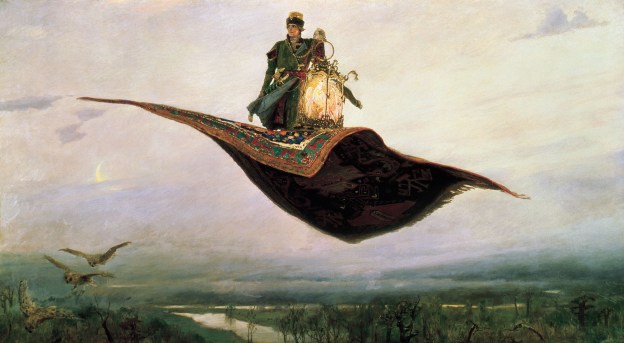
‘Literary fiction’ is a genre often found on university reading lists. It can sometimes be seen as the more ‘serious’ side of storytelling. One of its sub-genres, magical realism, mixes everyday life with magical moments in a way that is fascinating and quite different from typical fantasy books. The magic is subtle, unspoken, and completely mixed in with the ordinary and everyday.
‘Genre fiction’ is a term typically used for all the books that live in their own worlds outside of ‘literary fiction’.
‘Genre fiction’ tends to dominate bookshop shelves. These are the books readers seek out because they already love that type of story, whether it’s crime, romance, fantasy, or horror. ‘Genre fiction’ is easy to advertise and fairly easy to describe.
Unlike a ‘genre fiction’ category like fantasy, magical realism isn’t about big, magical worlds or epic quests. Instead, it features magic that’s accepted as part of daily life, whilst never being fully explained. The magic isn’t the focus. It’s just part of the world.
I first came across magical realism thanks to a high school teacher (Mr Johnstone), and I was hooked. Some fantasy authors, like Terry Pratchett, have poked fun at it. In fact, Terry Pratchett once joked that saying you write magical realism is “…a polite way of saying you write fantasy…” I can see what he means, but there is a clear difference between the two.
But what is Magical Realism?
Magical Realism is a literary style famously associated with Latin American writers like Gabriel García Márquez, Jorge Luis Borges, and Isabel Allende.
The most notable element of the genre is that when magical or fantastical events occur in an otherwise ordinary setting, no one within the story takes much notice (including the narrator).
In magical realism, the magic is ordinary. It’s not questioned. Characters don’t wonder how it works. They don’t even point it out. The narrator treats it like toast popping out of a toaster—normal and unremarkable.
The focus is always on the human experience. Even if there’s a ghost living in a tree or someone floating into the sky, it’s all part of the background, not the point of the story.
Take “One Hundred Years of Solitude” by Gabriel García Márquez. It includes flying grandmothers, ghosts, and prophetic scrolls—all treated as normal parts of life. That’s magical realism.
So, is it just ‘literary fantasy’?
So, is it just ‘literary fantasy’? It can feel that way. Books like “The Watchmaker of Filigree Street” by Natasha Pulley or “Before the Coffee Gets Cold” by Toshikazu Kawaguchi clearly feature magic. However, they focus on people, relationships, and daily life, not magic systems or worldbuilding.
That’s also probably why they’re considered literary fiction; they treat the magic as background, not plot.
Even Terry Pratchett, who joked around about magical realism, often blurred the lines himself.
Pratchett’s Discworld books sometimes let magical elements go significantly unexplained. What’s more, every single Pratchett book I’ve ever read gives a deep and clear connection to the human (or troll, or dwarf, or golem, or even lowly goblin) components of the story. All of this lets some of Pratchett’s own work edge ever so closely into magical realist territory.
Other books for younger readers do this too. Philip Pullman’s “His Dark Materials” and Garth Nix’s “Keys to the Kingdom” series both dip into this space. They sometimes avoid explaining how the magic works, letting the mystery remain.
Is Magical Realism a genre that would work for Kids?
All of this said, magical realism in children’s books is rare. Why? Kids are still figuring out how the real world works. They need some explanation about almost everything that happens in a story, whether it’s ‘real’ or magical. Plus, learning how magic works can be a fun part of the story in itself.
In my own books, Jack starts out in our world and learns about magic bit by bit. Some things are left unexplained, but I explain enough to keep younger readers clued in. That much explanation is definitely more like traditional fantasy than magical realism.
So are there any magical realist children’s books?
The one exception to the seeming rule about the difficulties of creating magical realism for kids is Roald Dahl. His stories often treat magic as normal, but his gritty, sometimes unpleasant real-world details make his stories feel oddly grounded as well.
Roald Dahl’s writing is so distinctive that I’ll be exploring it in more detail in a later post.
Fantastical stories lift us out of the everyday, but they do it in a way that helps us see human behaviour more clearly.
Whether we’re worried about a basilisk in the basement of the school, a ghoulish creature hiding in our garden, a dog that somehow switches off all devices nearby, or if we’re gingerly climbing the slopes of Mount Doom, all of these experiences make their own sort of sense. We can see the real human parts all the clearer when everything else seems strange.
Magical realism, in contrast to fantasy, holds on tight to the mystery of how the magic works. For some young readers, that might feel unsatisfying. However, it’s still strange enough to make the feelings of the characters stand out all the stronger.
With this in mind, we can write magical realism with considerably less explanation than a fantasy story. You can basically jump straight into the strangeness and show the real human emotions all the more clearly.
Here’s a writing activity to try:
The Magical Object Writing Challenge
PART 1: The Magical Object
Give your main character a magical object. It can be weird, strange, or subtle (it doesn’t even have to be an object; it could be a creature of some sort like my story).
Here’s a tip for part 1: To imagine how to use your magical object, it can help to think about how we might describe something more ordinary. Think of a phone. Most of us don’t fully understand how it works, but a single phone can have some fairly big effects in a story.
PART 2: As Ordinary as a Pen
The character doesn’t know their object is magical. They’ve always had it, and they’re so used to what it does that they think it’s as ordinary as a pen or a pair of shoes. No one explains it. Not even the narrator.
Here’s a tip for part 2: To make this easier for yourself, avoid naming the object in the title. Avoid describing it early. Let it blend into the story naturally.
PART 3: Real Life Drama
Write a story about an ordinary day. Come up with something dramatic (yet ordinary) that could be going on. Show the object doing something unusual, but don’t explain how or why.
Here’s a tip for part 3: Your magical object can be part of the solution, but be sure to look at the feelings of the people in the story more than you talk about the object.
PART 4: Emotions
Focus on how it affects people. What are all the main characters feeling at the end?
Here’s a tip for part 4: A story’s conclusion is often when there’s an emotional change. The more dramatic the change, the more dramatic the ending. Anger to joy, sadness to humour, you can decide what feelings you’d like to see your characters show.
EXTRA NOTE
The quadrants on the worksheet don’t have to be the order your story goes in. Once you have notes in 1, 2, 3, and 4, you could grab a separate piece of paper (or a jotter) and write up a story there.
This way, notes from 3 could be your beginning, followed by the object ideas you noted in 1, you can use notes from 2 to help you move the story along, whilst remembering to keep the magic subtle, and then finish your story using notes from part 4.
The order in which you use your four sets of notes is up to you.
A Simpler Choice for Quicker Storytelling
It can feel strange to restrict your writing a bit. One of the amazing things about writing fiction is how wild and open it can feel. With a blank page in front of you, you could take the story anywhere.
However, sometimes, when you have too many choices, just making a single choice can feel like the hard part.
Cutting your options down can force you to sharpen up what you want to say, and the sort of story you want to tell. This can also tell you a little bit about how you felt when you were writing too.
What did your story teach you about yourself?
It can feel strange to restrict your writing a bit. One of the amazing things about writing fiction is how wild and open it can feel. With a blank page in front of you, you could take the story anywhere.
However, sometimes that freedom can be a bit of a problem. When you have too many choices, just making a single choice can feel like the hard part.
Cutting your options down with something like the writing challenge we’ve just looked at can force you to sharpen up what you want to say, and the sort of story you want to tell. This can tell you a little bit about how you felt when you were writing too.
If you chose something creepy, maybe you needed a little jump scare to wake up your brain a bit. Perhaps your story had a little sadness in it, so maybe you needed a chance to let out something upsetting. Maybe you went for a humorous story, so you might have needed a laugh.
Writing fiction lets you deal with real emotions in imaginary ways, and magical realism offers a slightly different way to do that than more traditional genres.
I hope you enjoyed the activity, and sometime soon I’ll be adding a portion to the podcast where I showcase listeners’ stories, so feel free to share your story using the contact links that you’ll find on social media and on the website.
Final Thoughts & Questions
How did you (or your class) get on with the writing activity? I’d love your feedback.
Do you know of any children’s books that feel truly magical realist?
Which book genre translates well to children’s books, and which doesn’t?
Let me know in the comments or message me on Instagram.
As always, thanks for reading, and don’t forget you can buy a copy (paperback or Kindle edition) of my own Fantasy book ‘Jack Reusen and the Fey Flame’ over on this page, or you can see all of my books on my Amazon Author page here.
You can also follow this link to download classroom printouts in either black and white, or colour.
If you can’t access the Canva version, you can also download either a PowerPoint or PDF copy of the presentation for your smartboard to accompany the sheets using the Google Drive link above.
Watch or Listen to this post instead
Below are YouTube and Spotify versions of the vlog/podcast so you can listen to it as you do other things:
Enid Blyton is responsible for a huge portion of missed sleep from my childhood. The Famous Five books and the ‘Mystery’ series were staple components of my evenings (and long into the night) from the age of about eight or nine till I started high school at twelve (we don’t do middle school in Scotland). She opened a world of adventure to me but I have to admit she also wedged me thoroughly into a literary rut.
With Blyton’s books I developed a love of reading that became a core part of my identity, ever since then I’ve regarded myself as a passionate reader. However, her writing style left me cocooned from other works of fiction; she wrote in a relaxed, easily accessible, manner that demanded little of the reader and simply allowed the story to flow.
In many ways reading Blyton was like watching TV; I simply allowed the story to unfold before me, often going for chapters without feeling as though I needed to put much of my own thought in at all. This is the blessing and the curse of Blyton’s writing. Her books were published at a time when children were just beginning to migrate towards television as the entertainment medium of choice, Blyton appeared with an alternative.
I grew up in the eighties and by then we had access to so much more child-orientated TV than the generations that preceded us. The challenge was even greater for authors then than it had been back in Blyton’s day. Eighties children’s authors had to go foor the popular vote by whatever means necessary. They grasped for the ghoulish in the form of the Goosebumps series or pandered to a growing culture of pre-teen girls who aspired to a fantasised version of teenaged life in books like the Babysitters club. Meanwhile, in a dusty antique book shop on a holiday trip to Lincoln cathedral I came upon the famous five. I was hooked.
Blyton enjoyed (and still enjoys) the backlash from librarians, teachers, and other people who wish to promote ‘proper literature’ to children the world over for her work. Rhiannon Lassiter’s mother (Mary Hoffman) banned Blyton, you can see what Lassiter thought to that by following this link.
For many Blyton was low brow, pandering and, at best, akin to the type of bargain-bin paperback frivolity that adults buy at the train station or airport to help pass the time. In essence it was (is?) seen as just one step up from a magazine.
I can’t help but wonder if this is just a case of the anti-popularism which is often sported by the self-designated cultural elite, who seem to feel the need to put down anything popular as bourgeois and watered-down alternatives to ‘real’ literature/art in general.
I’ve never gone for this kind of thinking, I liken it to the idea that fine dining is always superior to fast food. Of course there’s something to be said for an excellently prepared meal but sometimes you really just want a greasy cheeseburger and fries from a burger van. (Neither fine dining nor fast food have the best credibility as sources of nutrition, in both instances it’s all about the taste, the aesthetic)
I think the same thing is true of literature, sometimes we’ll want to enjoy the complexities and nuances of an exquisite work of fiction but sometimes, and I think this goes ten-fold for those who are just beginning their literary journey, sometimes you just want to be swept up in an adventure.
So was Enid Blyton a bad writer? In my mind the answer is a resounding NO; she provided me a literary foothold in an era in which electronics and TV were taking over every aspect of the life of a child. She let me escape that world (a little) and allowed me access to the world of my imagination in a way that the alternatives simply couldn’t. Was she a literary marvel? Probably not, but the service she did perform well was to allow children to marvel at what a book could do.
I am the first to admit that moving on from Blyton’s style of writing was quite hard but as I noted in a previous post I found a way, as I’m sure many many more people did as well. There isn’t a doubt in my mind that the modern book industry would be an shell of its current state if it wasn’t for her prolific contribution to children’s literature, if for nothing else but that her works stood as an alternative to the proliferation of TV into the lives of children. In this sense, at least in my opinion, she stands up as a literary hero in her own right.
DON’T FORGET: Book one of the Jack Reusen series: ‘Jack Reusen and the Fey Flame’ is available in both paperback and in digital format. You’ll make me as happy as four kids and a dog with a picnic blanket and lashings of ginger beer if you click on this link to pop over to the ‘books’ page where you can find out more about the book and get details on how to get hold of your copy. I hope you like it as much as I enjoyed writing it 🙂
Just a couple of weeks ago one of the greatest authors to have ever lived passed away far far too soon, after battling a disease that must have been like the stuff of nightmares. Terry Pratchett opened my eyes in regards to fiction. Before Pratchett I was a staunch Enid Blyton reader but Pratchett exposed a whole ream of fictional genres that I’d never touched on before.
This brings me to his last offering for us all. OK some of you may already know about this but I just found out so let me just enjoy it. I had genuinely expected him to stop at ‘Raising Steam’ and take a well-deserved retirement but he left us with one last glimpse of his incredible universe to enjoy.
‘The Shepherd’s Crown’ will be the last Discworld novel and the fifth in the Tiffany Aching series (genuinely my favourite, closely seconded by the watch) and it’s due out later this year. You can check here, here, and here for confirmation. I simply cannot wait, Tiffany Aching is one of the best girl characters I’ve ever read and if you aren’t familiar with her adventures you really should get ‘The Wee Free Men’ and get up to speed.
Pratchett was a prolific author and wrote at a pace that inspires and terrifies me. Every author of my generation owes him a debt. We grew up with the Nomes, Johnny Maxwell, and the Carpet People and we ventured into the monstrous, hilarious, and tragic wonder of the Discworld, being exposed to fantasy, crime fiction, love stories, high-end philosophy, and most importantly a rich array of the wonderful and terrible things that humanity has to offer.
When ‘The Shepherd’s Crown’ comes out don’t expect to hear from me until I’ve finished reading. Feel free to share your Terry Pratchett memories in the comments below. As always thanks for reading, cheers, John
There are characters that stretch across the globe: Harry Potter, Mickey Mouse, Elsa but where are they? That might seem an odd question but think about it. What makes these characters so big? It could be the fact that they’re available on almost any type of media you could want (that clearly helps). However the thing that I personally think makes these characters so absolutely huge is that, in a way, they live inside the minds of a huge portion of the world’s population.
We’ve all had that moment when we’ve watched a film adaptation of a book and thought that the actor playing a character is nothing like the person we pictured. We already have an idea about that character, we’re connected to our imagined image of them, and we can even feel a little annoyed at the casting people for making such a wrong call.
This goes to show that as soon as we’ve encountered a character we develop our own version of them and when millions of people know a character that makes for a huge multi-layered version of them spread over our planet.
OK so Jack and his friends aren’t in the same league as these characters, currently there are just a few dozen copies of ‘Jack Reusen and the Fey Flame‘ out there in the world but I am starting to get feedback trickling in about the book and one thing is becoming quite clear: I’m coming to the strange realisation that I have very little control now over the way that readers think about my characters.
In many ways they all kind of have a life of their own now. As the adventures of the book play out readers will inevitably be picturing Jack, Thea, Fynn, Sparky, Connor, Alyssa, Granny Reusen, and even Harold in ways I had never imagined.
It’s both amazing and very intimidating to be told that someone likes one of the characters because I’m still writing them and people might not agree with the direction some of the characters go in. I have to walk a fine line between character development and straying so far that people will feel cheated.
I made the decision from the very start to let my characters age, more than that I wanted them to develop, I want the events of each book to matter to them, in light of that each story will change them irrevocably. I can’t even imagine what this process feels like for big authors like Rowling and Landy (Skulduggery Pleasant).
For these authors there are literally millions of versions of their characters out there in the world. They must have to have nerves of steel when making changes and developing their characters. The only other alternative would be to play it safe like Disney did with Mickey and not develop their character at all over the course of nearly ninety years (considering Mickey’s success I guess there’s something to be said for ‘if it aint broke don’t fix it).
Personally I want my characters to feel human and a big part of that involves letting them develop but that doesn’t stop it from being intimidating when in the back of your mind you know that some readers might not be entirely happy with the changes you make.
Do you have any favourite characters who were spoiled by a writer/author? Are there some un-aging characters that bug you (personally I’d love to see the Simpsons grow up)? Feel free to comment below, all the best, John
Just finished my talk at Our Lady’s RC Primary School, Stirling. All the kids were fantastic, loads of good questions and they seemed to really enjoy meeting Jack.
I had been particularly worried about what the older kids would think to the book but I got big laughs for a good few bits (don’t worry they were supposed to be funny).
I would do that again in a heartbeat. If you’re a teacher, or are connected to a school in some way, and you think the children at your school would enjoy a book talk/author visit please let me know.
Grabbing a cup of tea in the staff room now, I’ll post again soon with an update on the progress of ‘Jack Reusen and the Spark of Dreams’. All the best, John
Rough number crunching gives us an odd statistic (though with the popularity of Harry Potter, Skulduggery Pleasant, etc. this is perhaps not surprising). Basically children (for argument’s sake let’s say those aged from 0-15) make up a little less than 10% of the UK population but sales of ‘children’s fiction’ (as defined by the publishers) makes up more than half of the fiction sold here.
Let’s assume that kids read twice as much as adults. To be honest I’m not sure I would believe that, you just need to see the average group of commuters to see how many adult fiction readers there are. Anyway let’s assume that children are more avid readers. Even then that would be two kids fiction books for every child and one for every adult. Adults make up 90% of the population, so that’s still a 9:2 ratio.
To even out the ratio children would have to be getting through a whopping nine books for every one book read by an adult. Someone, somewhere, is reading a lot of kids fiction.
I’ll admit that, aside from a very small number of exceptions, I basically exclusively read children’s fiction. A big part of that is exposure; I work in an environment filled with children’s books so when I’m deciding what to read next my attention is already there, but what’s everyone else’s excuse?
Is it the simplicity of the story-lines? Is it the departure from the every-day themes which can arise in typical adult fiction (even the most fantastical)? Many of us read for harmless escape (that’s my main motivation anyway) perhaps it’s just as simple as that: children’s fiction offers a greater escape from the stresses of adult life.
I’d love to hear your opinion, so feel free to add a comment below. It’d be interesting to see the different reading preferences and reasons behind them. All the best, John
(information gathered from 2013 and 2014 statistics)
This time last week ‘Jack Reusen and the Fey Flame’ went live on kindle, since then I’ve sold a lot more copies than I expected to in Jack’s first week. I’ve also had a few people reserve copies of the print edition which should be on the shelves soon (printers’ schedule permitting).
The response to Jack’s world has really surprised me and I’m really touched that so many people have shown support for my wee book series either by buying a copy, or simply by liking the facebook page and following on twitter.
On top of this I now have two book talks booked for the coming weeks. One of these might be expected (for those of you that know me anyway), as it’s a book reading/talk and signing at Fun Junction in Perth.
The other event came as a real surprise as a teacher that I know who works in a Stirling school asked if I could join in with their World Book Day event which draws in three schools. Needless to say I jumped at the chance.
However, of all the brilliant things that have happened this week I have to say my favourite is the fact that one of my son’s friends at school came up to him and told him that his dad’s book was ‘awesome’. He’s six and he’s been reading it himself after his mum bought a kindle copy this week.
That was the whole point of writing this and I hope he’s still enjoying it. It still feels kind of odd knowing that there are people out there who know Jack, and Fynn, and all the others. Part of me still feels as though the characters just live inside my head, it’s lovely to think that they’re now alive in a bundle of other people’s heads too. That probably sounds a bit weird but you know what I mean.
Anyway thanks as always for reading, if you’ve had a read of ‘…the Fey Flame’ I’d love to hear what you thought of it in the comments below, Cheers, John

 Think of classic kids books (pre Harry Potter) and we find an even mix of two kinds of series. On one hand we get authors writing seemingly endless collections of books, on the other we get relatively short collections with a fixed end point.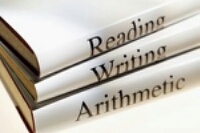




 ‘Literary fiction’ is a genre often found on university reading lists. It can sometimes be seen as the more ‘serious’ side of storytelling. One of its sub-genres, magical realism, mixes everyday life with magical moments in a way that is fascinating and quite different from typical fantasy books. The magic is subtle, unspoken, and completely mixed in with the ordinary and everyday.
 The most notable element of the genre is that when magical or fantastical events occur in an otherwise ordinary setting, no one within the story takes much notice (including the narrator).
 That’s also probably why they’re considered literary fiction; they treat the magic as background, not plot.
 Roald Dahl’s writing is so distinctive that I’ll be exploring it in more detail in a later post.
 Write a story about an ordinary day. Come up with something dramatic (yet ordinary) that could be going on. Show the object doing something unusual, but don’t explain how or why.
 Focus on how it affects people. What are all the main characters feeling at the end?
 The quadrants on the worksheet don’t have to be the order your story goes in. Once you have notes in 1, 2, 3, and 4, you could grab a separate piece of paper (or a jotter) and write up a story there.
 However, sometimes that freedom can be a bit of a problem. When you have too many choices, just making a single choice can feel like the hard part.
 Here’s a Canva link to access the presentation file