Category Archives: writing

The Ogres: Chapter 4: Miners

To find your way back to the very first chapter click this link

Machines

Huge machines rumbled past the tent and shuddered to a stop. People climbed out to look around, wandering off in all directions.

Mee and Bur-up could tell that something bad would happen if one of these people found them. The Alex and the Logan told them to go back to the cave and do what they could to hide the entrance. They also took most of the stones and metal with them. The boys hid the rest in their jacket pockets.

The people from the trucks were everywhere. The sun had only just come up and these people were busy rummaging through the forest. The family tidied away their tent and did their best to hide too.

The boys’ parents called people on mobile phones and discussed the value of the hill and how much gold they might need to buy it. The Logan and the Alex worried when their dad said “That much?!”

The family had no car to go to and they didn’t want to risk hiding in the cave. If any of these people saw them going into it then all of this would be for nothing.

More phone calls and the boys grew more and more bored. The Alex wandered off with his big brother and played in the forest. Only a few rounds of tig later a man turned up. He was very smart and was carrying a shiny leather case:

“Sorry boys but I’m in the process of buying this place. We’re doing some very dangerous work today. Lots of drilling and digging. I’m afraid you’re going to have to leave.”

Neither of the boys knew what to say. The smart man couldn’t buy a hill could he? They wandered back to their parents just as their mum was getting off the phone:

“What’s wrong boys? You look upset.”

The Logan looked back at the smart man:

“He says he’s buying the hill. You can’t buy an entire hill can you?”

Their mum laughed:

“Actually, I think we just did.”

The angry smart man

They looked back to the smart man with his briefcase. His phone went off. Moments after he answered it, his face turned purple:

“That’s not possible! Who else could have known?…Wait how much did they offer? That’s ridiculous. Keep the deal on hold. There’s no way someone has access to that much money that quickly.”

The man hung up his phone and stuffed it into his pocket. He turned to the quiet trucks behind him:

“OK guys we have to pack up for the day. Deal hit a snag, we’ll be back though. Just have to sort out a few things.”

The angry smart man walked past the family on his way back to his fancy car:

“Looks like you’ve got another day to play boys. We’ll be back tomorrow I think. Enjoy your day.”

He opened his car, got inside, and drove away at top speed. The boys looked at their parents:

“How did you do that?”

Their dad’s eyes widened:

“We promised a lot. Lets hope our new friends can help.”

It took longer than they expected for them to find the cave. When they did it was clear that Mee and Bur-Up were experts at hide and seek. A heap of bracken had been torn up in small patches all around the cave and then piled up in front of the opening. It was so expertly laced that it just looked like a mound of earth.

You would only know the cave was there if you saw people going into it. As the family slipped into the cave someone did see. Far away the smart man was sitting in his car with a pair of binoculars. (“So that’s where they found the sapphire.”)

He climbed out of his car and followed the family’s trail as quietly as he could.

Great big steps
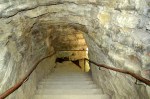
The stairs were very steep. Too steep even for the adults. The boys had to jump from one step to the next and after about fifty their legs started to ache. Surely they would find Mee and Bur-Up soon?

Every now and then they called down the tunnel in front of them, their voices echoing away to nothing. Finally they all needed a rest. The tunnel was getting warmer and it was getting harder and harder to breathe.

Above them a man took off his long overcoat and scarf and sat on a step as well. He could have kept going but the sounds of the family climbing down had stopped. He didn’t want to bump into them, he just wanted to find out where the sapphires were.

Deep below them the echoing voices reached Mee and Bur-Up at the bottom of the stair. The sound couldn’t have come at a worse time. Their leader Biggin was furious to see two bigger-folk strolling down the stairs of Ey-Kan as though it was an ordinary walk in the caverns.

He was figuring out the right punishment when the sound of little-people echoed down to them. Not just little people but little-people who knew both Mee and Bur-Up by name.

Biggin lifted his hands in anger:

“What did you do?”

Mee and Bur-Up hadn’t even told him about the trucks and about being ‘interesting’ yet. When they did he looked like he might just bounce them all the way back up the stairs himself:

“So how do we stop being interesting?”

Mee smiled:

“Don’t worry the boys’ parents had a plan. Though we left before we found out what it was.”

Biggin looked at them as though they had lost their minds:

“What were you thinking?”

Mee was almost in tears:

“It’s hard to explain. When we’re up there it’s like our brains stop working properly. I think it’s the cold.”

Biggin shook his head:

“So all of this bother and the big ice is still there?”

Mee got excited at this bit:

“No, actually no, the ice is gone. The boys explained. It’s just something called ‘winter’. After a little time goes by they get something called ‘spring’ when the plants grow and the animals wake back up again.”

There was a small crowd of bigger-folk gathered to listen to the surface adventurers. A few of them liked the sound of this ‘spring’ thing. In fact even Biggin liked the idea of seeing somewhere new (though for now he couldn’t admit it).

Biggin pulled himself up straight, looking as big and leader-like as he could:

“Right, before we think about anything else we need to see what the little-people’s plan is to make us less interesting.”

Presents for little-people

A lot of the bigger-folk wanted to follow Mee and Bur-Up as they made their way back up the stairs. Some even grabbed gifts for the little people they might meet up there.

As they walked up, each step made them feel odd. Mee and Bur-Up were more used to it now but more than a few of the others had to stop for a rest every few steps.

Their heads got a little fuzzy too, and their arms and legs changed colour and got more wobbly and thumpy (like it was harder to control them).

The yells from the family above got louder and louder (more loud hu-mans) until they could see four little people perched on the edge of a step looking down at them. The Alex jumped up and waved his hands in the air:

“They’re back, they’re back, and they brought friends.”

Further up the steps the smart man listened with great interest.

Who were ‘they’? Where were they back from? and Who were their friends?

Subscribe

Don’t forget to subscribe to get Ogre stories straight to your inbox. You’ll also get access to printable A4 sheets to make story reading easier. All free (and I’ll only use your e-mail address to send you weekly Ogre stories).

If you’d like these stories in your e-mail inbox (along with easy to print pdf documents) click here.

As always, thank you for reading, All the best, John

Marcus: Chapter 3: 3:00AM

To go to chapter 1 and follow the story through, simply click on this link

(These chapters are early drafts, the final edition of ‘Marcus’ is available in paperback and on Kindle. The Kindle edition is available on Amazon.co.uk and from Amazon.com, as well as all Amazon websites worldwide, simply search for ‘Marcus John Bray’. The paperback is available from Fun Junction in either Crieff or Perth). If you would like to read ‘Marcus’ from the beginning on this site you can click here for chapter 1.

James woke up, his throat dry, vague memories of nightmares drifting away. He grabbed a drink of water, perched on the end of his bed, and glanced at his alarm clock. A sickly green digital display blinked 3am.

What had broken his sleep? The whistling had permeated his dreams, the sound was still ringing in his ears. The cold water roused him further. The last traces of sleep vanished. The whistling was coming from the street outside.

It only lasted a few seconds more. By the time James was at his window the whistler was gone. From that point on he didn’t sleep a wink.

*

His eyes were red with tiredness when he arrived at school. Tash was the fist to notice:

“You look horrible! What happened to you?”

James filled her in on everything that had happened the night before. She tried to comfort him by explaining it all away. After all, it had all been muddled by his nightmares. There was no way to be sure about what he’d heard. Even as she comforted her friend, Tash’s throat grew dry and her heart raced.

Once they had shared the story with Taz and Nicky they were left with the difficult task of deciding what to do next.

Taz wanted to go on acting like nothing had happened. Nicky insisted that there must be a simple explanation and that the simplest way to get it was by talking to Marcus. James and Tash looked at them both, an expression of absolute disbelief plastered over their faces. James spoke first:

“I can’t believe what I’m hearing here. Ignore it or talk to Marcus? Those can’t be our only options.”

The others nodded in agreement. They needed more details about ‘their’ Marcus. Operation ‘ask Marcus weird questions and hope he doesn’t notice’ was scheduled for lunchtime. It happened sooner than that.

As they all lined up, ready to file into the school James found himself standing in front of Marcus. He felt guilty for snooping yet worried for his safety as well. When he turned back to take a look Marcus was smiling quietly, looking up at the pink sky and enjoying the tiny bit of autumn sun. (What was the phrase ‘pink sky in the morning…’?)

He didn’t look like a vampire, or a ghost for that matter. He wasn’t see-through and he wasn’t being fried by sunlight. Two of James’ suspicions almost completely evaporated. Perhaps the others were right. Maybe Marcus really was just an honest kid who simply resembled the boy in the photograph by some freak chance.

Marcus was at the front of the queue grinning at a story one of the girls was telling him. She went back to talking to her friend. With the grin still fixed on his face Marcus turned to face James and whistled a short, simple, easy-going tune. For James there was nothing easy-going about it.

*

When the bell went for playtime James gripped his chair. Tash and Taz, edging for the door, spotted his discomfort and forced their way back through the crowd. He could barely admit to himself how he was feeling. He faked a sore stomach and asked Mrs McClain if he could stay in.

He waited for the inevitable ‘no’ (teachers seemed to love saying ‘no’). She picked up a book from her desk and made her way to the door:

“I’m heading to the staff room just now. If you’re sure you’re not well you can come downstairs. Bring your homework jotter so you’ll have something to do. We can phone your parents if you still feel ill after break.”

Tash and Taz were led out of the room and sent off to the playground. Tash looked back at James in horror, mouthing “Are you nuts?!”

The murmur of the staff room turned into a swell of sound as Mrs McClain opened the door and led James in. It was quite possible that the teachers were louder than the pupils out in the playground.
James made himself comfortable at a table in the corner. He could barely make out any words but the smoosh of noises from teacher-chatter helped put his mind at ease. Then one word stood out:

“…Marcus has been very strange today. He’s normally so friendly and pleasant as well. I might have to get him to sit outside the classroom to work if he keeps disrupting the class like this. You wouldn’t believe what he said…”

James didn’t get to find out. One of the other teachers had put the kettle on, it drowned out everything else.

Did Marcus know about their research trip to the library the night before? Had he been watching them? Was he the one who whistled outside at 3am?

James concentrated on his maths homework, the clean simple numbers helped take his mind off everything. Before he knew it the bell was ringing and he was following Mrs McClain back up to the classroom.

Taz and Tash were two of the first ones in. They sat down at the table beside him and he told them what he’d overheard. Taz nodded with his eyes wide open:

“That’s about right. He was in a really weird mood today when we played football. Didn’t play fair, said some pretty nasty things. Then tackled Robbie really hard. He got sent to see Miss Bruce after that.”

None of them could remember a time when Marcus had been sent to the headmistress before. Taz and Tash seemed to be coming over to James’s side, though James had gone even deeper in his doubts about Marcus. Had he got sent to Miss Bruce’s office on purpose? Had he seen the picture on the wall?

The day dragged on. All three of them tried with all their might to get lost in school work. Thinking too much about Marcus left them all with headaches but nothing could take their minds off him for more than a few seconds.

When the bell went to go home they were the last in the class to leave. Taz didn’t even try to take the stairs two at a time as they made their way out to the front of the school. Tash was quiet. James couldn’t remember the last time he’d seen her quiet.

When they reached the front gate Nicky was waiting for them:

“What took you guys so long? I don’t think I’ve ever been the one waiting for you.”

They were about to explain their feelings about Marcus when he came strolling out of the front door. He didn’t head for the gate straight away. Instead he looked around, acting as though he had forgotten something. He turned to take the little lane to the right of the school that led up to the seniors playground but swung past them on his way:

“Hi Nicky, thanks for the wee chat. Hope it cleared some stuff up. Forgot my jacket. See you guys tomorrow.”

His smile looked practised but Nicky didn’t seem to notice. She waved and smiled.

Once Marcus was out of sight the others didn’t waste a second in turning to confront Nicky. What did she say? How much did she tell him? How much did he know?

Nicky had missed James’ story about the 3am whistle. She also hadn’t heard any of the stuff about the disappearing children. All the same she had still told Marcus about the photograph. He knew they were on to him, and that they were researching him.

Nicky frowned at them all:

“You’re getting it all mixed up. Marcus explained it all. The picture was his Grampa. He saw it himself in Mrs Bruce’s office at lunch time. They have the same name, that’s all.”

They couldn’t convince Nicky to see things any other way. She liked Marcus and had made up her mind that the others were getting caught up in spooky stories.

They skipped the library, choosing the comfort of home and their tea over more research. Nicky tried to comfort James before he left them to head into his house:

“Maybe you’re still in Halloween mode. It was weeks ago now. Just relax and let it go. It’s just a weird old photo.”

James gave her an awkward smile and went in.

*

James woke up in the middle of the night to more whistling. He pinched himself, splashed his face with water. This was no dream. The floorboards creaked as James made his way to the window. He felt the cold from the rattling window before he moved the curtain back. Down in the street, exactly where the whistling was coming from. Jack saw nothing.

The whistling stopped, replaced by a crunch, like footsteps through thick frost. The time flashed on his alarm clock: 03:00 am.

James returned to bed exhausted. He was drifting off when he heard the police sirens screaming past. The clock read 03:10 am.

*

Tash was white as a sheet the next morning at school and Nicky wasn’t there at all.

CLICK HERE TO READ ON TO CHAPTER 4

Marcus Chapter 2: No one there

To go to chapter 1 and follow the story through, simply click on this link

(These chapters are early drafts, the final edition of ‘Marcus’ is available in paperback and on Kindle. The Kindle edition is available on Amazon.co.uk and from Amazon.com, as well as all Amazon websites worldwide, simply search for ‘Marcus John Bray’. The paperback is available from Fun Junction in either Crieff or Perth). If you would like to read ‘Marcus’ from the beginning on this site you can click here for chapter 1.

James’ whole class looked up as he walked into the room. His neck prickled, his ears grew hot. James slumped into his seat and concentrated on what he’d just seen in the office. Taz wouldn’t believe him:

“Look, you don’t have to try and make me laugh. What you said in the playground. I know you didn’t mean it.”

James’ face was too straight, too pale, for it to be a joke:

“I’m not joking. I wouldn’t make up some weird story just to try and cheer you up. I’m telling you. It is one hundred million percent a picture of Marcus.”

James knew that Taz would never believe him without seeing it for himself. It really did sound nuts:

“OK, OK, we’ll go to the library on the way home? It’s from an old newspaper, they’ve got them there. I remember looking at them when we were doing that project on the first world war.”

Taz had to admit, a stop off in the library to warm up on the way home didn’t sound too bad. He’d worry about James losing his mind after.

The afternoon moved along slowly and the sunset outside didn’t help much. They’d be walking home in darkness. The thought of it made the library even more appealing.

They had a pretty big group of friends but four of them lived near each other and most afternoons they walked home together. Tasha was waiting for them at the gates, frizzy hair shoved under a woolly hat. As usual Taz got to the gates about twice as quickly as James could:

“Hi Tasha. James wants to stop off in the library on the way home.”

She nodded. She did that a lot, it was her way of trying to look like she half-expected everything that happened. Tasha was experimenting with being ‘cool’:

“I told you to stop calling me ‘Tasha’. It’s Tash, just Tash! Anyway, yeah, the library sounds good. At least I can warm up a bit. Wish girls could wear trousers. Who thought up this uniform anyway?”

Conversations with Tasha were often three conversations in one. She’d sometimes lose track herself.

They waited for Tasha’s ‘little’ sister Nicola to come out. She was only a year younger than Tasha, and was also taller by a few inches. ‘Tash’ rolled her eyes theatrically (she was in the drama group so she knew all about theatrical eye rolls):

“Wee sisters are the worst! Why is her class always the last one out?”

Nicky didn’t take long. She came skipping out of the front doors with her standard cheesy grin:

“Hey guys, what’s happening?”

Taz was always trying to impress Nicky:

“Not much. Heading to the library on the way home. James thinks he’s discovered the Crieff Primary vampire.”

Taz winked at James. Clearly he wasn’t taking this investigation seriously at all. James shook his head and led the way.

*

They defrosted in the doorway of the library. The smell of old paper drifting from inside. Taz was grinning:

“It always smells like my attic; all dusty and old. I kind of like it.”

Tash was less impressed. She proclaimed her annoyance to the ceiling. Blaming the heat of the place on all the old people who ‘lived’ there. She pulled off her jacket and jumper and flung them next to a stack of beanbags the librarians called the ‘kids corner’.

Nicky’s mouth dropped open at her sister’s behaviour:

“Tasha keep your voice down! It’s nice and cosy here. You always make such a huge thing out of everything that happens to you.”

Tasha shrugged, grabbed a beanbag seat from the top of the pile, slumping onto it. She whispered as quietly as she could:

“Sorry ‘Mum’ I’ll keep my voice down.”

James laughed. It was the first time he had since lunch time. He left his friends looking in the ghost stories section and made his way to the librarian’s desk.

He had looked at the old newspapers with his teacher. He wasn’t so sure they would let some kids thumb their way through fifty year old papers.

The librarian was really helpful. She couldn’t let them see the original paper copies. However, she brought James over to a weird gadget that looked like a big plastic TV screen and got him something called a ‘microfilm’ of the newspaper.

It didn’t take her long to find the right roll of film. It was filled with hundreds of tiny photographs of every page of every Strathearn Herald printed in 1942. Finding the exact page James needed took a lot longer. She showed James how to twist the dial, moving slowly between pictures.

James was left to cycle through hundreds of pages until he reached November, then he slowed down and clicked through page by page.

There it was. James leapt up to get his friends. Taz got there first, he was surprised at the likeness:

“That is really weird. I wonder if it’s a relative or something. He looks so similar.”

That was it. They were all going to treat it as an odd coincidence. As if it were just a funny story to pass around the playground tomorrow. He was about to say something when Tasha jumped in:

“That’s more than ‘similar’ Taz. That boy looks identical to Marcus. I don’t even like looking at it. And did you see what it says in the article underneath.”

They all scanned through the article but the words jumped out as soon as James saw them:

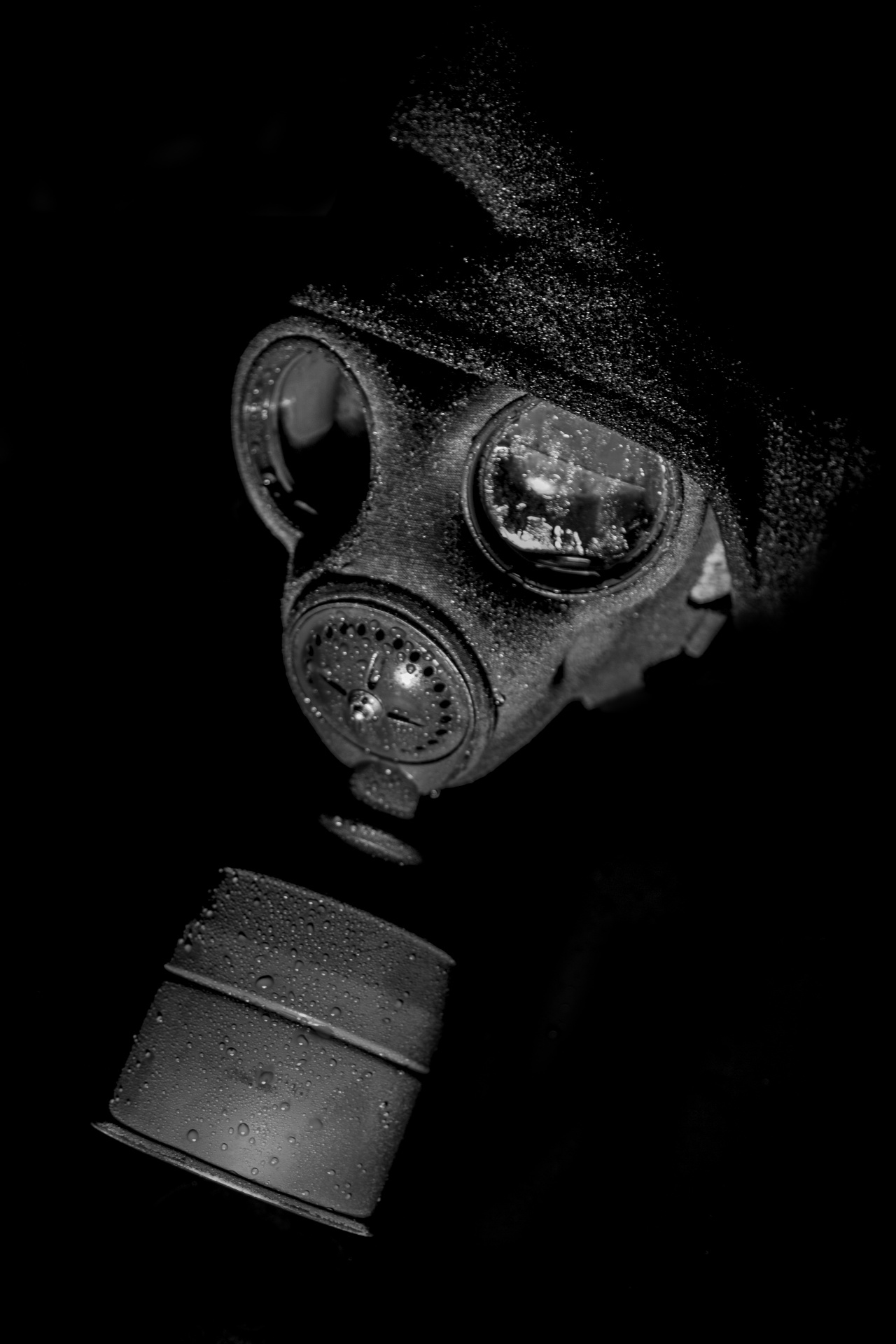
…Crieff Primary Pupil Marcus Bauchan demonstrates proper use of the child-sized gas mask…

For a few seconds no one said anything. James wanted to stay and look for more pictures. His friends, on the other hand, had become remarkably interested in how soon their tea time was (they couldn’t have looked more scared).

James couldn’t blame them. Looking alike was one thing but sharing the same name was beyond odd. He needed to see what else was hiding in the newspapers.

His friends packed up their bags and got their jackets back on. As they said bye, Tasha insisted that James tell her everything in school the next morning.

For the next half-hour James gradually ran out of energy. He wouldn’t have anything to share with Tasha the next day. Then he found it; an article appearing years after the gas-mask photograph. There wasn’t even a picture. The title left a cold feeling in the pit of his stomach:

‘Missing Children Still Unaccounted For’

The article named five children. Four names that James didn’t recognise, and one that he did; ‘Marcus Bauchan’.

James searched ahead for some clue about the fate of the missing children but it was pretty clear they had never returned.

James needed to get home soon. His parents would be worried. On a whim he decided to wind the film back again. The gap between stories was exactly twenty-five years (give or take a few days).

James looked for microfilm of earlier issues and found one from 1917 (exactly twenty five years before the gas mask). In November he found it, more missing children. This time there were no names, apparently they had been with a travelling circus. Again they vanished without a trace but that was all the article had to say about it.

James stared at the screen in front of him, afraid to look round. How could Marcus be linked to all this? He was just a ten year old boy.

That was when the lights in the library went out.

James swallowed but his throat was so dry it felt like it stuck together. He forced himself to look round and found that he was completely alone. He couldn’t even see the librarian.

He got up on legs made of dough. They were numb from sitting in one place for so long but his whole body felt numb too. He leaned on the table giving his legs a chance to get the feeling back.

The library windows were lit by the street-lights outside and the odd passing car headlight. They gave him something to see by. He almost missed a shape in the corner of one of the windows; a blurred face with a look of terror plastered over it. It was on the outside. That meant whatever it was was two, maybe three, stories up.

Perhaps it was a leftover Halloween decoration. Then James saw it move, its black eyes fixed on James. The feeling rushed back to his legs but they wouldn’t do anything he told them to. He watched the face follow him, tried to tell himself it was just a distorted version of his own reflection then a hand landed on his shoulder.
He spun round to face whatever creature had come to take him. The librarian looked down at him:

“Sorry, I thought you left ages ago. Come along, I’ve locked up. I’ll need to let you out.”

James tried to hide his shaking as the librarian led him to the door and let him out into the street. The cold clawed at his cheeks as he made his way home. The whistling wind didn’t help either, it added that extra bit of dread to his current mood.

That got worse when he realised there was no wind. The air was so still the trees looked like statues. The sound he heard was actual whistling, and it was coming from behind him.

He turned his head back and forth, attempting to locate the origin of the sound. It was coming from across the road. But there was no one there. James was alone.

He pictured himself challenging the mysterious whistler. Then his memory lurched back to the black-eyed face in the library window.

James arrived home in moments, his legs aching from the fastest run he had ever done in his life.

*

Chapter 3 will be available next Sunday (24th/Christmas Eve) at 6pm. To be sure it gets to you you can sign up for the Marcus mailing list (please click this link for the sign-up form). Being part of the mailing list will also give you access to pdf printable copies of all the chapters so far (if you’d prefer to read screen-free).

Hope you enjoyed this week’s instalment. Please pop a comment in the comments section to let me know what you thought.

As always, thanks for reading, All the best, John

CLICK HERE TO READ ON TO CHAPTER 3

The Ogres: Chapter 2: Rolly Box

To read from the beginning click here

Every year the bigger folk talked about going back up and every year they decided to wait. It went on so long that they forgot about the idea. The cavern was home. It was warm. It was safe. But it was dull.

Mee and Bur-up were young by bigger folk standards, but they were old enough to know better. They considered themselves ‘brave adventurers’, everyone else considered them fools.

Either way they found themselves stomping their way up hundreds of stone steps on a fairly normal Thursday morning. Bur-Up got tired. The most exercise he got was lifting food to his mouth. He was good at that, Mee had to admit, but it didn’t really count as training for a walk that hadn’t been attempted since before their great granny was born (bigger folk live a long time).

No one is sure if Mee was the braver of the two or if he was just the most foolish but he decided to continue up. The walls grew colder than anything he had ever felt. He felt sure the ice must still be there above them. Surely thousands of years of snow must have left it miles thick by now?

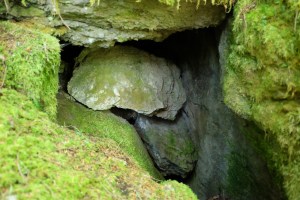
Instead of ice he found a cave. It was different than the stories. Smaller, more damp, more mouldy, more occupied. That’s when he met the creature.

It was small, slightly hairy, and it looked as though someone had put some clothes on it as a joke. Mee wondered if it was a pet of some sort. The creature made a horrible screeching sound. Yes, definitely a pet or guard animal of some sort. So where was it’s owner?

Mee asked:

“Is you lost hairy beast. Where your bigger person gone?”

The creature stopped shrieking. The hairy little beast talked:

“My Mum and Dad are back at the car. What are you?”

Mee shook his head:

“I’m Mee.”

The tiny hairy beast laughed:

“No I’m me!”

“NO, I’m Mee!”

“No, I’m me!”

This went on for a while until Mee got a little upset and exclaimed ‘My name is Mee!”. The little hairy beast came over to him:

“I’m sorry. I thought you were playing a game. Hello Mee. I’m Alex. You look very different to me. Are you human?”

Me shook his head. He hadn’t heard the word ‘human’ before. Maybe that’s what the little hairy beast was. Mee tried to explain:

“Mee is one of the bigger folk. We live under the hill. We escaped the big ice. Is it gone now?”

The hairy ‘Alex’ didn’t know what he was talking about:

“It’s a bit frosty outside but I haven’t seen any ‘big ice’.”

He led the way to the cave’s mouth and that’s when Mee saw it; a huge ball of fire in the sky. He had heard about this in stories but he couldn’t remember the name for it. The ‘Alex’ called it ‘the sun’.

Mee told the ‘Alex’ about how Ey-Kan had made ‘the sun’ and thrown it into the sky with a machine. Outside the cave the cold air made everything blurry, the sounds were all soft and sort of wet.

When Mee spoke it was like there was cloth in his mouth:

“Two of the Alex. I’m not thinking good. All too slow. It’s really slowing out here.”

The Alex looked round. Mee was right, there were two of him now. Two humans anyway. His big brother’s face poked out from behind a tree; eyes wide, a silent scream struggling to escape his open mouth. The Alex waved:

“It’s OK Logan. He won’t hurt you.”

The Alex looked back to Mee:

“Did you say it’s snowing?”

Mee shook his head:

“No, slowing. My head not work so good out here. Need warm place.”

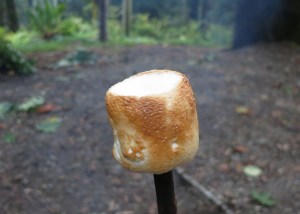
The two boys helped Mee find his way to their campfire. Their mum and dad had gone down to the car to get their picnic and the rest of their stuff. Logan had a backpack with him. In it were all the essentials for a weekend camping on a cold hillside; four packs of crisps and a big bag of marshmallows.

The bigger folk had nothing like this food. The squishy pink marshmallows were too good to say no to. Mee put twelve in his mouth then sat in the fire to get warm. The flames licked up his back and over his head. The heat melted the marshmallows in his mouth. It would seem that more melted means more delicious.

On Fire

The ‘hu-mans’ were being very noisy. It made it extremely hard to enjoy his mouthful of pink goop. It stuck his teeth together a little:

“What the matter? You both OK?”

The Alex squealed in shock and with laughter:

“You’re on fire! Isn’t it sore?”

Mee frowned slowly, enjoying the last of his marshmallows as they melted down his throat:

“Why would fire be sore? Not like it’s cutting me or bashing me!”

The hu-mans laughed but stepped back. The Logan tried to explain:

“It’s just, people aren’t normally fire-proof. Not many living things are.”

Mee shrugged:

“Hu? How strange. Can I have more mush mallow?”

The Logan slid the bag along the ground. Mee had grown so hot that his skin had changed colour; he was a deep, dark green now. If it wasn’t for the talking, and the moving, and the smiling, and the eating (and he was doing a lot of that now), the hu-mans might have thought he was cooking.

With a belly full of food and a freshly toasted butt Mee stood up and went for a wander in the forest. Cracking branches and knocking down the odd tree with a simple ‘oops’.

His next ‘oops’ came after he bumped into a big metal box. The box was perched on four squashy wheels. One bump was enough to send it rolling away from him.

The Alex caught up just in time to see the car rolling away down the road towards the town:

“Our car! What happened?”

Mee tried another ‘oops’ but the Alex seemed to need more than that:

“I bumped it.”

The Logan shook his head:

“Our stuff was in there. Our food was in there.”

Mee grew a lot more concerned about the runaway box:

“You mean more mush mallows?”

The Logan shrugged:

“Maybe.”

Mee ran after the ‘car’. It was far away, it had stopped, a wall had caught it. It was very broken. Mee went to look inside. He couldn’t find a lid so he just grabbed an end and pulled. It broke more. Since it was already broken Mee started pulling at all the sides looking for ‘mush-mallows’.
He found a smaller box inside, in it was lots of very cold stuff. Some of it could have been food, none of it was a bag of ‘mush mallows’. Mee wondered if they had fallen out, or if there was somewhere else he might find some.

Along the wall from the broken car Mee spotted a house. It was the first thing that looked right (though it was far too small). Mee knocked on the door and a hu-man answered. She was half his size, had steel coloured hair and her face looked strange, all stretched with eyes that didn’t blink. She was noisy too. She liked to say ‘arghhh’.

Mee looked down at the tiny person:

“Hello hu-man, I broke the car box and I need mush mallows. Where do mush mallows grow.”

The lady’s face stopped being all stretched and she seemed to have said enough ‘arghhh’ for now. Instead she became very quiet. Mee breathed slowly but it was still one…two…three, breaths before she spoke again:

“You can get food at the supermarket.”

Mee grinned a grin as big as the old lady’s whole head:

“Perfect. Where is the ‘Supermarket’?”

The tiny old person pointed into the town and told him it was at the very bottom of the hill. He gave her a quick “Thank you!” and went to get more ‘mush mallows’.

*

Thanks so much for reading. I really hope you enjoyed the story. Please let me know what you thought in the comments below.

I’ll have chapter three ready for you next week. Be sure to sign up to the e-mail list to receive chapters direct to your inbox (please click this link). You’ll also gain access to pdf printable versions of the stories (if you’d rather read without screens). I should also point out that the first eight chapters of the Bigger Folk will be available here on the website but later chapters will be released solely on the e-mail list.

As always thanks for reading, All the best, John

READ ON FOR CHAPTER 3: SHINY STONES vs SWEETS

The Ogres: Chapter 1: The Stairs

At the top of a hill in Perthshire is a small cave. I can’t tell you where that cave is, but I should say that if you do find yourself at the top of a Perthshire hill please watch your step.

In films we see mysterious caves leading to caverns filled with treasure (or at the very least mystery). Most caves I encountered as a child were more like cracks in the hillside. We used our imaginations to make them seem bigger.

But there is one cave, one single cave that is very different. It has no name, no one ever thought to give it one. Even a child may have to duck to get in. So much wet, green, foliage surrounds the entrance that during the spring and summer you could walk past it without even noticing.

If you did notice. If you peeled back the moss and the bracken and slipped inside AND if you had a torch, you could walk to the back of the cave. That’s where the steps are.

There are legends about these steps but they are not our legends. These legends don’t lie hidden in the stories we tell our children, they aren’t part of our heritage.

They are someone else’s legends. A kind of people that would shock you if you met them. They are different from us, so very different.

One of their stories is often told around the campfire at the top of that hill. It’s an important story for their people; it’s about the second time they used those stairs. But, to understand it you need to know about the first time they used them.

The metal

Long ago. Long before the grass grew on Scottish hillsides. Long before we had great rivers. Even before we had a monster in Loch Ness. There was the ice.

The bigger folk (that’s what they call themselves) don’t do well in the cold. When the ice came they grew ill. Their food stopped growing. The cold bit them and they had no energy to bite back.

Then came Ey-Kan. He was the biggest and the strongest of the bigger folk. The largest there had ever been. He drew his strength from the earth itself and he made a fire that could fight the ice and warm their homes even when the logs were gone. He was their magic man.

Ey-Kan could only help so much and the ice grew thicker and colder every day. One morning he smashed through three feet of solid ice just so he could touch the ground. He asked it what to do and it’s answer left him colder on the inside than the ice ever could.

The earth told him that the ice would grow like this for many, many seasons to come. Soon food would not grow here, the water would stop flowing, and the few trees left growing would crumble and die. So full of ice that they would be useless even as firewood.

The bigger folk could not stay here. However, unlike the little people, they weren’t used to travel. Tribes of bigger-folk might visit one another but they always came home.

They were built for work. Ey-Kan was the last of his tribe to feel hunger and he used the energy he had left to do what he did best; make metal. The little people learned metal work from the bigger-folk but they could never master it. They were too feeble, too fragile, too flammable, to do what Ey-Kan could.

He ripped the ice away, then tore into the earth. He dug and dug with his huge, hard, hands. At last he found the ingredients he needed. A secret recipe of metal that is now lost from our world. One known only to Ey-Kan.

The Object

Ey-Kan took the ingredients to his forge and fuelled the fire. He grabbed his largest crucible (a huge stone pot almost as big as his leg). The ingredients were dropped in and Ey-Kan made a few more trips out to the hole, collecting as much material as he could. On his twelfth trip it was just right.

He held the crucible over the flames and waited. Once the chunks had melted together, glowing a dull brown colour, Ey-Kan changed the fuel underneath and bellowed air in. The flames grew.

The metal in the crucible changed colour over and over, from brown to purple, purple to blue, blue to red, then red to yellow. If Ey-Kan weren’t one of the bigger-folk this is where he might have stopped. Instead he took off his coat, added a special fuel and watched the other colours show (the ones only the bigger-folk could see).

His eyes were built for looking at fire. They relaxed in the glow. In the heat. A welcome change to the cold whiteness outside. He worked for hours, doing things that only someone with fireproof hands can achieve (and even then, only with practice).

As a new day’s sunlight trickled through his window, lighting the side of the forge bright orange, Ey-Kan lifted the object to inspect it.
Flattened out on one side, a spike as sharp as a needle on the other, and down the middle was a long, thick handle made entirely from the same metal. It was a pickaxe unlike anything the bigger-folk had ever made. It was the object that would save his people.

Digging

Digging was the wrong word for what Ey-Kan did that day. It was more like his pick-axe told the earth and the rocks where to move. It sliced through ice. Through soil. Through cold hard rock. Every swing the same. He pulled back, struck, and the material at his feet parted to let him through.

It took very little time to open the cave. The rock shifted aside with a noise like brick sliding on brick. Another step with each swing. At two-hundred swings Ey-Kan’s tribe wondered what he was doing and made their way to the cave. They stopped hearing him after the three-hundredth swing.

Their food was gone. Their water frozen. There was nothing left for them on the surface and so they followed the newly-formed steps cut ahead of them. As they went further they changed. Their bodies growing more used to the heat under the hill.

Ey-Kan’s steps kept going. So deep that the walls grew red with heat. The bigger-folk could take it. This was all energy to them.

Finally, after possibly a thousand steps their way opened up to reveal a huge cavern. A tunnel at the far end led back up to the surface. Ey-Kan had gone to find more of the bigger-folk.

In time these others found their way down to the cavern. It was here that they built their home. However, it was the last any of them would ever see of Ey-Kan or his pick-axe.

The second time

Years passed and the bigger-folk grew used to their home in the depths of the earth. However, two of them grew tired, and desperate to see the land of their ancestors. They walked up the thousand steps, coughing from the dust. These stairs hadn’t been used in centuries and in the world above, the bigger folk had become the stuff of stories.

There are many tales of their experiences up those stairs. I’ll tell you one of them next week. If you’d like these stories in your e-mail inbox (in an easy to print pdf document) click here.

Thank you for reading, John

TO READ ON TO CHAPTER 2: ROLLY BOX JUST CLICK HERE

Respect the Editors

You can be your own worst enemy. It doesn’t take much and you’re either filled with self doubt or over-confidence. A lot of the time I am not in the ‘happy medium’ between these two perspectives, in fact I let these two factions of myself loose on one another, waiting to see which side will win the battle.

The ‘inner editor’

One prominent member of the self-doubt faction is a version of myself that many artistic/creative types might recognise. Writers talk about something we call out ‘inner-editor’; the little voice inside that makes you procrastinate over a single paragraph rather than get on with the five pages you’re supposed to be writing that day.

He was a noisy, persistent, pedantic, and energy sapping presence for years. One day I found National Novel Writing Month (NaNoWriMo) and with it I learned how to shut him up (for the most part).

The ‘inner artiste’

However, another character resides in my mind. He’s brooding, wildly passionate about everything, and possesses an unbreakable sense of self-worth. Everything he makes is a masterpiece. A sentence carved an finished to perfection, offered up as bountiful fruits to be enjoyed by the generations of humanity to come.This guy is a pillock. However, I need him. At 2am, when I’m just five-hundred words short of my daily goal the ‘Artiste’ pops out, full of certainty that he can create narrative splendour on four hours sleep, a couple of sandwiches, and fifty cups of tea.

The ‘artiste’ is my ace in the hole. My lifeline. He is the only way I know to get the words down in the time I’ve set myself.

However, what he writes often falls alarmingly short of expectations. When this happens my inner editor jumps out, prepared to gouge whole paragraphs (I don’t think he likes the ‘artiste’ much).

The truth is I reach a point where I can go no further with the tools I have at my disposal. I no longer look to an internal editor. At this moment I need a real-world reader/readers to look at my work, with a critical eye but also (I hope) with a degree of enjoyment of what they’re reading. I need an editor.

The REAL editor

I currently can’t afford the services of a real, fully qualified, editor. I honestly cannot wait for the day I can.However, so far I’ve managed to get by with support from a group of people I regard as ‘beta-testers’. Readers who dive into what I write and who I know will be honest. In some rare cases I’m given detailed notes covering grammar issues, lax areas in storytelling, and continuity errors (I’m an awful one for forgetting which characters are at which locations). (My wife is a great ‘beta-tester’, it’s almost as though tearing me a new one is actually enjoyable for her).

The odd thing about a good editor is that they look at a raw piece of work and see what it could be. Not only that but they have the wherewithal to guide the author to change that raw manuscript into something greater than it would have otherwise been.

Editors gain little credit for this. If (like me) you’re the sort of person who reads acknowledgements you’ll be accustomed to seeing editors receiving high praise. However, this is an often skipped section of a book and so, to all intents and purposes, the editor often goes unacknowledged.

Out there somewhere are a host of individuals who have spent countless hours improving some of your favourite works. You might pass them on the street and never know what they did.

The world’s literature is richer, more nuanced, and more engaging, thanks in a large part to the efforts of a group of unsung heroes. The ‘artiste’ might tear shiny rocks from the ground but it’s the editor who cuts them and polishes them in just the right way to make them shine. (To any editors reading this I apologise for the tired metaphor, I am but a lowly wordsmith).

I’d love to hear your own thoughts on the role of an editor in the creation of a literary work. Please feel free to comment below.

As always, thanks for reading,

All the best, John

Story Sundays

From this week onwards I’ll be putting out something I call ‘Story Sundays’. Every Sunday I will release one chapter of ‘Marcus’ (my new horror book for over 12s) and one chapter of ‘The Ogres’ (for children aged 5 years and up). These releases will continue for the next eight weeks.

Here’s a bit about each of the books so you can decide if you’d like a new chapter delivered to your e-mail inbox every Sunday:

Marcus

Wish you could be a kid forever? The reality is more grim than Peter Pan would have us believe. In this serialised book you’ll meet Marcus; a popular ten year old kid who knows the best games.

Marcus is hiding a secret. One dry November afternoon his friend James finds a second world war photograph bearing an uncanny resemblance to Marcus. The ‘boy’s’ deception is about to unravel.

However, for those investigating Marcus’ secret, their curiosity could be their undoing.

Set within the backdrop of the small Scottish town of Crieff during the 1990s, this is a story about guilt, lies, and sacrifice.

To subscribe to this serialised book simply click on this link (or on the photo).

UPDATE: following this linkYou can now read live chapters by .

The Ogres

The ‘Bigger-Folk’, as they call themselves, have lived under a hill for thousands of years. They know nothing about the hu-mans when they re-emerge into the world.

With the help of two human brothers they learn quickly that marshmallows are delicious, cars are easily torn apart, and people get a shock when you sit in a fire for a heat (The bigger-folk are fire-proof).

In human culture the ‘Bigger-folk’ have had many names; ogres, trolls, giants, orcs. They’ve had a bad rap. All the same, their brains don’t function too well in the ‘cold’ up here on the surface. The brothers are about to find out exactly how clumsy, how destructive, but also how caring these creatures can be.

If you would like to get a new chapter of ‘The Bigger Folk’ in your inbox every Sunday please click on this link (or on the photo).

UPDATE: You can now catch up with the latest chapters by following this link.

Thank You

I’ve been writing for a few years now. My first two books ‘Jack Reusen and the Fey Flame‘ and ‘Jack Reusen and the Spark of Dreams‘ are both available for kindle or in paperback editions (Just click the links).

The only thing that keeps me writing is knowing that people read my work and enjoy it. I’d like to thank you today for stopping by the site and (hopefully) for signing up for the new books.

This is a new concept for me. I’ve never serialised before and I really hope you’ll enjoy it.

If you have any issues with sign-up, or with the e-mails themselves please don’t hesitate to contact me.

As always, thanks for reading,

All the best, John


Lore

Sometimes we struggle. Motivation fails us. I got a taste of that recently as I neared the 30,000 word point in my latest book. Knowing that I was writing horror a friend (thanks Jo!) recommended I check out a podcast called Lore.

Humans are the real monsters

Lore is a fortnightly podcast (or web radio programme for those who prefer that term) that discusses the paranormal, the odd, the unpleasant. However, its primary focus seems to be the darkness that dwells in us all. The selfish voice, the creature that panders to fear, the red eyed monster of rage; all of these are distinctly human, distinctly internal, monsters.

Listening to tales of Lore drew me to that dark place, allowed me a closer view of those nastier human foibles that are the true basis of horror. Aaron Mahnke (the host/researcher/creator of Lore) introduces the listener to a selection-box of human awfulness. From the true story of the Pied Piper of Hamlin (NOT for children or the faint of heart), on to multiple tales of witch hunts through the ages, to the story of H. H. Holmes, a conman who created, and utilised, a hotel full of secret passageways and an underground ‘lab’ for his own sick ends (this hotel has since gained the name ‘The Murder Hotel‘).

The events in ‘Marcus‘ don’t come close to the horrors Mahnke describes in his show (for starters mine is pure fiction). However, I’d like to give credit to Lore, and Mahnke himself. He produced something that offered a custom set of blinkers for this first-time horror writer at those times when sitcoms, kids books, and social media, threatened to draw me away from my writing.

More to learn

There’s something else that Lore helped me see though. Mahnke persisted, every two weeks he got another solid bit of work out into the world. Well rehearsed, well researched, well performed. You can go back to the very first podcast and see the show evolve, gain a following, and importantly offer Mahnke the recognition he deserves.He made something people enjoyed and the world rewarded him. It’s an important takeaway whenever you come across this sort of creativity. The word ‘inspiration’ is banded about a lot, it has transient, insubstantial overtones. Instead I would say that Mahnke’s efforts provide more confirmation than inspiration.

Listening my way through the first episodes gave me confirmation that the right content, found by the right audience, and offered up consistently, will yield positive results.

Mahnke has his own Amazon TV series now (based on the podcasts) but he has also demonstrated his mastery of storytelling through the podcast in a way which has allowed him to market his own writing. Author of a host of books, and clearly working purely within a field he enjoys. What he has done has given me confirmation that all the slog is worth it.

Thank you Aaron.

Why listen to Lore?

Simply put it’s fascinating (if disturbing in places). Often we hear that the world has ‘gone to the dogs’ or that society is being eroded by one modern creation/concept or another. A step back in time (and in some cases it’s an uncomfortably short step back) is enough to show us that human beings have always found ways to be awful to each other.I’m not trying to suggest that we’re living in a golden age but lore can take the rose tinted glasses off of the reminiscence to ‘yesteryear’. We get by, we look after one another, we do what we can to help one another. The stories in Lore highlight this as well. It’s in our nature; the flip side of our darker internal demons.

Watch the news and you can be forgiven for thinking that we live in an age of terror. I find it odd that comfort can be found to remedy this perspective by looking at the horrors of the past.

I hope you take a moment to pop by the Lore podcast page and give it a try yourself (and no I’m not being paid to promote it/endorse it/otherwise send traffic his way).

As always thanks for reading, and feel free to pop back and tell me if you enjoyed the podcast,

All the best, John

Mist or Fog

Fog makes it harder to write but it’s essential. (No I didn’t leave the window open to add atmosphere to my morning writing). 

The reason fog both helps and hinders in equal measure is research. In order for my books to make sense I have to research what I’m writing. It’s time consuming but necessary.

In my most recent writing stint I decided it was important to know the difference between fog and mist. A character has the power to disperse into a cloud. 

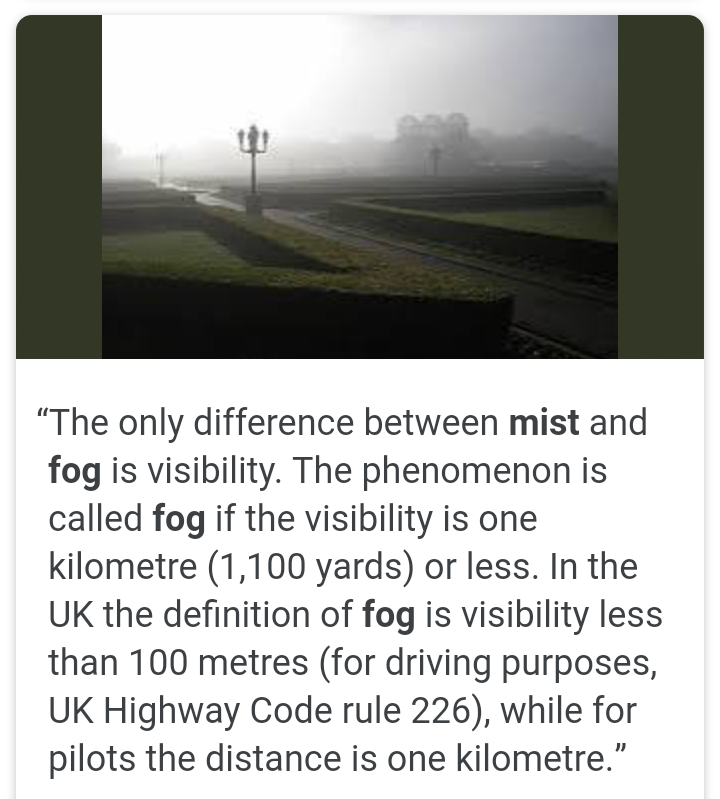
I thought the distinction between ‘fog’ and ‘mist’ would be an important one, and planned on using it in the book. Turns out it’s basically arbitrary. The distinction even gets cloudy (see what I did there) from one country to the next.

Apparently, for most of Europe it’s ‘fog’ when it impedes visibility for 1000m or less. Whereas here in the UK we don’t call it fog until one can eat it.So I went back and rewrote. My research felt fruitless but it actually saved me from writing something convoluted, hard to follow, and worst of all something that would have been nonsense.

Writing is often like that. You wait for the fog to clear. Do some research. Find out it’s just mist (at least in the UK) and get back to work.

Writers reading this, what odd facts have you discovered in your research? Did they force a change in your book?

I love getting comments so please feel free to have a blether in the comments section below. 

As always, thanks for reading, 

all the best, John 

About my new book ‘Marcus’

Please be aware that ‘Marcus’ is not aimed at younger readers.

I’ve been writing ‘properly’ for four years now. The Jack Reusen books are aimed at children of around eight years old and over. They are primarily fantasy stories, adventures in magic in which the main characters grow and develop. There’s a coming of age component to them which seems to resonate with kids. I love writing these books.

However, there are forms of magic that are too dark for Jack’s world. This year (2017) for National Novel Writing Month (otherwise known as NaNoWriMo) I decided to write a book that played with that magic. It went to a dark place. A place that isn’t appropriate for children.

What is ‘Marcus’ about?

Children are asked to grow up very quickly now. There is some truth to the idea that the teen years seem to be bleeding into the twenty-somethings, creating something called ‘twenagers’ apparently. This is something that I didn’t really see occur when I was that age (though I’m not saying this is a bad thing).

However, Children as young as eight or nine are being described as ‘pre-teen’, where the simple term ‘child’ would have sufficed in the past. The complicated description of this would tie together the odd pre-teen/twenager issue. The simple way to describe it is to say kids are growing up too fast.

Marcus is a book that looks at what happens when a child doesn’t grow up too fast. It’s a book about a boy who never grows up at all (and not in a Peter Pan, happy thoughts and fairy-dust sense).

Set in Crieff, it is a horror story about the importance of growing up. It features some of Crieff’s history along with some of my own creation (it is not intended to be completely historically accurate).

Who is Marcus?

Marcus is brilliant. Everyone at school likes him (even the teachers) but when James finds Marcus’ ‘grandad’ in an old school photo things get really strange.

The photo is odd, too similar to Marcus. Even more little things mount up. Marcus arrives late in the front office every morning. He’s always last to be picked up (even the teachers don’t remember seeing him go). Marcus doesn’t go to any after-school clubs, he doesn’t come round to anyone’s house. No one has even once bumped into him at the supermarket. Possibly strangest of all, no one has ever seen Marcus eating lunch.

There’s a lot more to Marcus than meets the eye and as James and his friends start to investigate they find that the closer they get to the truth. The more dangerous things become.

Marcus is far from what he seems but he is also not alone. Who should they trust? and what fate awaits them if they place their trust in the wrong hands?

In a room more ancient than their school or even the town of Crieff itself they find their answers. Can they escape? Will they ever see their missing friends again? What is the truth about Marcus?

(AND THAT’S JUST THE FIRST EIGHT CHAPTERS)

Please read on, I hope you enjoy the story. I’ll post a chapter every week as it’s revised and edited. If you see anything wrong or if you know some part of Crieff’s history that contradicts the events in the book please leave a comment (I’ll do what I can to fix it).

This is a work in progress, what you read here may change as time goes on but I will do everything I can to maintain the characters, setting, and overall story. I look forward to hearing from you.

All the best, John