Tag Archives: editing

Good Gracious it HAS Been a While!

Jack Reusen and the Chilren of Fate sneak peek cover 2I have been away from here for far too long. The perfect proof of this occurred to me a few weeks ago when someone who had attended one of my first-ever school talks (as a pupil) drove past me in Crieff High Street in a learner car.

Not only does that make me feel ridiculously old but it also highlights just how long I’ve been working on getting book three of the Jack Reusen series done. So I thought it was time for a very frank and honest update.

As of this afternoon, I am editing p167 of 202 of the final (post-editor, so it better be final) draft of Jack Reusen and the Children of Fate.

Karen, the illustrator has created a stunning cover for the book as well, and I’ve been in communication with the printers regarding pricing and print times for the first run (the first run of prints unfortunately always costs more and takes longer).

(Spoilers for book 2 ahead…)

This new addition to the Jack Reusen world follows Jack after he, his family, and his uncle’s cottage and garden landed in the heart of an ancient magical woodland within the world of Fey.

You’ll get to spend longer in Fey than you have in any previous Jack Reusen book. You’ll meet a strange new character who seems to be following Jack from inside his own mind. What’s more, you’ll get to learn more about Fey and how it’s connected to the Matter World. It’s a big story without being too big a read and I hope you enjoy it.

(…Book 2 Spoilers END)

There are twenty-one chapters in this new book (if you include the epilogue) and I’m currently editing chapter sixteen. I’m getting through about a chapter per day and I have some time off work so I may even get through more than that.

So, with only five chapters to go, I think it’s safe to say that I should be finished editing by the end of this week.

After literally years of plodding through drafts, I can’t believe I can say that the book will be ready in a week!
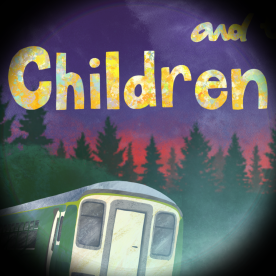
Jack Reusen and the Chilren of Fate sneak peek coverPrint turnaround can be as much as a month. However, as soon as I can get it uploaded, the book will be available digitally to read via Amazon Kindle (you can either read this on a Kindle reader or you could download the app and read it on any Android or Apple device).

I’ll obviously be back on here at each step of the process to keep people updated (especially once there are print copies available too). However, I promised myself that today’s post would be brief and to the point so that I could get back to work on the editing.

Wait What’s Happening?!

In brief:

The final draft of Jack Reusen and the Children of Fate will be done by the end of this week.

The digital edition should be available sometime next week.

And finally, at long last, the paperback edition should be available to buy in late April.

More to come…
fey-flameExtra Note: I also have plans to get an audiobook version of the first book out. This would take the form of either a podcast or an Audible audiobook, to be released sometime in the next few months. This is dependent on getting my office/ recording space in proper order so expect updates on that too.

For now, thank you so much for stopping by and please accept my apologies for the long (long long long…) wait for this next book in the series.

I hope you enjoy reading it as much as I have enjoyed writing it. It’s been a labour of love. The first version was very long. The delay has mainly come from trimming it into the reader-accessible version we now have.

I always want to create books that are as accessible to as many sorts of readers as possible, and I am really happy with the story we have now.

Thanks for stopping by, below you’ll find the mandatory self-promotional book plugs but you can skip these if you’ve already read the stories so far.

Thanks for stopping by and I’ll be much quicker to get back on here again next time,

All the best, John

***

Read my books digitally for FREE

reading reader kindle female

Photo by freestocks.org on Pexels.com

If you’d like to catch up on the first two books in the series you’ll find details on where to get these digitally (and potentially read them for free) below.

As always, you can get hold of print versions of the first two books from Fun Junction Toy stores, as well as by buying directly on this site (I’ll even sign a copy for you before it’s posted out). To buy from this site using PayPal, follow this link and click on the buttons for the books you’d like to buy.

Kindle Unlimited

All of my books are free to read for those with an Amazon Kindle Unlimited membership.

Kindle Unlimited currently offers a free trial for two months so you can see if you like their service.

After that, your membership would cost just £7.99 per month and you can cancel any time you like (including before the end of your two-month trial membership.

You said I could read your books for free?

Both of my main children’s fantasy books (The ‘Jack Reusen’ books, for 6 and up) are available on Kindle Unlimited. Here are the links for Amazon UK for ‘…Fey Flame‘ and for ‘…Spark of Dreams‘. On top of this, you can also find a short Christmas story I wrote a few years back, as well as my dark fantasy book (10-12+) ‘Marcus‘ (set in and around the old abandoned Victorian school in my home town of Crieff).

These are all available to read for free (even as part of your free trial) with Kindle Unlimited. What’s more, it’s always good to know that people are reading (and hopefully enjoying) my books.

If you’re in the USA, Kindle Unlimited has a similar free trial and you can find all of my books on my Amazon Author page.

A little more about my own books:

Once you’ve signed up to Kindle Unlimited, you’ll see that both of the Jack Reusen books come up as ‘free’, so you can read the whole adventure so far, for nothing.

Jack Reusen and The Fey Flame‘ introduces you to the land of Fey, as creatures (and other things) make their way through to the ‘matter-world’ (basically our world). Jack and his family have to discover a way of closing a collection of ‘breaches’ between the two worlds to make their world safe again.

*
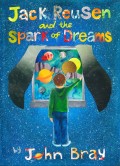
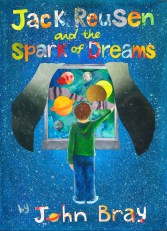
cover with blurb and barcode 2 trimmed‘Jack Reusen and the Spark of Dreams‘ is a slightly different kind of adventure. People are losing their ability to dream. Every night more and more people lose the certain something that makes human beings so good at solving problems and creating things; the spark of dreams. Jack discovers that he could be the key to understanding what’s causing this change, and he may even be the only person who can solve it and bring back the dreams and imaginations of hundreds of people.

I hope that both of the Jack Reusen books give you and/or your kids something to enjoy as you read them. Let me know what you think.

As always, thanks for stopping by my site, and I can’t wait to share even more details of my newest book,

All the best, John

5 Huge Benefits of Using Google Docs for Writers

wp-16647885873378466379242986409189

I have a feeling you might scroll past this but if you’re a writer who has trouble finding time to write then please don’t! I used to be pretty dedicated to my ‘old faithful’ word processing software too I get it, but please read on.

Like me, you’ve probably been using the same application for years. After all; it’s familiar, your previous work is all formatted that way, and you can’t be bothered learning a new thing when inspiration hits. You just want to write.

I’m not going to try and convince you to switch permanently but I want to briefly highlight how useful Google Docs can be for writers. Over the past couple of months, I’ve been able to get a surprising amount of extra work done and this is thanks, in no small part, to Google Docs.

Quick Disclaimer (By the way, I haven’t received any payment or any other benefit from Google for this post. I genuinely find it useful and thought that other writers may find it useful too)

Before I start the proper list I’d be foolish to skip one of the most obvious benefits; it’s free. I’m not going to list this as one of the ‘real’ benefits, mainly because so many other excellent word processing programs/ apps are available for free as well.

My all-time favourite free word processing program/ app is still OpenOffice. It has a layout similar to a very early Microsoft Word and also comes with the added benefit of customisable predictive text. This means that a suggested word will come up from your custom dictionary and you simply hit enter to have the word typed into the document for you (a massive time-saver and writing-speed boost).

However, recently I’ve come to realise that there are some clear and distinct features of Google docs which combine to offer a really unique and useful writing experience for me (and, I would imagine, any writer). Here’s the list:

1. Access anywhere

Munro perthshire scotland green hills mountains write anywhereI used to text myself notes whenever I was out and about and had a flash of inspiration. This was my simplest way of keeping track of my writing when I couldn’t access the actual document.

Notebooks didn’t work for me as I would always forget to bring them with me when I left the house. I have a drawer of lovely, special notebooks with attractive covers and a comfortable feel. All of which were purchased whilst out and about, only to be filled with a page or two of notes and then forgotten the next time I left the house.

Google Docs are in the cloud, I can access them using any device (including my phone) at any time. I have separate folders for different projects. Inside these folders are various documents with notes on the plot, characters, etc.

If I have an idea now, I can open the relevant document on my phone and add the note to the correct place. This saves me wasting time hunting through text messages or handwritten notes for that idea I had last Thursday or, worse still, losing ideas completely.

Losing ideas completely!? That brings me to the next brilliant feature…

2. Always saved

polar bear and cub scotland highland safariWhether your PC goes on fire, you drop your phone in the toilet, or your tablet is stolen by a rampaging bear. All your work is still safe.

When I was working on my master’s degree we were all given MacBooks by the university. They were great, (and, you know, free), so I fired it up and got on working on my thesis, saving everything I did in that one portable, easy-to-use device. Then it died…

Three months of notes, saved sources, and around a chapter of my written thesis were on that hard drive and apparently (according to the university tech guys and the Apple folk they spoke to), no force on this earth could bring them back to me.

For a month I looked for options. Then for another month, I learned a lot more about how laptops (and hard drives) work. With the help of online message boards and hints and tips from a few really nice computer experts, we managed to discover a way to hack into the hard drive and get some of my files back using a different operating system running from a USB drive.

Overall, (even with the online help) it was a nightmare to fix and it used up a significant portion of my time and energy, only for me to retrieve a fraction of what I had. I never looked at saving my work in quite the same way after that.

From that point onwards I was meticulous about saving copies of work. My work is now saved in multiple places and in multiple ways (I also vowed to myself that I would never use another Apple product, but that’s a whole different thing).

For many years I’ve saved a copy of all my books (and draft projects) in a Google Drive folder, a Dropbox folder, on my personal PC, on a backup hard drive, and on a USB stick. I also have at least one full printed copy of the first draft kicking about the house for beta reading and editing. It seems like overkill, I know it’s overkill, but I don’t care.

However, the one downside of all these copies was that, despite all the different storage locations, I could only edit the document on my home PC as the format was for OpenOffice.

Fast forward to my switch to Google Docs: I now save a copy of each book in the Google Doc format as well. It’s a little slower to load for reading but the upside is that it’s fully accessible for editing on any device (as I said above). This means that I have a safely stored copy of my current work in progress that automatically gets saved the second I make a change to it.

So long as I’m connected to the internet I can edit on the go. If I close my device my work is still saved right up to the moment I last edited it.

In fact, Google Docs even helps me with my edits:

3. Google Docs has Grammarly built-in

There’s a streamlined, free, beta-test version of Grammarly built into Google docs.

It catches basic spelling errors and also gives you hints about four key measures in your writing.

google docs grammarly colour color coded writing suggestionsIt will tell you whether what you have written would score high on correctness, clarity, engagement, and delivery. Each hint they give you is colour-coded to highlight which area will improve with the suggested change.

I haven’t yet, but you can also go ‘premium’ with Grammarly (for an additional charge). Those premium features will also be added to your Google Docs experience. This would offer you more comprehensive insights into your writing, along with deeper explanations regarding grammar and style suggestions.

As I say, I haven’t subscribed to Grammarly’s premium features. I feel that what you get is just enough to help without getting in the way of your writing.

After all, I use a real-life, human editor for my books who can help me fix much (much) more than the issues that Grammarly premium would spot.

Importantly, I also prefer to have a pair of human eyes take a look at my text (computers will always miss something) so I would be paying for an editor anyway.

4. Notes

google docs contributors adding comments to your workThere are multiple ways to utilise the ‘notes’ feature on Google docs but one of the most useful is the collaborative option.

So far I haven’t used it this way with my books but I have used it on copy with my copywriting clients multiple times. You can invite multiple users to access your document and add notes.

The editor for my books prefers to work with a paper copy. I understand her thinking, paper copies offer a distraction-free reading experience. On top of this, a paper copy allows you to write notes on top of the text itself.

However, if you were working with someone who is happy to work digitally the notes option is a fantastic real-time resource for suggesting and tracking changes to your document.

5. Compatibility

google docs text file formats available to export or downloadSpeaking of collaboration, if you need to have multiple people access your document Google Docs is a great option. You don’t need them to download software, they simply go to the document link you provide them and log into their Google account to access it.

From here anyone with an internet browser can read, comment on, or edit your document (depending on what level of access you give them).

This said, there will always be a stickler out there who prefers a particular document format. Fortunately, you can cater to them as well, as Google Docs allows you to save your work in a number of different formats.

This means that you can easily turn your text into (most) recognised document formats, as well as save your document into epub format (meaning it could be read on an e-reader such as a Kindle).

That’s pretty much it!

I’ve had great experiences so far using Google Docs for parts of my day job (the copywriting bits at least), and this year I’m starting to make use of the benefits of using it for bigger projects like my books.

Limits! (It can get a… bit… slow…)

Snail Race

‘Snail race’ by Noj Han at Flickr

There is one drawback which I’ve already hinted at. Currently, Google Docs is a bit slow and clunky with larger documents.

Once I pass around a hundred pages I definitely see a slow-down in what Google Docs can handle. However, it still works and still offers all the features I’ve mentioned above.

For the most part, I write children’s books. Most of my books are fifty thousand words or less. However, even at this, I can see some slowing. If your work is longer than this I might suggest saving your book as separate chapters and editing each one individually.

Having a newer device with a faster processor and more memory for your web browser to use will apparently help.

However, in my case, the problem seems to persist to a certain degree on all of my devices (no matter how new and/or powerful) so some of the problems are likely on Google’s end. I like to hope that any server-side issues will eventually be improved by Google as well.

As I said at the start, I don’t expect anyone to change from their favoured software. Nonetheless, I’m also all about helping make it easier to write (for myself and other writers), so I hope you give Google Docs a try. If you do, please pop back and leave a comment about your experiences.

As always, thanks for stopping by my site,

All the best, John

Getting serious about writing (wk3): Don’t scald yourself (plus book update)

We use a stovetop kettle. This is pretty rare here in the UK where most people use an electric one, but we have our reasons. Our kettle is the first stovetop kettle we’ve had and it took some getting used to.

(Kettles? What does this have to do with self-publishing/ my new book? Trust me I am going somewhere with this… However, if you just want an update on the new book, scroll down to ‘Book Update?’)

Back to kettles.

The main difference is that electric kettles rarely hold much heat once you empty them. Stove-top kettles don’t cool anywhere near as quickly. I didn’t realise this at first.

The thick cast-iron body of our kettle really holds heat. This is tricky for someone who drinks as much tea and coffee as I do. You see, I often finish a cup so quickly that I don’t make it back to my desk. When this happens I march back to the stove and refill that kettle for the next cup.

That’s where my problem started.

In my ignorance I was not aware that a hot stove-top kettle can turn tap water into instant steam; steam that rises up to meet the soft fleshy hand holding the handle directly above the opening. This isn’t enjoyable for said soft fleshy hand (or its owner). For weeks my kettle punished me for my quick return, for my overindulgence in hot beverages.

Then I found the knack; when you trickle the water in it hits the hot iron and evaporates quickly but if you blast that cold water onto the hot iron in a torrent the level rises too quickly to get heated through and magically not a plume of steam comes to eat at your fingers.

Yes John, your kettle (and you) sound pretty daft. What does this have to do with writing?

Why am I talking about steam and kettles in a post about writing and self-publishing? Well, it’s all to do with how you handle critical responses.

Prior to writing books my experience of critique primarily lay in school and higher academic settings. My work was the plastic kettle; simple, light, with no significant emotional weight. Even though my essays/ dissertations etc. were the result of hard work, in the grand scheme of things the work was only mildly important to me. You might say that it that cooled in my esteem quickly.

Criticism of an essay or a dissertation needs to be taken seriously, advice followed methodically with mental notes on how to avoid such mistakes next time. My approach to such criticism had always been to look through notes slowly, fixing mistakes with careful attention.

When I first received criticism about my books it offered an alarming contrast; not only was I still invested in what I had written, but it also had the emotional weight of being a part of me. It held its heat.

So, when I took that criticism and poured it gently over my work it burned unimaginably deeply. It stung and it made it hard to get down to the job of fixing mistakes. There were times during this ‘scalding’ process when I wasn’t sure if I was cut out for writing. Every red mark, every queried plot point, it scalded me. I wanted it to stop.

It didn’t take long for me to change my approach, to avoid being burned. However, that didn’t mean hiding from criticism. Instead, I came to realise that when it comes to more personal work, taking criticism has to be done in a big fast blast. Get in and get the job done. Puzzling over every comment will just hurt.

If you trust your beta-reader or your editor then look at their comment, fix the problem, and move on to the next point. Don’t linger long enough for it to even sting, just keep going, and eventually, you’ll find that the job is done; your book is better. What’s possibly more important is that you’re out the other end in a good state of mind. Unscalded, unscathed.

As I said in my HUGE how-to post on self-publishing last week, editing is vital. Those people involved in the improvement of your manuscript are indispensable. If you find someone who can make you a better writer hold on to them and most importantly take what they say seriously.

However, what I also should have talked about was the emotional toll that criticism can take. It can’t be denied, it can’t be avoided, but as I noted above it can be reduced. You can get used to constructive criticism and not let it drain you. It is possible to improve your book and still hold on to that desire to be a writer right up to the last page. Just do it quick, taking it slow on your manuscript will hurt.

Book update?


Last week’s step-by-step guide to self-publishing didn’t exactly leave me with much room to talk about the new book. I think I left a passing mention about reaching out to make contact with the people who make a project like this happen. However, that was pretty much all the progress update I had.

This week lets try and go into the reality of where I’m at. My beta reader is working through my draft chapter by chapter. This is great because I can launch into improvements in steps. Last night I started work on chapter 4 and I can already see the effect of an objective pair of eyes.

This book is the third in a trilogy arc but it’s also the launching point for a continuing series. This brings odd challenges with it, things I didn’t have to worry about it books one and two.

Completing the tale

Every book I write has to have an ending, a moment of emotional catharsis. To be honest, as a reader I have been known to drop a book series on book one if there isn’t something conclusive in that story. Book one doesn’t mean you can leave all the conclusions till book two or even three, the reader needs to feel as though they’ve read some form of ending.

That said, a series is made with the idea that some parts of the story will continue. You expect loose ends. I left loose ends in the first two books of my own series. Now I have to tie (some of) them up. This was not as easy as I had expected it to be. However, I think I got it. Time will tell if I’m actually right about this, as more chapters come back to me from my beta reader.

Setting a foundation

If I had just written a trilogy this would have been the end of my problems. However, ‘Jack Reusen and the Children of Fate’ is more than this; it’s also the launching site of three other books (books that I’ve already written). This gives me the odd task of creating a sense of finality and conclusion whilst leaving that all-important dot…dot…dot… at the end.

One of the key things I had to look at in order for this to work is character development. For the most part, we as readers will get the bulk of our sense of catharsis from the characters emotional/personal arc.

The main characters have to be different, affected. After all the events of the book, I need to show that they’ve changed. Where possible I’ve tried to make this a good change, but where this hasn’t been possible I’ve at least tried to show that the differences in their personalities will have positive results.

However, to lead into the next books I also have to show that my characters aren’t quite the best versions of themselves just yet. To be honest, things got a lot easier when I realised how subtle this hint could be; a passive character might become more headstrong but that doesn’t mean they’re taking a completely active role (as opposed to a reactive role) in how they deal with the world.

Just like normal people in the real world, book characters can develop and change for the better or the worse, in big or small ways. I’ve had to embrace this sense of constant change in order to be able to finish book three comfortably, while still leaving room for the next instalments.

A Change of Plans

Another important update from this week is that I’m going to have to push back my publication date a little. I’m sorry to have to do this but I want the book to be its best. I’ve been talking to various people involved in the book. Their schedules in this slightly-locked-down, slightly-not-locked-down limbo we’re in are slowly filling back up (so is mine if I’m honest) so I’m having to work with what we can all manage.

As a result, my release date is still November but now it’ll be later on (possibly the last week or so). On a positive note, this might let me combine the release of ‘Jack Reusen and the Children of Fate’ with the release of another wee side project.

It’s early days on whether this will work but if it does there might be a bonus release of something in early December (just in time for Christmas). I’ll keep the updates coming.

Get these posts right in your inbox

If you would prefer to get my posts directly to your e-mail inbox please feel free to follow this link to join the mailing list (you’ll only get e-mails from me, and trust me they won’t exactly be pinging into your inbox multiple times a day).

As always, thanks for reading,

Hope writers and readers found something useful in this week’s post, please add any questions or comments in the comments section below,

All the best, John


A second chance at a first impression (showing off the town) 

taylor park macrosty park bandstand crieff jack reusen john brayA few months ago I decided to rework ‘Jack Reusen and the Fey Flame’ with the intention of submitting it to a publisher. It’s safe to say the idea of a publisher looking at it is a little disconcerting.

I hadn’t done a full read through of ‘the Fey Flame’ for a long time. I’ve written four more books containing these characters since then and I was surprised to see how many ‘out of character’ things they do/say in the first book (at least from my perspective).

In the course of the other books the characters obviously grew and changed (how dull would a book be if the main characters learned nothing from their experiences?). However, reading the Fey Flame again has made me realise that I don’t know much about who they were before I first met them (if that makes sense). It’s been interesting getting to know this earlier version of these now very familiar characters.

I’m also discovering how hard it is to rework the Fey Flame without at least hinting about what will happen to them. I’m in a constant battle against spoilers.

Once this rewrite is complete I’ll have a shorter, snappier version of the book. (Don’t worry I’m not cutting that much, I just wanted to keep chapter length consistent etc.). I’ve also added a few wee touches here and there in places where I thought it would be nice to know more about some of the characters (Granny Reusen gets a wee mini story about her childhood).

One big change (but one that didn’t take much work to alter) is the fact that I’ve decided to be a lot clearer about the fact that everything takes place in and around Crieff. From the b….. with the W……… at the bandstand, to Jack’s first experience of Fey on Lady Mary’s walk.

All the books are inspired by the (admittedly slightly less extravagant) adventures I’ve had with my family in the town and countryside where we live. It felt only fitting that the books reflect that a little more strongly. If Harry Potter can visit Kings Cross station then it’s only fair that my characters can pop down to walk the Illohound in MacRosty Park.

It’s hugely intimidating realising that the Fey Flame will soon be in the hands of a publisher to await judgement. I’ll be sure to post once it’s been sent through and you can join me in my worries over the following months before I hear back. Wish me luck.

As always thanks for reading, all the best, John

NaNoEdit? Over a year of Jack Reusen books

birthday-candlesNo it’s not Jack Reusen’s birthday but it is just over a year since Jack Reusen and the Fey Flame went out into the world, and today marks another landmark too; it’s my birthday.

When I turned thirty I decided that before I hit forty I would write ten books and one album. If you count my philosophy book (don’t worry you don’t have to read it, but I’m thinking it counts) then to date I’m six books in, so not going too badly.

I’ve got a new job so I’ve had to give April’s ‘Camp NaNoWriMo’ (National Novel Writing Month) a miss. On top of that I still have two of those six books to edit properly, with that in mind the actual writing bit has taken a back seat.

To be honest it would be great if the folks at NaNoWriMo made an editing month as well. I’d be surprised if anyone can finish writing a book in just one month and still be able to walk away with something in final form.

Each of the books I’ve already released have had at least three edits, it’s a gruelling part of the process and it definitely would have been beneficial to be able to talk to others going through the same thing.

Maybe this post could count as a plea to the nice folks at NaNoWriMo, or simply to other writers out there who are at the same stage. It can be a bit of a lonely and thankless task at times, and it’s definitely nowhere near as satisfying as the huge rush of creativity that you find in the actual writing bit. It would be great to share this part of the process with others in the same way that people do with NaNoWriMo.

Today I won’t be thinking about editing too much, it’s my birthday so I’ll be spending some time with the family. However, I’m aware of how much I still have to do so if any other writers out there fancy going through the editing process together in May (after this round of ‘Camp NaNoWriMo’) then let me know.

Perhaps we could set up a twitter hashtag or something to tie our experiences together, maybe #nanoedit (it looks like it’s had a bit of use already). If you aren’t a twitter user feel free to post updates on the Jack Reusen Facebook page or in the comments for this post.

In the mean time feel free to pop over and see some of the things I’ve learned since I started writing here, one issue that was particularly difficult for me was simplifying plot, you can get an idea about the ways I’ve found to get around this by clicking this link.

Apologies for the silence on the blog post front over the past wee while, I’ll try and be better.

As always thanks for reading, all the best, John