Tag Archives: nanowrimo

Your fears and mine

You wake to see the shadow in the doorway. Unmoving, its silhouette breaks the illusion of safety. Your home no longer belongs to you. 

You shift position and realise the thing at the door was simply a trick of the light. The shadow of an object so mundane it makes you laugh (a jacket, a bag, something hung on the door handle).

You pull the covers back over your head and enjoy the warmth. Snuggled tight, you try to enjoy your silliness, to laugh off the fear. 

But the fear won’t go easily and the memory of that spector in your doorway plagues you. Hiding in the fringes of your vision and at the edge of your dreams. It will not be an easy night.

I’m writing a horror book and it’s given me a new found respect for R L Stine. Stine is the author of the infamous ‘Goosebumps’ series of children’s horror books (among many other titles) and he is very good at what he does.

There appears to be a tightrope to walk when writing horror for children. It wobbles between thrills and frights, and a true sense of horror. I walked the tightrope for the first eight chapters and then I fell in.

This new book is not for kids.

The difference became apparent when a main character takes in the reality of what they’ve done. That depth of responsibility, the reality of remorse somehow made things grow a lot more ‘adult’.

This made me wonder if there is a fundamental difference in what can terrify a child and an adult. We will overlap in the basic self-preservation fears, those that make us run from the monstrous (we all want to stay safe after all). However, do adults find a different kind of horror in recognising the monstrous in themselves?

Is the deep end of horror found in the place in our brain where our own monster lives? I’d love to hear what you think so please leave your own ideas in the comments section below.

As always, thanks for reading, all the best, John

Why are Jack Reusen books so short?

harry potter page 1A long long time ago (actually it was only three years back) I tried to read Harry Potter and the Philosopher’s Stone to my eldest son. It was a few weeks after his seventh birthday and he was on holiday from school. I thought that at last he was ready to sit down and enjoy one of the best children’s fantasy series ever written. He wasn’t.

Don’t get me wrong, he enjoyed it but his attention started lagging in the middle of each chapter. I tried to keep my reading as animated as possible but we still ended up stopping in the middle of some chapters. We would take a break, sometimes for a few hours, sometimes until the next day. For the most part it seemed to work. However, with each break he seemed to forget more details about the book.

At their heart Harry Potter books are mystery books in a fantasy setting. There are clues to remember and puzzles to solve throughout. Forgetting details in these sorts of books takes a lot of the oomph out of them.

I would be asked things like ‘Who’s Ron?’ ‘Why can’t Harry just do magic straight away?’ or possibly the most telling ‘Why does he live with his Aunt and Uncle?’ (asked when Harry has his first Hogwarts Christmas). It was clear he was forgetting more than he was remembering and at around chapter six or seven I could see that almost everything was going over his head.

We put Harry Potter away, to come back to when he was a bit older. All the same, the experience of trying to retain his interest lodged in my mind.

This sensation came back to me when November of 2014 rolled in. The nights grew long, and I discovered a new way to write. NaNoWriMo (national novel writing month) fell into my lap. They said something like ‘you have a book inside you waiting to get out’ and I realised that there really was.

Jack Reusen and the Fey Flame became something that I needed to write; something fantastical, exciting, relatable, and importantly, a book that could (hopefully) maintain the interest of an energetic seven-year-old like my son.

There are lots of books for seven-year-olds. Incredible, exciting, sometimes hillarious books, but I felt like I could write something a bit different. I wanted an element of the seriousness of ‘older’ fantasy books, and a slight taste of the danger and thrills that come with that.

From my own experience I realised that I could hold my son’s attention for about ten minutes, so (estimating a reading speed of about 250 words per minute) I worked out that my chapters needed to be no more than 2,500 words long.

I also wanted to make sure the story could be read all the way through in a relatively small space of time so I limited my chapter count to be sure that the whole book could be read in around a fortnight (at a rate of one or two chapters per night).

When I released the first book in the Jack Reusen series I began to hear that other families were having exactly the experience I’d hoped they would. (I was also pleasantly surprised to find out that some parents were sneakily reading ahead to see what happened next). These responses were brilliant, then, around a month after release, I heard something that changed the way I looked at the books.

At the time I worked in a local toy shop. One of our regular customers came in specifically to thank me for writing the book. I hadn’t been thanked for the book before.

It turned out that she had been trying to get her nine year old son to read chapter books for years. Nothing caught his interest. Then she gave him ‘…the Fey Flame‘ and apparently he read the whole thing in just a few nights. I was taken aback and told her how happy I was that he had enjoyed the book so much.

That boy wasn’t the last to say something similar about the Jack Reusen books. The shorter length seems to have made it easier for a lot of children to enjoy. Now that I know I’m helping kids get into reading I can’t bring myself to change the formula.

The original idea was to give families something that they could enjoy together, but a fantastic side-effect seems to be getting more reluctant readers caught up in a book. I love reading and the idea that someone might miss out on the enjoyment of it is disheartening. If writing short chapters and short books helps get a few more kids enjoying reading then I’ll write as many of these books as I can.

Thanks for reading and please feel free to share your own favourite short/quick reads in the comments below. All the best, John
Questions to make your brain whizz at Viewlands Primary School

viewlands primary school perth scotland

I was recently invited to talk about writing at Viewlands Primary School in Perth as part of their programme of activities for Book Week Scotland. I spoke to four year groups (primaries 4, 5, 6, and 7) and each year group contained two classes which added up to about sixty kids at each talk. It was taxing, enlightening, but most of all it was a lot of fun. Each age group had their own ideas and their own questions.

scottish book week free author talk

I was asked about the work involved in writing a book, the methods I use to develop a character, I was asked why I picked the fantasy genre, what my favourite books are, and hundreds of other equally interesting questions.

On top of this some of the older children were interested in the practical elements of writing; we discussed the fast-paced first-drafting I do as a result of my connection to National Novel Writing Month. This gave me a chance to describe some of the difficulties I’ve faced in the past in regards to forward planning (or the lack of it).

viewlands primary school perth scotland

I think the teachers were pleased to hear me sharing some important lessons I’ve learned about forward planning and the difficulties of redrafting rushed areas of my work that don’t contribute to the overall story (I get the feeling that planning ahead is something teachers have to remind pupils about a fair bit).

It was an exhausting and massively fulfilling experience and I’d like to thank Mr Scoogal and all of the other teachers for inviting me along on the day. I had an absolute blast and I hope the children did too.

nanowrimo national novel writing month

I wanted to post about this weeks ago but I’ve been tied up in yet another bout of National Novel Writing Month (guess I’m a glutton for punishment). NaNoWriMo is once again over (I completed my word-count of 50,000) and life is finally going back to normal.

The month was tough and some things I tried in my writing turned out to be a bit of a waste of time. One activity in November definitely wasn’t a waste of time and I’m extremely grateful to all the staff and pupils for the wee injection of energy I got right smack dab in the middle of the writers equivalent of a marathon.

Thanks for popping along to read this, feel free to scroll down to see more posts on writing, and thanks again to all the staff and pupils at Viewlands for having me along, all the best, John

Falling for the Villain

438px-Villainc.svgNot long ago I had a twitter conversation with ‘Amber Medley‘ (a fellow NaNoWriMo writer). The basic idea was how to move forward in writing (tackling the dreaded writer’s block). I suggested a technique I use where I take a character out of the book and look at what they do in different settings.

Eventually the conversation moved on to how we draw believable characters, especially villains; viz. not writing a bad guy who just goes ‘Mwahahahah!’.

The interesting point that came up was the fact that the more human your bad guy gets, the easier it is to like him/her and, as a writer, you typically don’t feel you should like your villain.

I have a confession to make. Originally the primary villain of ‘Jack Reusen and the Fey Flame‘ (the ‘Wishmaster’) was going to be the overarching bad guy for the series. The ‘Wishmaster’ was to follow Jack throughout the book series, building in malice and in his capacity for harm in natural stages until Jack would have no choice but to face up to him in a huge final showdown.

This sounds dangerously close to the story of another non-magical boy who discovers he can do magic and faces off against a deadly foe. You can imagine my relief then when, at some point in November 2014, I sat down with a cup of tea, started my writing for the night and, for the first time, was properly introduced to my ‘Wishmaster’. I had gotten him all wrong.

He was still just as dangerous, still as malicious, and cruel, but then I started to realise what had brought him there; a need to share his gifts with others and his discomfort at finding that others actually got by fine without his gifts. He had grown resentful of these people’s lack of gratitude and I suddenly understood who he was and the story he needed to need to tell me.

I still couldn’t let him take over my first book, and I still needed him to take a back seat for ‘Jack Reusen and the Spark of Dreams‘ but I made him bide his time. I knew his story now and I knew where he was going to have to go. He would remain a frightful memory for Jack and his friends for a while. After all, their story was just beginning. However, I was sure to set aside space in ‘Jack Reusen and the Children of Fate’ and, to an extent, in ‘Thea’s Quest’ (Book 4).

I grew to care for my villain and in doing so I grew to enjoy what I was writing a lot more. It gained more depth and I found it easier to connect with all of the characters (even bit players).

During my twitter conversation the other day ‘Amber Medley‘ pointed out the fact that she was worried about growing to like her villain but if I hadn’t grown to like mine I don’t know if the books would have moved forward at the pace they did. Perhaps sometimes it pays to like the villain.

NaNoEdit? Over a year of Jack Reusen books

birthday-candlesNo it’s not Jack Reusen’s birthday but it is just over a year since Jack Reusen and the Fey Flame went out into the world, and today marks another landmark too; it’s my birthday.

When I turned thirty I decided that before I hit forty I would write ten books and one album. If you count my philosophy book (don’t worry you don’t have to read it, but I’m thinking it counts) then to date I’m six books in, so not going too badly.

I’ve got a new job so I’ve had to give April’s ‘Camp NaNoWriMo’ (National Novel Writing Month) a miss. On top of that I still have two of those six books to edit properly, with that in mind the actual writing bit has taken a back seat.

To be honest it would be great if the folks at NaNoWriMo made an editing month as well. I’d be surprised if anyone can finish writing a book in just one month and still be able to walk away with something in final form.

Each of the books I’ve already released have had at least three edits, it’s a gruelling part of the process and it definitely would have been beneficial to be able to talk to others going through the same thing.

Maybe this post could count as a plea to the nice folks at NaNoWriMo, or simply to other writers out there who are at the same stage. It can be a bit of a lonely and thankless task at times, and it’s definitely nowhere near as satisfying as the huge rush of creativity that you find in the actual writing bit. It would be great to share this part of the process with others in the same way that people do with NaNoWriMo.

Today I won’t be thinking about editing too much, it’s my birthday so I’ll be spending some time with the family. However, I’m aware of how much I still have to do so if any other writers out there fancy going through the editing process together in May (after this round of ‘Camp NaNoWriMo’) then let me know.

Perhaps we could set up a twitter hashtag or something to tie our experiences together, maybe #nanoedit (it looks like it’s had a bit of use already). If you aren’t a twitter user feel free to post updates on the Jack Reusen Facebook page or in the comments for this post.

In the mean time feel free to pop over and see some of the things I’ve learned since I started writing here, one issue that was particularly difficult for me was simplifying plot, you can get an idea about the ways I’ve found to get around this by clicking this link.

Apologies for the silence on the blog post front over the past wee while, I’ll try and be better.

As always thanks for reading, all the best, John

Write all day and you will realize 5 things about yourself that you never knew

Rock_balancing_(Counter_Balance)NaNoWriMo is here again and some of you are probably tired of hearing about it. Trust me it’s tiring on the inside as well. This is my third National Novel Writing event and it marks the writing of my fifth book set in a world that started to take shape only a year ago.
In my last post I talked a about the new book and explained a little about the support that’s helped push me on to write so much in such a short space of time. To absolutely anyone who has bought Jack Reusen and the Fey Flame you have no idea how much it means to me, and for those of you who have picked up a copy of the sequel, consider yourselves responsible for the barrage of books that are about to erupt out into the world.

When you sell copies of your first book there’s always a little voice in the back of your mind that wonders if people are just being nice. When you start selling copies of the sequel it makes you wonder if maybe they really do like to read what you’ve written. Thank you for that.

Anyway, on with the five things I’ve learned through plunging myself into this surprisingly demanding eventy. Here are some things that my last two NaNoWriMos have taught me:

Resilience: When you skip a day of writing it’s easy to beat yourself up over it but this just wastes time and energy that you could use to make up for lost time the next day. The first NoNoWriMo opened up my eyes to the fact that blaming yourself for a slip is utterly pointless, it’s happened. You just need to get back at it.

Time management: This is essential for the completion of a task like NaNoWriMo. After a few slips you start to discover what caused the problem and the vast majority of the time it has a lot more to do with expecting too much of yourself in too small a time-frame. Just because you wrote 1000 words in an hour a few times don’t use that as your gauge for how long it will take you to write 1000 words. Some passages need careful thought, some need extensive research just to get a place or character name just the way you want it. This will take time, don’t short-change yourself on time. Set aside an hour and a half a day to begin with, if you struggle to meet your target word-count add more time, if you speed through with keys blazing you could save some time on editing by going back over it then and there. Be fluid in time allocation but be persistent in working.

Commitment: In the middle of November last year I started calling myself a writer and actually meaning it but I knew that I’d be talking nonsense if I couldn’t even finish my first book. It was like a promise I made every time I said ‘I’m a writer’. Builders build, bakers bake and writers write. It was suddenly that simple. If you’re writing now and want to finish what you started a good first step is to commit to the moniker, call yourself a writer and mean it.

Confidence: You start off cautious, then you get a few thousand words in and suddenly it’s time to tell the world. You write blog posts. You post updates on social media. You tell friends and family. Then you sit down and freak out because you feel like they’re all expecting more of you. To be honest they probably aren’t (this tallies up with the final thing on this list) but this doesn’t stop the fact that you’re writing, you’re really doing it. All of a sudden there’s a new part to your personality, and it feels pretty awesome.

Being humble: This one is hard, for all the celebration of being a ‘writer’ you still need to remember that despite all the hours of work you put in there’s a good chance that the passage that you wrote at 3am after a marathon 5000 word day probably isn’t your best work. When the month is over you’re going to have a lot of work to do, admit that, drop the ego, develop some humility, and make something that you can actually be proud of. At the end of the day, if you can’t admit the faults that you can see in your own work then deep down you’ll never be able to tell yourself that you’ve done your best.

I’ve mainly written this post with fellow NaNoWriMo participants in mind and I hope it helps a bit. As you go through this month you’ll need to dig deep and what you find there will surprise you, but trust me it is utterly, unequivocally worth it.

As always thanks for reading, please feel free to ask questions or pop down a comment in the comments section below. All the best, John

Staying on target

wpid-training_dummy_500.jpgToday I passed 12,000 words of ‘Thea’s Quest’. Chapter six is done and I’m close enough to my word-count target to feel fairly comfortable. It was a hard slog today (wrote almost 4,000 words) but I really feel like it was worth it.

It’s a lot of fun experimenting with what Thea will do in different situations, it’s telling me so much more about who she really is and what the tone of the other books in her series will have.

As I said in my previous post, I won’t have much time for blog posting during all the other writing madness this month but when things go right it’s nice to share. Hope you’re all well, and as always thanks for reading (and for stopping by). All the best, John

Thea’s Quest

11703059_507851296031556_3727381389049552295_nYep, the beginning of Thea’s story is already taking shape. The fifth book set in the world of Fey now has five (very rough) chapters and it’s surprisingly different from Jack’s books. This month also marks the one year anniversary of the very beginning of Jack’s (and Thea’s) adventures. I still can’t believe how quickly this year has flown by and I’m really thankful for the reception the books have had so far.
Thea is such a different character to write about. I now have a character that instantly understands all of the basic things about Fey, she’s a lot less surprised by magical creatures and events than Jack was and I’m really enjoying the fact that I can just let odd things happen and then drive the story forward. It was always fun to share Jack’s awe as a new world unfolded around him but there’s something really liberating about just taking that magic for granted now.

The new book series will be released more slowly than the first as I now realise just how demanding it is to do all of the additional stuff required of a book. First there’s editing, then there’s talking about the books (because otherwise how would people hear about them), and alongside all of this I need to go over cover designs etc. with Karen but to be honest the bulk of the work there is on Karen (she knows her stuff so well, I barely need to go into any detail with her, she just gets it).

Talking about the books is definitely the most fun of the two ‘non-writing’ jobs associated with writing, I’ve been for school visits, held an in-store book launch, joined in with an authors event to do a book talk at the Crieff arts festival, not to mention a steady stream of communication with readers through this blog and the social media profiles I set up for the books over on facebook and twitter.

The big bad EDITING job is never a thrill and it’s this that has prompted me to spread out my book releases a little. I’d rather be able to spend more time chatting about the books and doing a wee bit of editing each week than be locked to the computer almost every day desperately trying to catch up with editing. At least for the foreseeable future I think we’ll be on about two book releases a year. I just don’t think I’ll be able to do four in one year again for a while.

Speaking of editing the next two books are on their way but it is taking a while. Though it’s less work this time through (I’m definitely learning from my mistakes), it’s still work. I’m going to try and get Jack Reusen and the Children of Fate’ away to the printers in the next couple of weeks (should be printed by the start of December) and ‘Jack Reusen and the Christmas Fox’ should arrive a week or so later (it’s a Christmas story so definitely want to get a rush on that).

In the mean time I can share a wee bit about Thea’s Quest (though it probably won’t be out until next summer). In Thea’s first book we find that the polar-bear girl has discovered some pretty impressive powers (even more impressive than turning into a polar bear). She is struggling to understand them though and she’s having an even harder time learning to control them. Her quest will take her to parts of Fey she’s only ever heard of in stories and her journey will teach her a lot about herself and her friends. Where the Jack Reusen books introduced us to a strange other world, Thea’s books will take us on a voyage steeped in ancient magic and even older stories.

I’m really enjoying the research for these books, I started looking ahead to some of the places Thea might visit earlier this year, I even posted a few sample pictures on the Jack Reusen facebook page. I desperately want to get the third and fourth books out before Christmas so I probably won’t be blogging a whole lot over the next few weeks. Every spare minute I have this November is going to be spent on books. Hope it all works out, wish me luck. As always, thanks for reading, all the best, John

Neil Gaiman

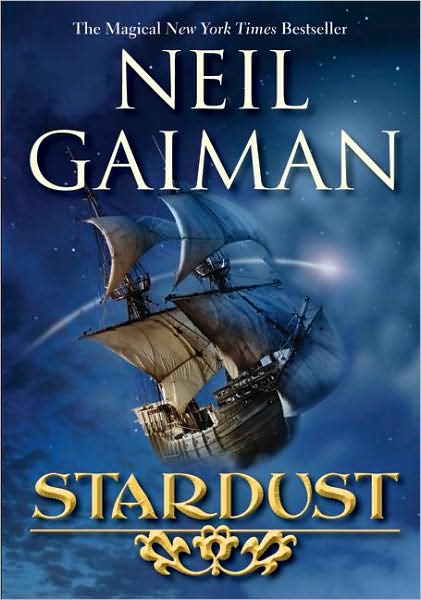
stardustDuring my wade through a world of words I somehow managed to finish Neil Gaiman’s book ‘Stardust’. To be honest I’m surprised that it took me this long to pick it up, it’s a fantasy book about a town that lies right beside an opening into the land of the fairies. Familiar as this sounds it’s miles away from my own books in plot, themes, characters, and most of all tone.

It’s a book that’s definitely not for kids and as fun as it was for me to read, at times it could be quite jarring to go from reading Gaiman’s work and then delving into writing the wold of Jack and Thea. Sure there’s magic, other worlds, odd creatures, etc. but ‘Stardust’ was so much more adult that I had to be careful to remember to tone down the themes in ‘Jack Reusen and the Children of Fate’.

I normally make a rule of not reading while I’m writing so that I don’t get caught up writing in somebody else’s style but I was half way through ‘Stardust’ when NaNoWriMo started and I found that I needed some type of diversion whilst writing this time. I think I managed to keep the books separate in my mind probably first and foremost because of the main theme of each. Where ‘Stardust’ is a stand-alone adventure into a slightly Victorian take on the fantasy genre, ‘Jack Reusen and the Children of Fate’ is a modern disaster novel set in a fantasy setting.

I feel like I’ve had a chance to play with some of my favorite movie genres whilst writing the Jack Reusen books. ‘The Fey Flame‘ is a world building book with a big villain but beyond that I’ve had a chance to play around with some other ideas. ‘Spark of Dreams‘ was my take on the zombie genre (but toned down a lot to cater for children of seven or eight years old and up). Next, in ‘Children of Fate’ we get an ‘end of the world’ themed story (don’t worry, everything is kind of alright in the end), after that we have what I’m thinking of as book three and a half, it’s a Christmas/Yule story and for now that’s all I’ll say about it.

Book four is all Thea’s, in many ways (and yes I know this sounds totally nuts) she seems to be helping me write it but overall it will be a quest, one that takes her through many of the other nations to be found in Fey, it’s a strange place and it’s becoming a huge pile of fun to research.

Anyway back to Stardust, if you’re a fantasy reader like myself I imagine you’ll get a kick out of Stardust. The one unusual aspect I noticed about it was just how rigidly Gaiman sticks to the ‘show don’t tell’ rule for writers. Basically we’re supposed to explain the worlds we create using the characters reactions and by highlighting that world using carefully described action sequences.

Ordinarily writers do a good job of this but in fantasy the rules are often relaxed. It’s not easy to build a world in the first chapter or two of a book without having to occasionally allow the narrator to explain what’s going on. J. R. R. Tolkien basically writes a history of Middle Earth in the first few chapters of ‘The Fellowship of The Ring’. It helps you get to know where you are but it’s not the easiest thing to get through.

To be fair to Tolkien he was writing his books at a time when the modern fantasy genre was in its infancy (Tolkien being it’s godfather after all). A lot of modern fantasy harkens back to Tolkien so in a way he was doing a lot of world building for all of us. That said we don’t all deal in elves, orks, dwarves etc. and even if they did there’s still a sizable chunk of the population who still wouldn’t know what these races are. As a result many modern fantasy writers still have to explain the people of their worlds and describe what they can do.

Gaiman doesn’t really do that, you simply see the characters do what they do and it’s up to you to gauge what they are capable of and to establish what power level they have. Sometimes when two characters meet for the first time it can be surprising to realise that you may have misjudged just what that character is. ‘Stardust’ is a fantasy book but if you’re expecting a big expository element in the first chapter or two you’ll be waiting a while, the story just starts and it’s up to you to keep up. It’s an unusual yet refreshing experience for a fantasy reader and I definitely recommend it (I should also point out again one more time: ‘STARDUST’ IS NOT FOR KIDS).

a-burden_cover_smlAnyway, thanks for reading, and feel free to add suggested reads in the comments below (I’m editing now so the ‘no reading’ rule has been officially dropped). Next up for me is Hiraeth: a Burden (the second book in the Hiraeth trilogy), again not for kids but definitely worth a read, it ‘s a modern-day fantasy set in Wales, Ireland, England, (and a wee bit of Scotland too), and focuses on an underground (not literally) group of Druids who hide their true nature by means of working for the lifeboats service.

Let us know if you’ve come across any particularly good reads, after all the nights are fair drawing in (I don’t really remember having a summer) and nothing completes a chilly night-in better than a good book. All the best, John

Well that was intense!

Camp-Winner-2015-Twitter-ProfileLast night I wrote a bundle of words, they were all in an arrangement that I liked and for people who read English they will hopefully make sense. However, probably the most important thing about those words (at least for the time being) is that one of them happened to be the 50,000th word I wrote last month!

Once again I’m a NaNoWriMo winner and now I have a third Jack Reusen book, a Jack Reusen Christmas special, and there’s even a first chapter or so drafted for the first book in Thea’s trillogy (though I was so tired by that point that I’m fairly certain I nodded off pressing keys so I’m not sure what that’s going to look liiiii8iuijjjjiiujujuijke).

Once again National Novel Writing Month was an even mixture of a total blast and ‘that thing that makes me feel like my brain is about to melt out of my eyes’. What’s more I’m now going to be fairly confused if someone tells me they like my new book. I may accuse them of hacking my laptop to get at one of these new early drafts.

I now know what happens to Jack and co. next, and after that, and even a little after that, so expect some mini spoilers and short stories set after Spark of Dreams to be appearing on here in the coming weeks.

Speaking of short stories, I’m also running a competition in conjunction with Fun Junction in the run up to the Crieff Arts Festival. If you know of any children who would like to create a character (either pictures, descriptions, or both) that has a chance of appearing in a Jack Reusen short story then keep an eye out on here for more details. The easiest way to stay informed is to either ‘like’ the Jack Reusen facebook page or follow the Jack Reusen account on Twitter.

Today I am alarmingly tired but happy. I hope the new instalments are a fun read when I get them out into the world. ‘Jack Reusen and the Children of Fate’ should be ready in October. Thanks as always for reading, all the best, John