 “Editing? I’ll just do my own”, “Cover Design? I can draw, or I could just use a photograph”, “Marketing/PR? I don’t need ads or the press, I’ll just tell people about it myself.”
Any of this sound familiar? If you’re new to self-publishing you may be making the same mistake I did; assuming that we’re supposed to take the ‘self’ part literally.
This week I have been contacting all of the extended members of the team that help get my books out into the world. With a launch date in November, I need to get my book looking right as soon as possible. The resources I can now draw from are a stark contrast from what I had during the launch of my first book and working on this week’s blog post has brought a lot of that first experience back into focus.
This post has accidentally become gargantuan and covers almost a step-by-step guide to self-publishing. If you would like to cover the bullet points simply read the bold text in each section to get the gist.
For that first year or so of writing/self-publishing I imagined that I could somehow be the Jack of all trades; carry an entire business on my shoulders. Depending on where you are in the publishing process you may have already experienced the same (or at least a similar) delusion.
‘Delusion’, really?
The term ‘Delusion’ might come across as harsh but it’s a tough mindset to escape and it can force a writer to take on so many roles that they barely get to be a ‘writer’ any more. I’ll explain where my delusion took root by describing where I was about six years ago.
Back then I looked at self-publishing as a collection of smaller jobs which interlaced to make up the job of ‘self-published writer’. It’s a fairly large list, and I know I’m leaving out a lot but the following snapshot should be sufficient.
 I imagined that the following eight ‘jobs’ were the cornerstones of self-publishing. In this respect I probably wasn’t far off the mark but, for whatever reason, I (mistakenly) convinced myself that, somehow, I was uniquely qualified to perform each of these tasks myself.
If you’re new to self-publishing these are probably the main areas which could spread your energy too thin to get on with any of the actual writing parts of the job.
Editing
For many writers (myself included) editing can be one of the least enjoyable components of the writing process. Whether you’re self-publishing or have a book signed to a traditional publisher, you will have to polish it before it hits the shelves. However, there is editing and there is editing.
First read-through
 In my first year, I reworked my text, I read through my first draft and cleaned up problems. I also tightened up sloppy sentences and cut paragraph lengths. I did what I thought was editing, then I got my text in order, formatted it for A5 and submitted it to a printer.
I also launched it as an e-book for Kindle (a process which took minimal work to learn and which I will definitely post about at a later point).
I was happy, I had a book out, people were buying it, reading it, and saying positive things about it. However, I forgot that when asking someone in person for an honest review it’s pretty unlikely that they’ll tell you the full truth of how they felt.
It was only when closer acquaintances started to point out issues that I realised the book wasn’t 100% there. It wasn’t even 50%. That’s when I moved on to add the next step in my editing process.
An objective pair of eyes
 Find yourself someone close to you who isn’t afraid about hurting your feelings (you perhaps just had someone pop up in your mind, good, yes, that’s them). This person, if they are willing, could well be an indispensable part of your writing process.
Butter them up in whatever way you can think of, then ask them if they would mind looking at that manuscript which up till now you thought was perfect. You know, the one that you read through three times, fixing ‘every mistake’.
If they say yes, and if you get that frank feedback, then you’re in for a surprise. That ‘finished’ book is far from it. Every confusing plotline, every unlikeable character (whom you simply regard as ‘misunderstood’), every annoyingly repetitive technique you use without noticing; it will all be laid bare and handed to you in pages marked with notes.
This may sound like a nightmare scenario but I can assure you that without this angel with a red pen, your writing will never become what it could be. You can revise and revise a text up to the 10th iteration but without those objective eyes, you will never spot the real problems.
There is one caveat to add here. This individual may not be a ‘professional’. By this, I simply mean that they may not necessarily be accustomed to working with text and honing it into something better.
Your objective helper (what I call my ‘Beta-reader’) may only be able to help you with your more obvious problems, and if they’re helping for free then that’s as much as you can hope for. To really polish that story up into a truly finished piece you will need to get hold of someone with industry experience.
Calling in ‘The Professional’
 This next step costs money. I took this step once I had already sold a number of books as it was the only way to justify the expense. However, it’s a cost that’s easy to justify and if you already have a kitty of cash set aside for your budding business then this is an area where you’ll need to dip into that.
The term ‘professional’ can mean a lot of different things. It is also potentially strongly linked to your chosen genre. E.g. if you write historical fiction, true crime, or any other genre which relies on truth in the world then I would suggest having someone with knowledge in that field look at your manuscript.
I primarily write fantasy fiction for children, so what I needed was someone accustomed to concise writing, which carries a lot of information in a short space of time. Thankfully, I managed to find a local journalist that fit the bill perfectly.
From my own experience, professional criticism can be less sweeping and more specific. Often my notes highlight places where meaning is blurred, where I need to be more concise, and where I need to disentangle complicated strands of plot.
There are two areas in the making of my books where I have spent what I would call ‘real money’ and both are truly vital. Professional editing sharpens everything up, it gets your writing into a much better place and it can also help you feel less of that ‘imposter syndrome’ that new writers often battle.
(I actually wrote a post a while back about imposter syndrome, it’s a tough situation and if you’d like to know how I’ve come to deal with it, pop over here for a look: “One simple tip for a first time writer (and three that may only work for me)“)
Book design (and Formatting)
Cover design
 I say there are two areas where I spent ‘real’ money on my books and this is the second. Initially, I made my own cover for my first book. There are probably still something like sixty or so copies out there in the world. However, it was far from eye-catching and though it looked exactly like I expected it to, it didn’t really convey much about the story inside.
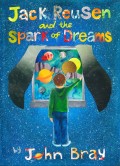
When it came time to release the second Jack Reusen book, ‘Jack Reusen and the Spark of Dreams‘ (the one with ‘zombies’ in it), I realised I needed help if I was going to get it to look the way I wanted.
Not only did my cover illustrator Karen MacAllister get exactly what I wanted, she also added a huge amount of energy and brightness to the design which worked in a way I hadn’t imagined. My second book looked brilliant, considerably better than the first. A good cover is basically an on-shelf advert for your book. Karen’s cover meant that my second book was almost outselling what was supposed to be the first book in the series.
From there I asked for Karen’s help again and I wasn’t disappointed. The new cover which Karen made for “Jack Reusen and the Fey Flame” (book 1) is probably my favourite so far.
This week I got in touch with Karen regarding the cover for book three, I’m keeping my fingers crossed that she can spare some time to make something equally amazing again.
Formatting
This is one area in which I did have experience. At the time of starting my first book, I had just finished a research masters degree (basically a lot of writing) and I had also been a Philosophy tutor (which meant a lot of essays to mark, and places to spot mistakes).
On top of this, my part-time job involved running web activity for a toy shop, which included blogging, product upload on web-stores, and some of it involved the formatting of text for print.
I have worked with a host of different editing software, back-end text editors on web sites, and a bunch of other things. This was one time-consuming area where I didn’t necessarily have to hire a professional.
Don’t get me wrong though, this is still something that takes a lot of time and it’s an area I would be all too happy to outsource once I can justify the cost. I currently format my books for both the print and digital editions (using free software by Calibre) but I wouldn’t mind handing that particular task over.
That said, formatting is a hard thing to get right; if you don’t have experience in this field I highly recommend that you get someone to sort this for you. Learning the necessary skills could set you back weeks, months, or even years, depending on your level of experience.
It’s a service often offered by printing companies so you won’t have to go far to find someone who can help. Which brings us to…
Printing
 You may choose to skip this step if you intend to only offer digital copies of your book but even releasing digitally has its hurdles (see above).
The key thing with printing is to decide a few things before going into it: How much of the process you want them to handle? How many copies are you willing to store once they’re printed? Do you want the option to ‘drop-ship’ small batches of books to retail establishments/ schools?
The printer you use won’t be able to work miracles. You’ll need to know what you want from them (e.g. what you want your book to look like, how much you’re willing to pay) before you click ‘send’ on your book files.
How much involvement?
There is a difference between a simple print operation and what used to be called ‘vanity press’. Vanity press offers a host of services, these can be invaluable if you lack the skills/ contacts for things like formatting, editing, illustration, and even PR and advertising.
However, PLEASE PLEASE PLEASE be careful, small scale publishers (/’vanity publishers’ like these cost a lot more and, because of this, there’s a lot of money to be made which can attract less principled imitators.
I know of at least one author who spent thousands with a ‘publisher’ only to be left with an attic brimming with books whilst questioning whether they even still owned the rights to their own book any more.
It’s easy to make a mistake when using a ‘vanity publisher’ and the only advice I can give is to talk to other authors (there are a lot of us over on Twitter who are more than happy to talk to new authors about our own experiences).
The simple life
I avoided small press/ ‘vanity publishing’ myself. I personally think it can be a phenomenally useful tool but I was happy to make the arrangements and work through the management of my book myself. For this reason, I went directly to a printer.
 I currently use Book Printing UK and have absolutely no complaints. It took me a while to adjust to how long the process actually takes but that was my hurdle to get over (prepare for your first run to take as much as a month due to the proof approval process, but subsequent reprints can be as little as a week or two depending on volume).
If you decide to go this route you’ll need to keep the following things in mind.
The right price
A printer will take your finished files and print them into as many copies as you need. Your price per book should factor into your choice here. I’ll break my own process down (I was a book buyer for a shop for a little under 10 years so I’m coming at this from both angles).
First look at books in your genre. Look at the mass-market and premium prices and try to figure out where your book lies on that scale. Price as objectively as you can and don’t charge more than what you see on the shelf unless you have a clear reason to do so.
Typically a retailer will expect 30% of the cover price. Though the expectation can be a higher discount than this if they aren’t sure how it well will sell.
As I say, I used to be a book-buyer so I’ll vouch that I used to ask for as much discount from the supplier as we could get. Take your projected cover price and subtract 30% (at least).
Next, come any foreseeable overheads. Here’s one example; I agreed to give a percentage of the cover price to my illustrator, this means that I need to set this aside on every book I print. Subtract this value from what is left of your cover price and keep this figure in mind.
Now it’s time to look at printing costs. Get a few quotes (some printers offer an immediate quoted price, whilst others may take a day or so). Look at areas where you’re happy to make a sacrifice or two (e.g. would black and white internal images be sufficient/suitable for your book? They cost a lot less that colour pages after all.).
Take your quoted price, subtract it from the previous value and there’s your profit per book. If that looks good to you, if you think you can work with that, then you’re ready to self publish. If you don’t think you can make money at your cover price once you count in all the costs involved, then you may need to reassess your book and look at ways of shaving back your costs.
Page count can be the biggest factor in setting your print cost so it might be worth looking at a deeper edit as your first target. Stephen King in his book ‘On Writing’ suggests a 20% cut of word count for a decent edit. For some, this can be hard to picture but if cost and earnings are an issue it could be time to look at something like a 20% drop in pages (so long as the story stays safe).
Once you’re ready to print at a price that leaves you making a reasonable amount then it’s time to look at getting your book out there.
Press/ Media/ Advertising
 This is an area which is growing more familiar to me but one which I’ll confess is probably the one that I find trickiest out of the bunch.
The world is a noisy place now when it comes to information about new creative media. There’s a new digital boxset to watch every week, Podcasts aplenty, more YouTube videos than you could watch in a lifetime, and that’s before you get to media in text form. There’s a lot of competition for the eyes and ears of consumers.
Then there’s the capacity for books to get in front of a user. Every book by traditional publishers seems to come with a fanfare which could bring a lowly self-published author to tears.
Your key here is not to let this get to you, to step to one side of this feeling of overwhelming competition and realise that there are people for you to engage with. I write for children and so, for the most part, I try to engage with my target readers.
I offer free school talks in schools and find it really rewarding to engage with current and potential readers of my books (it also helps me see what it is that they enjoy about my books too).
On top of this, I’ve recently set up a creative writing programme closely linked to the Scottish primary school curriculum.
The aim of this is to make life a little easier for the teachers who have been so supportive and helpful in letting me visit their classes. Each part of this programme will show teachers what has been covered that week and help them check off the curriculum targets which their pupils will have covered.
There’s a pretty solid chance that your target market also has a space where you can interact with them. Some of this interaction may take time to establish but it is worth it. The bonus of this extra time with your demographic is that you’ll learn more about them too, finding out what they like to read will help you consider good angles for your next project.
Once you find your niche you can make sure that time and money spent on advertising and the press is going to good use. You probably won’t be able to directly track your returns on this particular investment but I can assure you that without a niche those returns will be close to zero. The world is a noisy place now, the least you can do is make sure your message is getting to the right ears.
Author engagement (book talks/ signings etc.)
 Author engagement is really a follow-on from what I described in the previous section. This is hard to balance, you want to promote your book but you also have to remember that your audience doesn’t want to hear book plugs all the time.
Try and find something that could help your target market in some way. I offer schools creative writing assistance for pupils. Other ways you could help potential readers is by suggesting books that you enjoy yourself. This could be in the form of a blog, a video blog, or even a reading group (if you have the time to pup into these).
Second to writing, author engagement is likely to be the biggest draw on your time. Be good to your target readers and they’ll be good to you.
Also, if you make a commitment with your target audience you’ll need to stick to it. You don’t want to be the writer who lets down their readers, so make sure you don’t bite off more than you can chew.
Distribution
Distribution often doesn’t factor in during the planning stages of your publishing process but it’s the true bread and butter of your self-publishing business. Some of the most important relationships you’ll develop on your self-publishing journey will be between yourself and the people who sell your books.
The first hurdle you will have to jump in this journey will be in the form of setting up these contacts. Before you even contact a potential stockist, there are some basics you should consider which will greatly increase your chance of being stocked by them.
The basics
What bookshops want
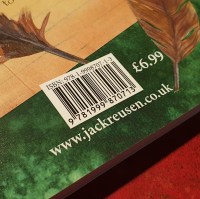 A book buyer needs to track a few things, make their job as easy as possible. First and foremost get a barcode. Your printer will likely be able to generate a barcode for you and set you an ISBN number too. This is a one-time expense (and well worth the money) but it can become a little expensive if you have more than a couple of books in your sights.
You can actually buy your own ISBN numbers in bulk (here in the UK you’ll get that from Neilsen), it greatly reduces the cost per book with the added advantage that your books will have codes sit close together. When distributors/retailers are cataloguing your book(s) this will mean that they are all visible in order.
This is the key thing about a functional barcode; most book retailers use ePOS systems (basically a stock-managed till system) so that they can keep track of stock in real-time.
When they scan your book at the till their database will update to show that the shop now has one less copy in stock. When this number hits one or zero their system may be set up to tell them it’s time to order more copies.
Without a barcode, your book could be forgotten and that reorder notice may never happen. They might sell five copies of your book in the first month but not realise that they need more for six months (if ever). This could have lost you thirty book sales (or more), so get a barcode!
Being present
 You could double down on ensuring that your books are visible to readers with another simple, and important, step; regular communication.
Be as professional and as accomodating as you can be with bookshops or larger distributors and set up a regular check-in where appropriate. This could be as simple as an e-mail or phone call once a month. Don’t go straight to the point by asking if they need more books, instead ask how business is and get a feel of what’s been going on there. This helps you stay on their radar and it can give you opportunities to do more with your books.
During these conversations you might spot places where you could help their business in some way; you might offer to help promote your books with them (e.g. guest author signings), author events can be a great way for an independent book shop to look interesting and energised.
However, there are other ways in which you could help too, from social media support to guest blogs on their website. You could even help them manage a monthly reading group (virtual or in-person).
With the knowledge that you are there to support their business, you’ll become a fixture in the way they think about their books. Being at the forefront of someone’s thoughts can be a really good way of increasing in-store recommendations to readers. Once you look invested you’ll look less pitchy when you ask if they need a few more copies.
Calls like this (and the involvement that comes with it) can be time-consuming for both you and your retailer(s) so don’t do this every week. Once a month would be adequate but I’d suggest that the results would be much the same with a call every six weeks or even once every couple of months.
The simple message is to look after your retailers and they’ll look after you.
Sales
 Sales are out of your control (mostly) but you can influence your numbers in direct relation to the energy you put in with your target readers and your retailers/ distributors. You’re likely to see a spike in sales in your first month or so after launch but with decent, regular engagement you may be lucky enough to keep those numbers high and maintain reasonable sales.
If you want regular sales you’ll need to set aside time for regular engagement. You can’t outsource this, there’s no authenticity to having a social media professional pose as you on twitter or write blogs for you. This is real, and your earnings will remain ongoing only so long as you maintain contact with your readers.
This is doubly true for digital sales. According to a post from Just Publishing Advice if you have a book available on Kindle then your book is one of a crowd of anywhere between six and possibly eight million ebooks.
All of these are lumped in by genre, there are no real ‘special mentions’ unless you count top sellers, free ebooks, or sponsored listings (and that’s whole other thing). Your listing on Amazon is unlikely to be seen unless you actively promote it. Again this leads to the need for you to engage with target readers in a regular and authentic way.
Don’t plug your book on Twitter every twenty minutes like clockwork and then wonder why you start losing followers. No-one wants to be pitched a book every time they log in.
Keep your plugs light (but make sure you do plug your book at least occasionally) and fill your feed with relevant, interesting content that your target readers might enjoy. If they feel engaged they’re much more likely to click that amazon listing link and see what your book is like.
Writing
This final job is really the main job in self-publishing a book. This is where you first put your energy and it’s likely the part of the process you enjoy the most (otherwise why decide to be a writer at all?).
With this in mind, it’s absolutely vital that you hold your writing time as precious. Wherever possible, try to limit the time you spend on the other parts of the job. You’re not a failure in self-publishing if you use professionals to help, just look out for potential con-men and fraudsters.
Some professional services might be unreasonably costly for you at present but keep them on the horizon, they will help your book be the best it can be.
Sorry for the gigantic post!
I had no idea how long this post would become when I set out to write it. Initially, it was just supposed to be a check-in on week two of the self-publishing journey for my new book. However, it grew arms and legs and most of my Sunday was spent reigning it in.
I’m pretty sure I just accidentally wrote a step-by-step guide to self-publishing so, that was nice. If you find it useful print it out and stick it on a wall, steal the headings and mark them as a checklist of things to do before getting your book out there.
Mostly please leave a comment if you have found this useful. I’ve never written a blog post this long and I’m hoping it was time well spent, it would be great if you let me know it helped.
Thanks for taking the time to read this far and if you would like a weekly update on the self-publishing journal please join my mailing list by clicking this link (no spam, just me),
All the best, John


 This week’s writing activity is pretty simple, but it should prove useful for those moments when a story simply isn’t coming to you. There are classroom sheets to go along with this activity. You can click here for a direct link to the Canva presentation, or download a PowerPoint version here.
 The activity sheets for this writing activity are pretty simple, and are designed with the expectation that there will be additional jotter or digital writing as well. A black and white version is available here, a colour one is available here, or you can get access to a Canva project edition (that you can edit) here.
 You can play the accompanying podcast episode alongside the classroom presentation. I’ll call out the next section so you know when to change slides. (In future episodes, I’ll try to be more direct about this with something like ‘turn to the next slide’ after each section).
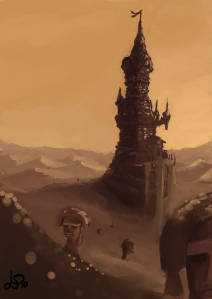 In this chapter, I played with the idea of setting. First, we look at how familiar places can become uncomfortable when we notice things that we don’t remember seeing before. Then, we look at what it feels like to feel lost, truly lost, and what our reactions to this feeling can tell us about ourselves.
 OK, now you know a lot about this new place, so let’s take a look around and see if there’s anyone there.
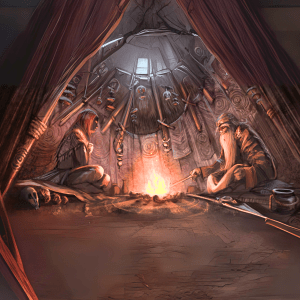 Now ask your character a few questions. What are their interests? What are their skills? What are their main fears? What would they like to be doing this time tomorrow?
 You now have two out of the three basic parts of a story; the last one is called ‘plot’.
 As the weeks go on, we’ll start reading one or two of your stories on the podcast each week.
 I have been away from here for far too long. The perfect proof of this occurred to me a few weeks ago when someone who had attended one of my first-ever school talks (as a pupil) drove past me in Crieff High Street in a learner car.
 Print turnaround can be as much as a month. However, as soon as I can get it uploaded, the book will be available digitally to read via Amazon Kindle (you can either read this on a Kindle reader or you could download the app and read it on any Android or Apple device).
 Extra Note: I also have plans to get an audiobook version of the first book out. This would take the form of either a podcast or an Audible audiobook, to be released sometime in the next few months. This is dependent on getting my office/ recording space in proper order so expect updates on that too.