Tag Archives: School

Story Ideas: Places

For the past few weeks, I’ve been adding a podcast to my range of content. This post is directly linked to this week’s episode titled “Story Ideas: Places”, where we look at a quick and easy way to jump-start your creative juices.

By the end of the activity, you should have a full story written up, and we’re also encouraging pupils to submit their stories to be read on the podcast (details on how to do that will be available below). With this in mind, I hope you enjoy this writing activity and read to the bottom to find details on how to submit your story to be read on the podcast.

Writing Activity Resources

Teachers

This week’s writing activity is pretty simple, but it should prove useful for those moments when a story simply isn’t coming to you. There are classroom sheets to go along with this activity. You can click here for a direct link to the Canva presentation, or download a PowerPoint version here.

Pupils/ Students
The activity sheets for this writing activity are pretty simple, and are designed with the expectation that there will be additional jotter or digital writing as well. A black and white version is available here, a colour one is available here, or you can get access to a Canva project edition (that you can edit) here.

Play along podcast episode (if you prefer)

You can play the accompanying podcast episode alongside the classroom presentation. I’ll call out the next section so you know when to change slides. (In future episodes, I’ll try to be more direct about this with something like ‘turn to the next slide’ after each section).

You can also pause at the end of the prompt on each slide to leave time for writing. All in, this will probably add up to about a 1-hour classroom activity. You’ll find the Spotify version of the podcast below, and links to it on other podcast platforms in this linktree.

On With the Activity (From here on out, this will match the content of the podcast)

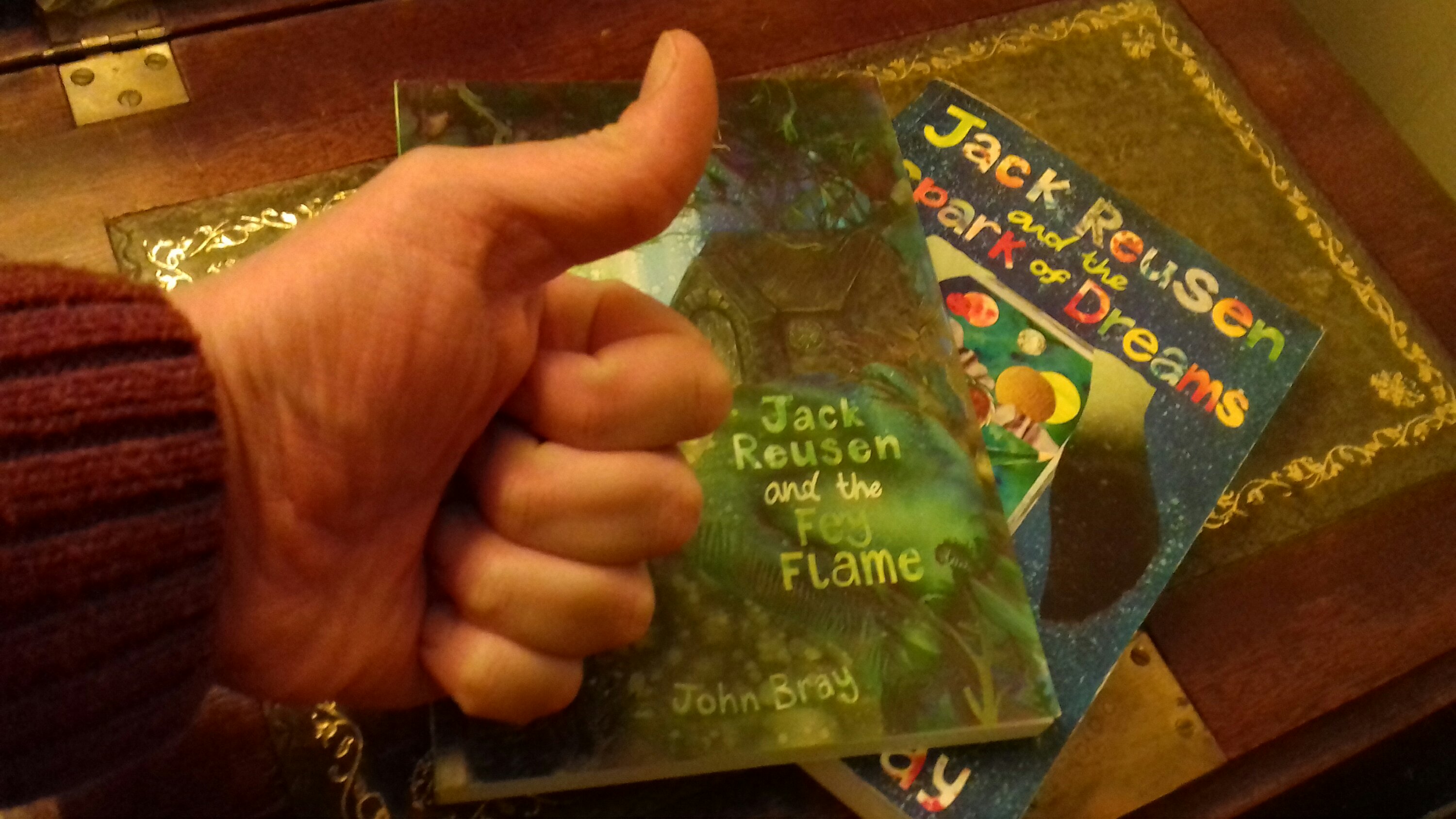
Today, we’ll be looking at a writing exercise that focuses on setting and place in your storytelling. With this in mind, I thought I’d try something a bit different and begin the episode by reading the first chapter of my first book, “Jack Reusen and the Fey Flame”.
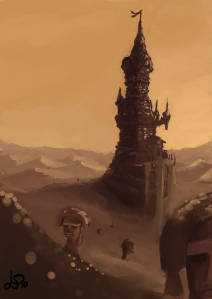
In this chapter, I played with the idea of setting. First, we look at how familiar places can become uncomfortable when we notice things that we don’t remember seeing before. Then, we look at what it feels like to feel lost, truly lost, and what our reactions to this feeling can tell us about ourselves.

You’ll see the meaning of the setting change a few times in this chapter. I hope you enjoy listening to the sample chapter, but whilst you listen, keep an eye (or ear) out for any times where the setting is moving the story forward.

(You’ll get the full chapter reading in the podcast episode. If you’d like to read the rest of the story with your class, you can also pick up a Kindle copy by following the links at the bottom of the page for purchasing, or reading for free through Kindle Unlimited, on Kindle in your country.)

The Writing Challenge

You’ll have seen a lot of focus on setting in the little excerpt I’ve just read, and now it’s your turn to experiment with a story setting.

You’ll have a full story by the end of this activity, but the direction we take may be a little different from the way you normally set up a story and I hope you enjoy it.

Story Ideas: Places

Being creative is a really useful skill in life (not just for storytelling) so learning tricks and techniques to get your creative side working is never a bad thing.

Today, we’re going to look at a quick technique that I use. It should help switch on that creative part of your brain and prepare you to create a fantastic story.

We’ll start with place as it’s sometimes neglected a little in storytelling. Starting with the place can sometimes launch you into a new story in unexpected ways.

Part 1: Somewhere different

Think of where you’re writing right now. Is there a place that could be the most opposite you could possibly imagine? Somewhere absolutely nothing like where you are sitting at this moment?

What is that place like?

What’s the weather like there?

Is it a safe place, or is it somewhere perilous?

If you were to sit down and write in this new place, what would you be writing with?

Would it be a scroll of paper with a feather quill and a bottle of ink, or would you be writing on a futuristic tablet with an AI that talks to you as though they’re the cleverest being in the galaxy?

Part 2: A stranger

OK, now you know a lot about this new place, so let’s take a look around and see if there’s anyone there.

Who are they? Are they a human/ an animal/ an alien/ or something else?

What are they doing?

What mood are they in?

You now should have a setting and your main character. This isn’t everything you need for a story, but it’s a good start.

Part 3: Getting to know people
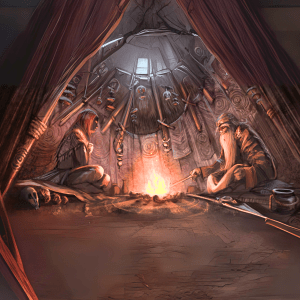
Now ask your character a few questions. What are their interests? What are their skills? What are their main fears? What would they like to be doing this time tomorrow?

Take your time with your character. Ask weird questions, but even ‘boring’ questions can give you ideas for your story. What might your character eat for breakfast? Where do they sleep? You might be surprised at the direction their story takes.

Part 4: Go and write

You now have two out of the three basic parts of a story; the last one is called ‘plot’.

What will happen to your character next?

Will something surprising happen to them?

What will they do as a result?

Will they be happy in the end?

Write your story in a digital format, or in your best handwriting, or draw some amazing pictures to make up a ‘comic book’.

When you feel your story has reached a natural end, please be sure to share your stories on the Celebrating Stories portal.

As the weeks go on, we’ll start reading one or two of your stories on the podcast each week.

You’ll find links to share your story on the classroom slideshow, which you can download over on the website. Alternatively, you’ll find a link to it in the episode notes for this podcast episode.

Your story could be the next one we read on the podcast!

Go here for the Google Form to submit your story (click this link). You can share handwritten stories, digital text versions, or even pictures.

Thanks for popping by

As always, thanks for tuning in to listen to this week’s episode of Lit Up With Green Flame, and for coming here to read the more extended version on the website. If you haven’t already, please don’t forget to subscribe on your favourite podcast platform.

We’re on Spotify, Apple Podcasts, Audible, Amazon Music, YouTube Podcasts, and many more. Just go to your favourite podcast app and search for ‘Lit Up With Green Flame’ (click here for the linktree that lists how to find us on your favourite podcast platform, just click on ‘Lit Up With Green Flame Books Podcast’ button to find the link). Subscribing is free, and you’ll be sure to catch the newest episode as soon as it’s live.

I hope you pop back next week when we’ll be looking at the strange world, and wild life of Roald Dahl (since it’ll be his Birthday in just a couple of weeks, he would have been 109 years old this year on the 13th September).

Also, if you’d like another writing activity to try, you could look at the one we did on Magical Realism a few weeks ago. You’ll find a link to that here.

Thanks again for listening in, and I hope you don’t mind the slightly longer episode this week.

All the best, John

Green Flame Books: The Power of Reading Week long discussion

Is reading for 20 minutes a day the ‘magic ticket’?

Reading for 20 minutes a day is often linked to better academic results, but what’s the science behind it?

Is there more to the story than test scores? And how big a deal is book ownership when it comes to childhood literacy?

This week’s Green Flame Books discussion dives into the power of reading and why access to books really matters. We’ll start tonight with a focus on “What Reading can do for you”: a post about the power of reading and why it’s not all about test scores.

You can also watch this post as a vlog on YouTube or watch or listen to it on the podcast on Spotify, listen here or click through to watch/listen on your app of choice:

Scroll down for a quick overview of the other topics we’ll explore together this week. Then join the chat on the blog and Instagram to share your thoughts.

Never Miss a Moment

Love a topic below? Tap the button to add ‘Green Flame Books: Literacy Discussions’ to your calendar.

You’ll get gentle reminders all week so you can join the conversation when it suits you best.

Click here to add the Green Flame Books calendar

Mon, 28 July

📖 Blog: Is 20 minutes the magic number?
Do test scores tell the full story about reading?

Tue, 29 July

📸 Instagram: Who Gets to Own a Book?
Let’s talk about book access—past and present.

Instagram posts page

Wed, 30 July

📸 Instagram: Book-rich or Book-poor?
Can digital books close the literacy gap?

Instagram posts page

📖 Blog: 1 in 5 UK kids don’t own a book
Could buying a book change a life?
📸 Instagram: Reading Lets You Share Worlds…
Which stories built your closest bonds?

Instagram posts page

Thu, 31 July

📸 Instagram: What Stories Do You Carry?
What tale from childhood has stayed with you?

Instagram posts page

Fri, 1st August

📸 Instagram: Which Story Opened Your Eyes?
What book helped you understand others?

Instagram posts page

📝 Instagram Prompt: Write about someone who loves what you hate
Can a character change your mind?

Instagram posts page

Sat, 2nd August

📖 Blog: Reading Fiction is Reading Minds
How shared stories build empathy in writers.

Sun, 3rd Aug

📸 Instagram: Why Do We Want Kids to Write?
What motivates young writers today?

Instagram posts page

To add the calendar to your own and join the discussion

Join the Green Flame Books Literacy Discussions Calendar

Alternative link to download an ical file if the one above link isn’t working

Getting Serious about Writing (wk4): Why should someone care about your book? (Building trust and community)

Photo by Pixabay on Pexels.com

This week I have been looking ahead at book visibility. This particular aspect of self-publishing is pretty wide-ranging; it can be complex, it can be hard work, but it can also be fun.

Obvious parts of the process (at least in modern terms) are things like social media strategy, a blog timetable, and traditional PR (newspapers etc.).

However, looking at it from this angle first is pretty much cart-before-the-horse stuff. There’s an objective (and sadly a little pessimistic) position you need to consider first:

Why should anyone care about your book?

At least in the first instance, your book is likely to gain local/ niche attention, and that’s when things are going well. However, even that attention will only come if the press can make a story out of what you’re doing.

The headline ‘Local Author Self-Publishes Book’ isn’t exactly going to turn heads. However, ‘Local Author Uncovers Town’s Secret Past’ is much more likely to catch the eye of a local newspaper’s readership.

(Image: StrathearnSnapshots) from Strathearn Herald 30th Aug 2018

I’m on my third draft at the moment, following Beta-reader comments and fixing and amending as I go. It’s safe to say that if I don’t know what my book is about by now then I never will. With this in mind, now is a pretty good time to start working on the elevator pitch for the book. I’ll have to figure out how I’ll summarise this book to potential readers but I should also be ready to explain it to people with influence, like reporters, head-teachers, and class teachers.

Your own book may not be for kids so where you see ‘teacher’ insert someone else who might be in a position to tell someone about your book.

The content of your book may not be enough by itself to turn the heads of these influencers so be prepared to do some extra work at this stage. Is there something you could do to make a story out of the publication of your book? Is there a real-world story about what you’ve gone through to get it out there, or even a story about how this particular book might be relevant to a contemporary news topic?

It has taken me years to realise that neglecting this step is truly foolish; the real issue is that there are a lot of new books coming out this year, there will be even more by this time next year and as a writer, you need to have some means of highlighting what makes your book different. In a traditional publishing situation, a lot of this work would be done for you, you could even be lucky enough to have a real-world and blogosphere book tour set up and coordinated for you.

Laying the Groundwork

Photo by Karolina Grabowska on Pexels.com

In self-publishing, you are responsible for your own PR and the seeds you sow in the minds of potential readers (and in those of influencers) will decide whether your book sells. To navigate the next year or so you’ll need answers to a few key questions:

  • Who is this book for?
  • Why should they care about it?
  • Can you help your target market in some way (not specifically tied to your book)?

Also:

  • Who are the main people that your target market will listen to?
  • Why should they care about your book?
  • Can you help these influencers in some way (not specifically tied to your book)?

Putting a plan together

With answers to the above questions in hand, you should hopefully be in a position to create a genuine and authentic connection with them without sounding like your going on a hard sell for your book. I can certainly confirm the fact that you will receive considerable benefits over and above book sales if you develop a true connection with your audience.

This component of the book strategy can make some authors feel a little uncomfortable. Can we feel an honest connection if that connection comes as part of an ‘organised strategy’?

Photo by Suzy Hazelwood on Pexels.com

It can help to think of this element of your book release as being less like a business plan and more like planning a social event like a party.

Where the focus of a party might be a person’s birthday, your strategy here is to highlight and celebrate a book. You don’t bring business into it at a birthday party and you don’t (have to) bring business into it when organising a book launch.

Instead focus on building a community, a list of ‘guests’ who you would like to celebrate with. One difference between a book launch and a birthday party is that you may not have met some of these people prior to the organising of the launch. The chronology of this doesn’t have to detract from the real connections you form though.

A beautifully organised book launch shouldn’t leave you with that sense of unease over whether you’re on a hard sell. If you are careful about the process then you, your readers, and your influencers will be connected in ways that go far beyond your book by the time it lands on shelves.

What does that look like?

I can’t speak to how every developed network will look once it’s established but I can give you a little insight into my own.


I write for children, in many ways children aren’t the ones who actually purchase the books. They may choose it but typically there are parents/ guardians who approve of a choice and either buy the book or give them the money to make their purchase.

It’s also typically the case that children will often hear about new books through their school. As a result of all of this, it’s a long-established part of writing children’s literature that school visits and workshops are part of your job.

With this in mind, you have to remember how subtle your connection with your audience will be. Most of the time you will meet your readers through their teachers or at some other event organised by parents and other responsible adults. Personally, I feel this is as it should be. I have two children myself and I find it reassuring to know that my kids encounter books that have been vetted a little by a responsible adult.

Things change in your teens and you may choose to read books in a way that breaks away from this format, this is also something I approve of. My own experiences in reading were enriched by the safety net in place in my early education and the releasing of that network in my teens.

Introducing yourself

This ‘network’ of people who supervise what children read are understandably wary of new books, and this goes doubly for self-published authors. Let’s face it, the fact that you have printed your book yourself means that it hasn’t been vetted in the same way that it would through a traditional publisher. There’s a slight hint of added risk involved in considering a book like that for children.

Photo by cottonbro on Pexels.com

A self-published children’s author has to take extra steps to ensure that they are accessible, accountable, and easy to understand. Just as you needed an elevator pitch for your book, you will also need to get one ready for yourself. Who are you? What are your views on things? Are your books likely to come with an agenda? What subject matter is dealt with in your books?

An additional element that I’ve come to notice is that teachers, in particular, tend to also look at the educational nature of your interactions with their pupils. Does your talk cover any topics/ outcomes that they need to cover in that term? Can they use your visit to add extra energy into their segway into a core topic within the curriculum? Will your visit offer an aspirational benefit?

Whether you’re witing for children, teens, or adults the question of who you are will jump right to the forefront when you choose to take the self-published route. You’re a little riskier, a publisher isn’t standing behind you with their hard-won credibility so you’ll need to win that credibility yourself. Keep this in mind.

Serve your Community

Photo by Belle Co on Pexels.com

The questions above will be present in your potential readers’ minds whether they ask you explicitly or not. Try and be as upfront and honest as you can be in how you deal with them. Your niche is there waiting for you, be as true to yourself and your book as you can be, that way your community can grow from a place of trust and authenticity.

When you’re self-published it’s not so much a sales pitch as it is a case of developing the trust that you (and your book) may lack by not having that publisher’s logo behind you. There are some brilliant things about being self-published but this part may feel like one of the negatives. However, it can be one of the most positive things if you do it right.

Be helpful to your community not because you want them to buy your book but because you identify with them and enjoy hearing what they have to say. If your book really is good enough they’ll let each other know and your sales will go up.

If your book isn’t as good as it can be you can at least hope that some members of that community will let you know what went wrong. They may even offer to be Beta readers for your next project. Be as open to them as you can be and your writing career will benefit in its own time.

A Weekly Dose of Self-Publishing Advice?

I’m publishing a new post about the self-publishing process every Monday. Each post is different and focusses on what I’ve been up to that week. Each post uses that week’s activity to look in-depth at a topic that’s important to the overall self-publishing process. (You can find all of my ‘Getting Serious About Writing’ posts by clicking this link)

Eventually, you’ll follow me through final edits, formatting, printing, and digital publishing, along with the other essential aspects of self-publishing (like this week’s topic of community growth and reaching your audience).

If you want to make sure you don’t miss a post you can subscribe to receive each post on Monday by e-mail, simply click this link to subscribe to my mailing list via Mailchimp.

I’m the only person using that account so you’ll only receive what I can type (so don’t worry, you won’t be getting ten e-mails a day).

As always, thanks so much for reading, please feel free to add a comment/ question here or over on Twitter (you can find me at @Johntoyshopguy).

All the best, John

free creative writing course for kids celebrating stories literacy scottish curriculum for excellence

FREE Curriculum for Excellence literacy classroom resources

Very soon I’ll be launching a new ten-week series of classroom resources for teachers called ‘Celebrating Stories’. It’s based around the Scottish Curriculum for Excellence but many of the learning opportunities and outcomes will be relevant within other curricula as well.

Our focus?

Photo by Pixabay on Pexels.com

The primary focus will be on literacy (as you would imagine, coming from an author). However, over the course of the ten weeks, pupils will also encounter challenges and opportunities to learn within other spheres as well; including maths, community engagement, art, and some components of design and technology. (You can find a full list of curriculum areas covered by downloading this document: Celebrating Stories Curriculum for Excellence Experiences and Outcomes for planning learning, teaching and assessment)

Your class will be taken through something like a miniature course in creative writing/ self-publishing. The class will choose the nature of the end result but the aim is that it will take the form of a class-published set of work which can be utilised to raise funds for the school.

Given the duration and level of work involved each week, this is an ambitious project for a class. Completing the set activities could take 2-3 hours of class work per week (or more) depending on your pupils’ level of interest.

I don’t want to be too specific about weekly time at this point as the programme is still untested. However, your class’ participation will decide how much things progress on their chosen project.

What do teachers get?

I will contribute both a teacher’s guide and relevant pupil printouts each week via email but the work will primarily be in the hands of pupils (with support and guidance from their teacher).

The course offers pupils the chance to develop teamwork and leadership skills, along with encouraging creative output, critical analysis, and developing their young enterprise capacities.

PLEASE NOTE: I can offer virtual and/or in-person support for schools (e.g. help with editing or formatting) but this isn’t a standard part of the ‘Celebrating Stories’ programme. I’m more than happy to help where I can but additional arrangments will need to be made if more involvement is needed (please contact me for details).

Will this work alongside normal classroom activities?

Photo by Lum3n on Pexels.com

All activities are checked against concrete outcomes within the Scottish Curriculum for Excellence so that the project doesn’t detract from their ongoing educational goals. (A list of key areas covered will be included in your welcome e-mail.)

Core activities are all aimed at level two outcomes, primarily within the Literacy component of the Scottish Curriculum for Excellence. Additional components, drawing on other skills, have also been checked against the relevant level two outcomes in the curriculum.

I should note that Celebrating Stories has no affiliation with Education Scotland, However, measures have been taken to ensure that this course will fit within normal classroom activities for pupils working in level two (p6/7).

What does ‘level two’ mean, who is this for?

This programme will primarily be of interest to teachers of p6 and p7 pupils in Scotland. (That’s around 10-12 years old, for those who are unfamiliar with the Scottish system for year-groups).

It has been designed for a single class (of around 30) but could also be used as a year-group project with minimal changes.

COST DISCLAIMER:

I should note here that there is no cost for joining the programme. No funds will be requested  (nor expected) on the part of Green Flame Books in relation to the e-mail based version of ‘Celebrating Stories’.

However, you may choose to pursue certain formats of media that (outside of the programme) will cost money (e.g. printing costs if you choose to hire a local printing company to print a booklet for you).

Though this may initially cost the school funds, the young enterprise component of ‘Celebrating Stories’ is aimed at helping pupils consider ways in which they might recoup any costs which arise from their activities. A whole section of the course looks at how pupils can use this as an opertunity to raise money for their school.

Any and all funds you raise are purely for your school.

Want to get in early?

If you would like to be one of the first to use this resource (or if you would just like to keep up with what I’m working on for/ with educators) you can subscribe to my teachers’ mailing list by following this link.

If you have any questions please post them in the comments below or as a reply to the welcome e-mail you receive from me.

Hope to hear from you soon,

All the best, John

Getting serious about writing (wk1): The long strange trip

Five years ago I was in full swing in my writing:

For starters, despite having only been a ‘proper writer’ for a couple of years at that point I had two books out on shelves and people were actually buying them too (and telling me they liked them, which was even better). I was even visiting schools to tell kids about my books and talk to them about writing.

On top of all this, I also had this website running with regular blog posts telling everyone about all of these new writer experiences. I had even managed to persuade myself to keep up a regular (guilt-free) batch of ‘writing time’ each week.

It was a good time.

So anyway, as I say apparently five years have passed (five very good years mind you) and I actually had no idea it was that long. That was until an old post popped up on my Facebook feed to remind me; a post from a time when I had entered a state of something like ‘writing bliss’. A time when I was announcing to readers that the newest Jack Reusen book was on its way. (I was also writing in a ‘gypsy caravan’; one of the most unique writing locations I’ve ever been in see the picture above too).

Two books were good but three made a trilogy, it started a series! I was on chapter 12 of the latest Jack Reusen book; ‘Jack Reusen and the Children of Fate’ and nothing seemed to be in my way. Unfortunately, I didn’t know it at the time but finishing ‘…the Children of Fate’ was to become one of the biggest challenges I was going to face as a writer.

Five years later, and that book still isn’t on shelves. The story was there, the characters reached a dramatic conclusion to their three-book arc, everything I needed was there. So what went wrong?…

Fixing my mistakes (Some notes for other writers)

This post is part of an ongoing series about self-publishing. Over the next few weeks, I aim to highlight some of the mistakes I’ve made as a writer and also explain some of the techniques I’ve discovered which help minimise the risk of mistakes like these happening again.

First off, I should say that I didn’t simply hit the ‘pause button’ on my writing five years ago. In the intervening years, I’ve released a new book (a standalone dark fantasy call ‘Marcus’), helped a classroom of kids write their own novel, and written three more books set in the Jack Reusen universe (all currently, unfortunately, still in draft form).

In fact, it was whilst writing these new stories; skipping ahead in time and seeing where my characters were going, that I came to see what wasn’t right about my original version of ‘Jack Reusen and the Children of Fate’.

Problem number one (Direction):

I didn’t see it at the time but I had lost all objectivity. The truth was that my story lacked direction. I ‘sort of’ knew where my main characters were going but my third book was the writing equivalent of standing in the doorway of a house, wanting to leave but stuck in a state indecision; ‘to the park, or hunt for Nessie, to the zoo, or rob a bank ?’. It was a stalemate of options, something that I can imagine is a fairly common problem in fiction writing.

To compound things I had gone into book three knowing that I had more books planned. Because of this I originally left everything in book three up in the air. I wanted to leave myself with lots of options for book four and beyond. The story was up in the air on purpose, I told myself that it was meant to be like that, but a single read was enough for my beta reader to bring the whole thing crashing to the ground. With slightly more objective eyes I looked again at my story and realised it simply wasn’t working.

I tried to fix it, with editing and writing, and more editing, and more writing. On my second draft I chopped out whole sections, then in my third I added whole new chapters. I wrote so much that the story grew arms and legs and became a monster.

Then, for a long time, I locked that monster in a desktop folder and pretended it wasn’t there.

Problem number two (Denial):

My second problem was one which I suspect many self-published authors suffer from. I didn’t want to accept that there was a problem. I told myself ‘It’s not that bad’. At one particularly unhinged point, I even considered simply launching book three as a ‘Beta version’ on Kindle.

I thought that I could release book three in a rough format and fix problems as people pointed them out. The biggest issue with this is that it just isn’t very nice to use your readership as your editors. If they enjoy your books they should get to see them at their best, not simply at a level you tentatively regard as ‘good enough’.

In the end, I realised that I simply needed to break away from the text and write some other things. Time and (narrative) distance came to show me that book three (as it stood) was far from ‘good enough’ but it also gave me more experience and offered new writing skills that would help me when I returned to the book.

Not only did I come to see that my book wasn’t right but I also came to recognise how important it was to get it right. However, as I developed my writing and worked on new projects, more time passed, so much that I now had three sequels written to a book that still wasn’t ready to go out. I had now invested years of writing in this project.

It was time to make that time mean something, I probably left book three for longer than I needed to, the dread of how difficult my job was to be looming over me.

That time had been essential in helping me become more objective, to step back, and to accept the fact that this book needed some significant work. However, if I wasn’t careful I could have left that little file waiting forever.

Problem number three (Time):

3am watch on stone floorI noticed these issues more than a year ago. Almost four years had passed since I had written the last sentence of that first draft and I knew that was far too long for a third book in what was now a five/six-book series.

At some point last year I tried to cask my anxiety aside and took a look at the dreaded manuscript.

I had learned more about writing by then, I was more relaxed about making big changes when the story called for it. In short, I was more able to deal with problems in my writing.

During that new look at book three, it was clear that I could do better (I already knew that), but for the first time in a long time, I realised that the book wasn’t unsalvagable. It could be fixed. It could become better than ‘good enough’ but getting it there would take work.

Unfortunately, that work was going to take time and with two kids, a part-time job, my own business, and marketing activities for my already published books, I didn’t exactly have an abundance of time.

My weekly routine marched on; work to do, meals to cook, clothes to wash, kids to drop off and pick up from school. Step by step ‘Jack Reusen and the Children of Fate’ dropped in priority. It bothered me on a number of levels but hardest of all was during book talks when I would talk about characters who were (at least in my own mind) already years past the stages they were in my first two books.

I wanted to tell readers what happened next to these characters but I couldn’t because book three wasn’t out. It wasn’t real yet.

Book three hovered in my periphery for a very long time. I wanted to tell the story but I never had the time to fix it and get it out.

Then came lockdown…and for better or worse, everything changed.

New Habits

I have time now. Even during the eased lockdown process here in Scotland, there are still a few extra hours each week for me to work on my books, and that’s exactly what I’ve been doing. I’ve been working for weeks on it.

At first, it was just a bit of polishing, then it was some textual decorating, then a big word clear-out. Then I tore a couple of chapters out to make room for the real story. The endless strands of what was a meandering story were either dropped or woven into the main tale. Characters went through arcs.

I started to understand what this book was really about all along; How it tied together with what came before and how it really could launch what I have set up for after. It’s been a long strange road from that gypsy caravan five years ago but tonight I am about to sit down and complete my edit of the last chapter of ‘Jack Reusen and the Children of Fate.’

‘Jack Reusen and the Children of Fate’ is ready (really ready). At last.

More steps before we reach the finish line

However, that’s not the end of the story when getting a book onto the shelves. There’s a long way to go.

I’m now on proofreader stage, next comes the editor, then a final tidy up for print formatting etc. and we’re off to the printer. (By the way, this sounds quick but it could still be November before all of these stages are complete).

Every week I will fill readers in on what a self-published author does in getting their book from this raw (sort of complete) stage to something real, well-formatted, looking good, and most importantly sitting on shop shelves.

I’ll have lots of tips to share as we go on but this first one should fill you in on how you can motivate yourself to get your project up and running.

All it took for this to happen after five years of indecision and denial was a tiny bit of extra time and a slightly better approach in how I use that time.

My new magic tool

One of the most useful things I’ve done during lockdown was to set myself a clear list of activities to work on in small increments. Key to this change has been a greater emphasis on time-management (so that I don’t let myself brush off necessary work again).

One of the most beneficial tools I found was a new time-management service. The service is called ‘ClickUp‘ (by the way this is an affiliate link so I do get ‘ClickUp credit’ if someone signs up for a free trial, I don’t want to seem disingenuous).

ClickUp is compatible with my PC and my phone so I can now easily track what I need to be doing on a day-to-day basis pretty easily. It comes in tiers so you can actually use a free account for life if you only want the basics.

However, you don’t have to use something like ClickUp; you could simply work on a spreadsheet, or even write it by hand on a bulletin board, whatever works for you. The key change is to look at what you want the end of your project to look like then frame your work in relation to that goal (working back).

In my case, I started with my end goal for this book (paperback copies out in time for Scottish Book Week in November) and worked my way backwards through the essential stages which get a book into print. I broke down each job and looked at when it would need to be complete for this to work. Then I broke down my own work into much more manageable sections, each coming up as small, specific, tasks with deadlines and reminders.

Book three is back on. It will finally be making its way to shelves, and it is a huge weight off my shoulders.

Follow the whole book publishing process!

I’m going to add an update on this site every Monday as I move towards publication. These posts will offer a detailed step-by-step guide which should show how a book moves through its various incarnations before it lands on shelves.

I’ll do what I can to help readers (and fellow writers) follow this book’s progress; from writer’s draft, through all the tidying work of proofreading and editing. We’ll look at the cover design process, marketing plans, and even the formatting that’s needed for the printers. I’m going to do what I can to make sure you can see exactly what’s involved in self-publishing.

If you’re interested in following this process please feel free to join my mailing list (you’ll only get emails from me, and you won’t get spammed with 100 emails in one day because I just can’t write that quickly). It’s easy to sign up, simply click this link and fill in your name and e-mail address.

Please feel free to ask any questions you like in the comments below and I’ll be back next Monday with more updates,

As always thanks for reading,

All the best, John

Help young people find an outlet

This is a different sort of post today. I recently launched a new website for children and young adults called ‘Celebrating Stories‘.

The idea behind the site is fairly simple. I thought about the fact that a lot of us (adults) are using creative outlets to deal with the odd mix of alert, isolation, and simple stir-craziness that we’re all going through at the moment.

I thought it might be nice if children and young adults had access to a venue where they could share their own stories (fiction/ non-fiction/ jokes/ poetry/ any other forms of expression).

‘Celebrating Stories’ is a place for children and young adults to be creative and share their own take on the world with others. They’ll also be able to comment on each others’ stories, offer encouragement, chat about their stories, and tell them about their own.

How do kids get their story on ‘Celebrating Stories’?

Each writer will have to become a member of Celebrating Stories. This is a free process and doesn’t take a lot of time.

To join simply click this link and join the ‘Celebrating Stories’ mailing list (it’s totally free, there will never be a charge for membership). N.B. Make sure to use the email address of the person who will be using the ‘Celebrating Stories’ membership.

Login details will then be sent out and they’ll be writing stories in no time.

I hope this resource helps children to engage with each other and be creative. It can’t hurt for them to have an outlet during these strange times as well.

Thanks for reading,

All the best, John

Behind you!…

An eerie whistle sounds behind you.
There’s no one there.
He’s hiding now. Hiding in your phone, in your tablet, your Kindle Reader…
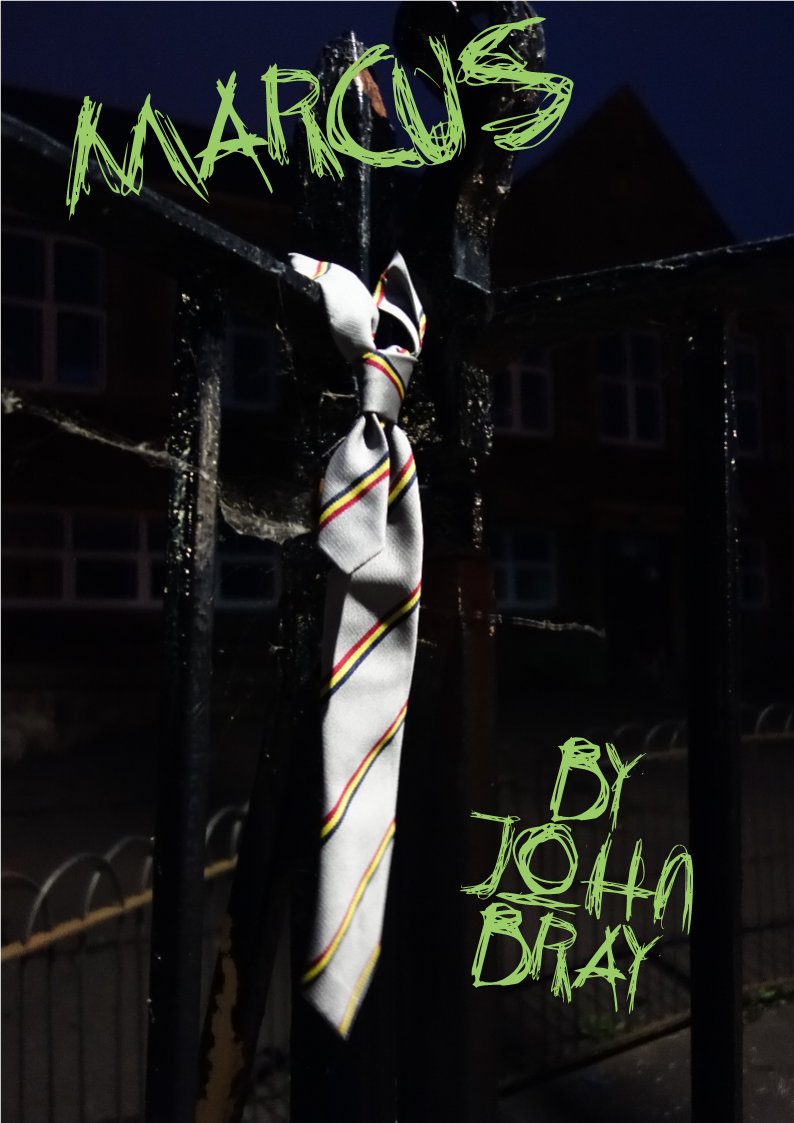
Yep, ‘Marcus’ (my dark fantasy/horror novel for readers aged ten and up) is now on Kindle reader and the Kindle app for Android and Apple. Pop over for a look now, click this link to find ‘Marcus’ on Amazon.co.uk.

Why did I wait so long to launch the Kindle edition?

Some readers may know (many may not) but ‘Marcus’ actually came out in paperback well over a year ago. I had a proper book launch and everything.

Prior to that, a less polished edition was made available here on my website on a chapter by chapter basis (you can still read the whole thing if you like, just follow this link to chapter one of ‘Marcus’). It was my attempt to replicate the old newspaper serials which worked so well for Dickens, Robert Louis Stevenson, H. G. Wells, and Arthur Conan Doyle.

All of my other books up till that point had been available in print and on Kindle but, on this occasion, I held off. I’m not sure why; possibly because I enjoy the face-to-face nature of paperback book sales. Either in communicating with a retailer or in signing a paperback copy, there seems to be something more ‘human’ to the whole business of paperback books.

However, this face-to-face contact isn’t a safe option in the current climate and I’ve come to realise that without a digital copy I won’t be able to engage with readers at all.

Please have a read and tell me what you think

Whether you read the serialised copy here or the Kindle edition of ‘Marcus’ I would really love to know what you think. Being cut off from your audience isn’t an easy thing and it would be great to hear from anyone who reads any of my books.

If a dark fantasy/horror doesn’t sound right for you, then feel free to have a browse of my Author page over on Amazon. It would be great to chat to any readers at the moment. You can find me on Facebook and over on Twitter.

Hope all is good with you,

As always, thanks for reading,

All the best, John


Friends Of Old St Michael’s Children’s Book Day

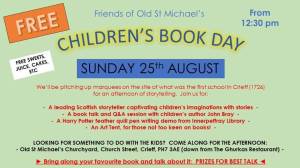
This Sunday (25th August, at 12:30) there’s a great children’s books event along at Old St Michael’s Church Yard in Crieff. Positioned right on the site of Crieff’s first ever school.

Somewhere to enjoy a last wee taste of summer

The old school building has been gone for a while but it’s nice to be in touch with a bit of the town’s history; standing where it once stood.

As it looks now it’s a bright, open, grassy spot under a bit of tree cover. It’s a space that a lot of people in the town don’t know about but thanks to the work of the ‘Friends of Old St Michael’s’ it’s looking lovely and fully equipped for all sorts of events (and don’t worry there is cover if we get a spot of rain, they have a marquee set up ready).

Something fun to make back to school a little easier

The whole of Sunday’s event is family-friendly and there’s loads to do while you’re there. Learn to write with a real quill (like Harry Potter!) with Library of Innerpeffray, or listen to a story from an expert Storyteller. You can also travel through time with artefacts from Perthshire’s past from medieval times and the Victorian era.

Along with this you can participate in various art activities and enter a book review competition by sharing a review of your favourite story (with some GREAT PRIZES FOR THE BEST TALK).

And Little Old Me!?

So why am I telling you all of this? Self promotion obviously. I’ll be there as well, talking about the Jack Reusen books and about story-craft (and there might be a free book or two as well).

As you might know from previous posts, I offer bookwriting workshops in schools and I always love to hear what sorts of stories kids have locked up in their heads. I won’t be running a workshop on Sunday but hopefully we’ll get kids excited about writing their own stories, told from their own unique perspective on the world.

If you want to be kept up to date about the event (and you’re on Facebook) you can either mark yourself down as ‘interested’ or ‘going’ on the Facebook event page. That way you’ll be notified of any changes or other updates (plus it helps me feel good to know we’ve got a good crowd along 😉 ). It’s always good to support these sorts of events when they apear in town, hope to see you along on Sunday.

All the best,

John

Horror at Ruthvenfield Primary School!

ruthvenfield primary school book writing workshop ruthvenfield's portal to the nineteenth 19th century author john bray perthshire scotland

Over the past few months, I’ve been working on an exciting new project with pupils from Ruthvenfield Primary School. Pupils from their p6/7 class have worked long and hard to create their very own book titled ‘Ruthvenfield’s Portal to the 19th century’.

I didn’t want to post about it until it was all ready. There can be a lot of changes to a book even after a first draft is completed so I felt that it was best to wait until they were ready to share their creation.

I just got back from a wee event they put on today in the forest that features in chapters three and four of their book. (I even got a wee thankyou from the kids written in sticks in some eco-art they worked on this afternoon).

Now that the book is here I’m so glad to finally get the chance to share what we’ve been up to.

More than a one-off workshop

One of Ruthvenfield’s pupils read one of my books (‘Jack Reusen and the Fey Flame‘) and his mum suggested to the headteacher (Sarah Burke) that she get in touch. Initially, I was happy to put on an ordinary book talk for World Book Day but Mrs Burke asked me if I would like to do a workshop as well.

I’ve always wanted to try something a bit different when it comes to workshops. I thought that it would be good to have the pupils themselves put in all of the work; creating their own book from start to finish, illustrating, editing, and marketing it. As far as I could see this was the best way to let them feel invested in their work.

This sharing of the workload also helped them demonstrate excellent teamwork. The project was a little ambitious, as it tied in a creative writing project, with young enterprise components, as well as a degree of community engagement/PR/marketing elements. I knew from the start that we were asking a lot of the pupils but they seemed up for it.

Exceeds Expectations

The pupils put together something fantastic. They’ve surprised me often, not that I had low expectations, it’s more that I knew this would be a challenge and they’ve met that challenge and gone above and beyond.

I left as many decisions as I could in the hands of the pupils. During our initial workshop, we listed genres and subjects on the board (nominated by the pupils) and they voted for their favourite; a horror story, focussing on relationships (both enemies and friends), set in their own school.

From this moment on they seemed extremely connected to their book (once the writing itself began one pupil, off ill, even logged in to the shared editing system and worked on his chapter). Miss MacKenzie (the p6/7 teacher) noted that they were all highly motivated to make their book as good as it could be.

About the book

I had the enjoyable task of looking over their work and offering editorial comments. It is a genuinely fun (and scary) read. It follows a group of classmates as they are flung into another time with a set of tasks to complete. If they fail they will never be allowed to return to their own time.

It’s a unique story with a perspective on primary-school-aged children that is both enlightening and very honest (because it’s written by primary school children). The book was divvied up with chapters written by small groups of pupils.

Despite the shared workload, they had a structured book plan and character maps for their main characters so the overall tone of the book is coherent and makes for an accessible read. I’m probably biased but I strongly suggest you get hold of a copy.

Copies are available from the school at the end of the day tomorrow (27th June), or from Fun Junction in Perth and Crieff. Priced at £4, it’s a great summer read for anyone aged eight and up.

For Teachers/Group Leaders/Educators (Obligatory Self-promotion)

This was a new take on my usual school visits but one that I feel went very well. If you would like to run something with your own class/group please get in touch.

The full writing task from the first workshop to a finished, printed, book is a complex and multi-faceted project.

In theory, a class could have a finished book in as little as two to three months (depending on the level of time that pupils have available for it each week).

It’s definitely possible to start in September and have a finished book completed in time for a school’s Christmas fair. However, I would personally recommend spreading the workload out a little further (especially for a larger school).

A more realistic timeframe would be to run from September until the following spring. This would allow pupils more time to work on their book. What’s more, this timeframe offers the added benefit of additional time to organise a ‘book launch’ event where the authors can sell (and autograph) their books.

I still have dates available for initial workshops in September (2020) and I’m happy to discuss additional details and requirements. You can reach me by e-mailing: greenflamecreative@hotmail.com

All the best, John

Reminding an Author about writing: Visiting Braco Primary School

This post is long overdue. I normally like to post about a school visit within a few days but I’ve been swamped with writing/book related work over the past couple of months.

Finally, I have a little breathing space so I thought I’d pop on and talk about my visit to Braco Primary School.

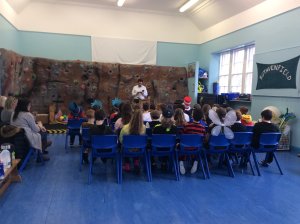
I was lucky enough to get to talk to the whole school. The children were brilliant, welcoming, and they asked some really interesting, and surprising, questions (like ‘Do you talk about ethics in your books?’ and ‘How does an author make money?”).

Everyone likes a story

multi colour rainbow shoes john bray author crieff perthshireI don’t always talk to younger year groups, as the Jack Reusen books are aimed at children aged 7 years and up. However, I came prepared with a wee story I wrote a while ago called ‘Drip the Bogey Ogre’ (you can read the whole thing by clicking this link). The primary ones and twos were lovely and we had a fun five minutes or so talking about my shoes as well (I wore my multi-coloured shoes).

From there I went on to talk to the older school. There seems to be a collection of would-be authors in the older school and they all had questions about improving their writing and about aspects of the writing process like motivation and inspiration.

I hope I didn’t sound too repetitive but one thing I kept going back to was the fact that writing is like exercise; you need to do it regularly to be in good shape, and you have to have good quality ingredients to put into it.

With writing, you get out what you put in

Just as a healthy body comes from regular exercise and good nutrition, so too does a healthy capacity for writing come from writing regularly and consuming only good quality books.

These sorts of things always have more impact when you use an example. I shared an experience from when I was writing ‘Marcus‘ last year. At the time I hadn’t written a horror story for young adults (12 and up) before so I started reading around to get a feel for the topics and limits associated with that age group.

Some books I read were fantastic but there was one (it will remain nameless) that was less so. Don’t get me wrong, I enjoyed the story but I didn’t see what it was doing to my writing until editing time came along. It turns out that the chapters I wrote whilst reading this particular book were some of my worst, characters grew flat and I found it hard to get my bearings. Much editing was needed before they went public.

This was my takeaway advice for Braco Primary’s writers; do everything you can to make sure that what you are reading is good. Combine this with paying attention to the world around you in your own way. Understanding what your own point of view is will enable you to find your own voice. However, you’ll find that, only by reading work by experienced and talented authors, will you be able to make that voice as articulate and coherent as it can be.

Thank you for the enthusiasm boost!

Not only was my visit to Braco Primary an enjoyable one but their questions and enthusiasm for writing gave me a much-needed boost in the midst of this year’s NaNoWriMo (something that’s always welcome).

Thanks again for having me Braco Primary. I hope you enjoy the first two Jack Reusen books and I hope to have book three ready in the near future.