Tag Archives: writing

Story Ideas: Places

For the past few weeks, I’ve been adding a podcast to my range of content. This post is directly linked to this week’s episode titled “Story Ideas: Places”, where we look at a quick and easy way to jump-start your creative juices.

By the end of the activity, you should have a full story written up, and we’re also encouraging pupils to submit their stories to be read on the podcast (details on how to do that will be available below). With this in mind, I hope you enjoy this writing activity and read to the bottom to find details on how to submit your story to be read on the podcast.

Writing Activity Resources

Teachers
This week’s writing activity is pretty simple, but it should prove useful for those moments when a story simply isn’t coming to you. There are classroom sheets to go along with this activity. You can click here for a direct link to the Canva presentation, or download a PowerPoint version here.

Pupils/ Students
The activity sheets for this writing activity are pretty simple, and are designed with the expectation that there will be additional jotter or digital writing as well. A black and white version is available here, a colour one is available here, or you can get access to a Canva project edition (that you can edit) here.

Play along podcast episode (if you prefer)

You can play the accompanying podcast episode alongside the classroom presentation. I’ll call out the next section so you know when to change slides. (In future episodes, I’ll try to be more direct about this with something like ‘turn to the next slide’ after each section).

You can also pause at the end of the prompt on each slide to leave time for writing. All in, this will probably add up to about a 1-hour classroom activity. You’ll find the Spotify version of the podcast below, and links to it on other podcast platforms in this linktree.

On With the Activity (From here on out, this will match the content of the podcast)

Today, we’ll be looking at a writing exercise that focuses on setting and place in your storytelling. With this in mind, I thought I’d try something a bit different and begin the episode by reading the first chapter of my first book, “Jack Reusen and the Fey Flame”.
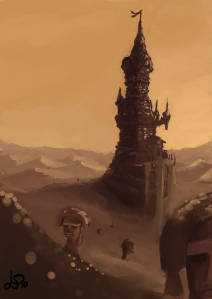
In this chapter, I played with the idea of setting. First, we look at how familiar places can become uncomfortable when we notice things that we don’t remember seeing before. Then, we look at what it feels like to feel lost, truly lost, and what our reactions to this feeling can tell us about ourselves.

You’ll see the meaning of the setting change a few times in this chapter. I hope you enjoy listening to the sample chapter, but whilst you listen, keep an eye (or ear) out for any times where the setting is moving the story forward.

(You’ll get the full chapter reading in the podcast episode. If you’d like to read the rest of the story with your class, you can also pick up a Kindle copy by following the links at the bottom of the page for purchasing, or reading for free through Kindle Unlimited, on Kindle in your country.)

The Writing Challenge

You’ll have seen a lot of focus on setting in the little excerpt I’ve just read, and now it’s your turn to experiment with a story setting.

You’ll have a full story by the end of this activity, but the direction we take may be a little different from the way you normally set up a story and I hope you enjoy it.

Story Ideas: Places

Being creative is a really useful skill in life (not just for storytelling) so learning tricks and techniques to get your creative side working is never a bad thing.

Today, we’re going to look at a quick technique that I use. It should help switch on that creative part of your brain and prepare you to create a fantastic story.

We’ll start with place as it’s sometimes neglected a little in storytelling. Starting with the place can sometimes launch you into a new story in unexpected ways.

Part 1: Somewhere different

Think of where you’re writing right now. Is there a place that could be the most opposite you could possibly imagine? Somewhere absolutely nothing like where you are sitting at this moment?

What is that place like?

What’s the weather like there?

Is it a safe place, or is it somewhere perilous?

If you were to sit down and write in this new place, what would you be writing with?

Would it be a scroll of paper with a feather quill and a bottle of ink, or would you be writing on a futuristic tablet with an AI that talks to you as though they’re the cleverest being in the galaxy?

Part 2: A stranger

OK, now you know a lot about this new place, so let’s take a look around and see if there’s anyone there.

Who are they? Are they a human/ an animal/ an alien/ or something else?

What are they doing?

What mood are they in?

You now should have a setting and your main character. This isn’t everything you need for a story, but it’s a good start.

Part 3: Getting to know people
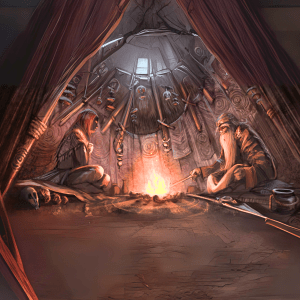
Now ask your character a few questions. What are their interests? What are their skills? What are their main fears? What would they like to be doing this time tomorrow?

Take your time with your character. Ask weird questions, but even ‘boring’ questions can give you ideas for your story. What might your character eat for breakfast? Where do they sleep? You might be surprised at the direction their story takes.

Part 4: Go and write

You now have two out of the three basic parts of a story; the last one is called ‘plot’.

What will happen to your character next?

Will something surprising happen to them?

What will they do as a result?

Will they be happy in the end?

Write your story in a digital format, or in your best handwriting, or draw some amazing pictures to make up a ‘comic book’.

When you feel your story has reached a natural end, please be sure to share your stories on the Celebrating Stories portal.

As the weeks go on, we’ll start reading one or two of your stories on the podcast each week.

You’ll find links to share your story on the classroom slideshow, which you can download over on the website. Alternatively, you’ll find a link to it in the episode notes for this podcast episode.

Your story could be the next one we read on the podcast!

Go here for the Google Form to submit your story (click this link). You can share handwritten stories, digital text versions, or even pictures.

Thanks for popping by

As always, thanks for tuning in to listen to this week’s episode of Lit Up With Green Flame, and for coming here to read the more extended version on the website. If you haven’t already, please don’t forget to subscribe on your favourite podcast platform.

We’re on Spotify, Apple Podcasts, Audible, Amazon Music, YouTube Podcasts, and many more. Just go to your favourite podcast app and search for ‘Lit Up With Green Flame’ (click here for the linktree that lists how to find us on your favourite podcast platform, just click on ‘Lit Up With Green Flame Books Podcast’ button to find the link). Subscribing is free, and you’ll be sure to catch the newest episode as soon as it’s live.

I hope you pop back next week when we’ll be looking at the strange world, and wild life of Roald Dahl (since it’ll be his Birthday in just a couple of weeks, he would have been 109 years old this year on the 13th September).

Also, if you’d like another writing activity to try, you could look at the one we did on Magical Realism a few weeks ago. You’ll find a link to that here.

Thanks again for listening in, and I hope you don’t mind the slightly longer episode this week.

All the best, John

Green Flame Books: The Power of Reading Week long discussion

Is reading for 20 minutes a day the ‘magic ticket’?

Reading for 20 minutes a day is often linked to better academic results, but what’s the science behind it?

Is there more to the story than test scores? And how big a deal is book ownership when it comes to childhood literacy?

This week’s Green Flame Books discussion dives into the power of reading and why access to books really matters. We’ll start tonight with a focus on “What Reading can do for you”: a post about the power of reading and why it’s not all about test scores.

You can also watch this post as a vlog on YouTube or watch or listen to it on the podcast on Spotify, listen here or click through to watch/listen on your app of choice:

Scroll down for a quick overview of the other topics we’ll explore together this week. Then join the chat on the blog and Instagram to share your thoughts.

Never Miss a Moment

Love a topic below? Tap the button to add ‘Green Flame Books: Literacy Discussions’ to your calendar.

You’ll get gentle reminders all week so you can join the conversation when it suits you best.

Click here to add the Green Flame Books calendar

Mon, 28 July

📖 Blog: Is 20 minutes the magic number?
Do test scores tell the full story about reading?

Tue, 29 July

📸 Instagram: Who Gets to Own a Book?
Let’s talk about book access—past and present.

Instagram posts page

Wed, 30 July

📸 Instagram: Book-rich or Book-poor?
Can digital books close the literacy gap?

Instagram posts page

📖 Blog: 1 in 5 UK kids don’t own a book
Could buying a book change a life?
📸 Instagram: Reading Lets You Share Worlds…
Which stories built your closest bonds?

Instagram posts page

Thu, 31 July

📸 Instagram: What Stories Do You Carry?
What tale from childhood has stayed with you?

Instagram posts page

Fri, 1st August

📸 Instagram: Which Story Opened Your Eyes?
What book helped you understand others?

Instagram posts page

📝 Instagram Prompt: Write about someone who loves what you hate
Can a character change your mind?

Instagram posts page

Sat, 2nd August

📖 Blog: Reading Fiction is Reading Minds
How shared stories build empathy in writers.

Sun, 3rd Aug

📸 Instagram: Why Do We Want Kids to Write?
What motivates young writers today?

Instagram posts page

To add the calendar to your own and join the discussion

Join the Green Flame Books Literacy Discussions Calendar

Alternative link to download an ical file if the one above link isn’t working

Good Gracious it HAS Been a While!

Jack Reusen and the Chilren of Fate sneak peek cover 2I have been away from here for far too long. The perfect proof of this occurred to me a few weeks ago when someone who had attended one of my first-ever school talks (as a pupil) drove past me in Crieff High Street in a learner car.
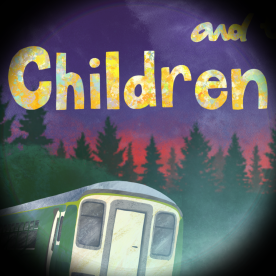
Not only does that make me feel ridiculously old but it also highlights just how long I’ve been working on getting book three of the Jack Reusen series done. So I thought it was time for a very frank and honest update.

As of this afternoon, I am editing p167 of 202 of the final (post-editor, so it better be final) draft of Jack Reusen and the Children of Fate.

Karen, the illustrator has created a stunning cover for the book as well, and I’ve been in communication with the printers regarding pricing and print times for the first run (the first run of prints unfortunately always costs more and takes longer).

(Spoilers for book 2 ahead…)

This new addition to the Jack Reusen world follows Jack after he, his family, and his uncle’s cottage and garden landed in the heart of an ancient magical woodland within the world of Fey.

You’ll get to spend longer in Fey than you have in any previous Jack Reusen book. You’ll meet a strange new character who seems to be following Jack from inside his own mind. What’s more, you’ll get to learn more about Fey and how it’s connected to the Matter World. It’s a big story without being too big a read and I hope you enjoy it.

(…Book 2 Spoilers END)

There are twenty-one chapters in this new book (if you include the epilogue) and I’m currently editing chapter sixteen. I’m getting through about a chapter per day and I have some time off work so I may even get through more than that.

So, with only five chapters to go, I think it’s safe to say that I should be finished editing by the end of this week.

After literally years of plodding through drafts, I can’t believe I can say that the book will be ready in a week!

Jack Reusen and the Chilren of Fate sneak peek coverPrint turnaround can be as much as a month. However, as soon as I can get it uploaded, the book will be available digitally to read via Amazon Kindle (you can either read this on a Kindle reader or you could download the app and read it on any Android or Apple device).
I’ll obviously be back on here at each step of the process to keep people updated (especially once there are print copies available too). However, I promised myself that today’s post would be brief and to the point so that I could get back to work on the editing.

Wait What’s Happening?!

In brief:

The final draft of Jack Reusen and the Children of Fate will be done by the end of this week.

The digital edition should be available sometime next week.

And finally, at long last, the paperback edition should be available to buy in late April.

More to come…

fey-flameExtra Note: I also have plans to get an audiobook version of the first book out. This would take the form of either a podcast or an Audible audiobook, to be released sometime in the next few months. This is dependent on getting my office/ recording space in proper order so expect updates on that too.

For now, thank you so much for stopping by and please accept my apologies for the long (long long long…) wait for this next book in the series.

I hope you enjoy reading it as much as I have enjoyed writing it. It’s been a labour of love. The first version was very long. The delay has mainly come from trimming it into the reader-accessible version we now have.

I always want to create books that are as accessible to as many sorts of readers as possible, and I am really happy with the story we have now.

Thanks for stopping by, below you’ll find the mandatory self-promotional book plugs but you can skip these if you’ve already read the stories so far.

Thanks for stopping by and I’ll be much quicker to get back on here again next time,

All the best, John

***

Read my books digitally for FREE

reading reader kindle female

Photo by freestocks.org on Pexels.com

If you’d like to catch up on the first two books in the series you’ll find details on where to get these digitally (and potentially read them for free) below.

As always, you can get hold of print versions of the first two books from Fun Junction Toy stores, as well as by buying directly on this site (I’ll even sign a copy for you before it’s posted out). To buy from this site using PayPal, follow this link and click on the buttons for the books you’d like to buy.

Kindle Unlimited

All of my books are free to read for those with an Amazon Kindle Unlimited membership.

Kindle Unlimited currently offers a free trial for two months so you can see if you like their service.

After that, your membership would cost just £7.99 per month and you can cancel any time you like (including before the end of your two-month trial membership.

You said I could read your books for free?

Both of my main children’s fantasy books (The ‘Jack Reusen’ books, for 6 and up) are available on Kindle Unlimited. Here are the links for Amazon UK for ‘…Fey Flame‘ and for ‘…Spark of Dreams‘. On top of this, you can also find a short Christmas story I wrote a few years back, as well as my dark fantasy book (10-12+) ‘Marcus‘ (set in and around the old abandoned Victorian school in my home town of Crieff).

These are all available to read for free (even as part of your free trial) with Kindle Unlimited. What’s more, it’s always good to know that people are reading (and hopefully enjoying) my books.

If you’re in the USA, Kindle Unlimited has a similar free trial and you can find all of my books on my Amazon Author page.

A little more about my own books:

Once you’ve signed up to Kindle Unlimited, you’ll see that both of the Jack Reusen books come up as ‘free’, so you can read the whole adventure so far, for nothing.

Jack Reusen and The Fey Flame‘ introduces you to the land of Fey, as creatures (and other things) make their way through to the ‘matter-world’ (basically our world). Jack and his family have to discover a way of closing a collection of ‘breaches’ between the two worlds to make their world safe again.

*

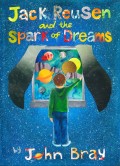
cover with blurb and barcode 2 trimmed‘Jack Reusen and the Spark of Dreams‘ is a slightly different kind of adventure. People are losing their ability to dream. Every night more and more people lose the certain something that makes human beings so good at solving problems and creating things; the spark of dreams. Jack discovers that he could be the key to understanding what’s causing this change, and he may even be the only person who can solve it and bring back the dreams and imaginations of hundreds of people.

I hope that both of the Jack Reusen books give you and/or your kids something to enjoy as you read them. Let me know what you think.

As always, thanks for stopping by my site, and I can’t wait to share even more details of my newest book,

All the best, John

Half a million words

Are you an ‘expert’ at 100 hours, or 500 hours or is it more like 1000 hours before you can wear the title?

A ‘master’ of a craft can only call themselves that after hours of practical application. However, there’s always debate on just how many hours that is.

Writing is an odd craft. On the surface it might not seem like a craft at all. Writing may seem cerebral, the exact sum total of ‘book learning’ but the truth is that writing is just as nuanced and as practical as any physical craft (though obviously with less cuts, bruises, or blisters to show for it). You learn writing by doing it and it takes a lot of writing before you feel like you know what you’re doing.

I’ve been ‘taking my writing seriously’ for about seven or eight years now. Each year entering another NaNoWriMo (National Novel Writing Month) in November. I’ve written a lot now and this year I’m on my tenth NaNo project.

This means that at some point tonight I’ll have written half a million words (combining all my writing projects to date). I can’t figure out whether this means I’m a better writer now or if it simply means that my imposter syndrome is less forceful now.

It has been an amazing experience and I genuinely do feel like I’ve improved my ability to get my ideas/stories across.

In November of 2014 I sat down and wrote this opening paragraph:

“Jack pulled his old coat close but it wasn’t doing much against the drizzling rain, it wasn’t waterproof, it was really thin, and the wind was whistling in at him no matter how tight he pulled the zip up.”

My first ever NaNoWriMo word was ‘Jack’. Tonight I’ll find out my five-hundred-thousandth word will be.

Wish me luck!

As always, thanks for stopping by my site,

All the best, John

5 Huge Benefits of Using Google Docs for Writers

wp-16647885873378466379242986409189

I have a feeling you might scroll past this but if you’re a writer who has trouble finding time to write then please don’t! I used to be pretty dedicated to my ‘old faithful’ word processing software too I get it, but please read on.

Like me, you’ve probably been using the same application for years. After all; it’s familiar, your previous work is all formatted that way, and you can’t be bothered learning a new thing when inspiration hits. You just want to write.

I’m not going to try and convince you to switch permanently but I want to briefly highlight how useful Google Docs can be for writers. Over the past couple of months, I’ve been able to get a surprising amount of extra work done and this is thanks, in no small part, to Google Docs.

Quick Disclaimer (By the way, I haven’t received any payment or any other benefit from Google for this post. I genuinely find it useful and thought that other writers may find it useful too)

Before I start the proper list I’d be foolish to skip one of the most obvious benefits; it’s free. I’m not going to list this as one of the ‘real’ benefits, mainly because so many other excellent word processing programs/ apps are available for free as well.

My all-time favourite free word processing program/ app is still OpenOffice. It has a layout similar to a very early Microsoft Word and also comes with the added benefit of customisable predictive text. This means that a suggested word will come up from your custom dictionary and you simply hit enter to have the word typed into the document for you (a massive time-saver and writing-speed boost).

However, recently I’ve come to realise that there are some clear and distinct features of Google docs which combine to offer a really unique and useful writing experience for me (and, I would imagine, any writer). Here’s the list:

1. Access anywhere

Munro perthshire scotland green hills mountains write anywhereI used to text myself notes whenever I was out and about and had a flash of inspiration. This was my simplest way of keeping track of my writing when I couldn’t access the actual document.

Notebooks didn’t work for me as I would always forget to bring them with me when I left the house. I have a drawer of lovely, special notebooks with attractive covers and a comfortable feel. All of which were purchased whilst out and about, only to be filled with a page or two of notes and then forgotten the next time I left the house.

Google Docs are in the cloud, I can access them using any device (including my phone) at any time. I have separate folders for different projects. Inside these folders are various documents with notes on the plot, characters, etc.

If I have an idea now, I can open the relevant document on my phone and add the note to the correct place. This saves me wasting time hunting through text messages or handwritten notes for that idea I had last Thursday or, worse still, losing ideas completely.

Losing ideas completely!? That brings me to the next brilliant feature…

2. Always saved

polar bear and cub scotland highland safariWhether your PC goes on fire, you drop your phone in the toilet, or your tablet is stolen by a rampaging bear. All your work is still safe.

When I was working on my master’s degree we were all given MacBooks by the university. They were great, (and, you know, free), so I fired it up and got on working on my thesis, saving everything I did in that one portable, easy-to-use device. Then it died…

Three months of notes, saved sources, and around a chapter of my written thesis were on that hard drive and apparently (according to the university tech guys and the Apple folk they spoke to), no force on this earth could bring them back to me.

For a month I looked for options. Then for another month, I learned a lot more about how laptops (and hard drives) work. With the help of online message boards and hints and tips from a few really nice computer experts, we managed to discover a way to hack into the hard drive and get some of my files back using a different operating system running from a USB drive.

Overall, (even with the online help) it was a nightmare to fix and it used up a significant portion of my time and energy, only for me to retrieve a fraction of what I had. I never looked at saving my work in quite the same way after that.

From that point onwards I was meticulous about saving copies of work. My work is now saved in multiple places and in multiple ways (I also vowed to myself that I would never use another Apple product, but that’s a whole different thing).

For many years I’ve saved a copy of all my books (and draft projects) in a Google Drive folder, a Dropbox folder, on my personal PC, on a backup hard drive, and on a USB stick. I also have at least one full printed copy of the first draft kicking about the house for beta reading and editing. It seems like overkill, I know it’s overkill, but I don’t care.

However, the one downside of all these copies was that, despite all the different storage locations, I could only edit the document on my home PC as the format was for OpenOffice.

Fast forward to my switch to Google Docs: I now save a copy of each book in the Google Doc format as well. It’s a little slower to load for reading but the upside is that it’s fully accessible for editing on any device (as I said above). This means that I have a safely stored copy of my current work in progress that automatically gets saved the second I make a change to it.

So long as I’m connected to the internet I can edit on the go. If I close my device my work is still saved right up to the moment I last edited it.

In fact, Google Docs even helps me with my edits:

3. Google Docs has Grammarly built-in

There’s a streamlined, free, beta-test version of Grammarly built into Google docs.

It catches basic spelling errors and also gives you hints about four key measures in your writing.

google docs grammarly colour color coded writing suggestionsIt will tell you whether what you have written would score high on correctness, clarity, engagement, and delivery. Each hint they give you is colour-coded to highlight which area will improve with the suggested change.

I haven’t yet, but you can also go ‘premium’ with Grammarly (for an additional charge). Those premium features will also be added to your Google Docs experience. This would offer you more comprehensive insights into your writing, along with deeper explanations regarding grammar and style suggestions.

As I say, I haven’t subscribed to Grammarly’s premium features. I feel that what you get is just enough to help without getting in the way of your writing.

After all, I use a real-life, human editor for my books who can help me fix much (much) more than the issues that Grammarly premium would spot.

Importantly, I also prefer to have a pair of human eyes take a look at my text (computers will always miss something) so I would be paying for an editor anyway.

4. Notes

google docs contributors adding comments to your workThere are multiple ways to utilise the ‘notes’ feature on Google docs but one of the most useful is the collaborative option.

So far I haven’t used it this way with my books but I have used it on copy with my copywriting clients multiple times. You can invite multiple users to access your document and add notes.

The editor for my books prefers to work with a paper copy. I understand her thinking, paper copies offer a distraction-free reading experience. On top of this, a paper copy allows you to write notes on top of the text itself.

However, if you were working with someone who is happy to work digitally the notes option is a fantastic real-time resource for suggesting and tracking changes to your document.

5. Compatibility

google docs text file formats available to export or downloadSpeaking of collaboration, if you need to have multiple people access your document Google Docs is a great option. You don’t need them to download software, they simply go to the document link you provide them and log into their Google account to access it.

From here anyone with an internet browser can read, comment on, or edit your document (depending on what level of access you give them).

This said, there will always be a stickler out there who prefers a particular document format. Fortunately, you can cater to them as well, as Google Docs allows you to save your work in a number of different formats.

This means that you can easily turn your text into (most) recognised document formats, as well as save your document into epub format (meaning it could be read on an e-reader such as a Kindle).

That’s pretty much it!

I’ve had great experiences so far using Google Docs for parts of my day job (the copywriting bits at least), and this year I’m starting to make use of the benefits of using it for bigger projects like my books.

Limits! (It can get a… bit… slow…)

Snail Race

‘Snail race’ by Noj Han at Flickr

There is one drawback which I’ve already hinted at. Currently, Google Docs is a bit slow and clunky with larger documents.

Once I pass around a hundred pages I definitely see a slow-down in what Google Docs can handle. However, it still works and still offers all the features I’ve mentioned above.

For the most part, I write children’s books. Most of my books are fifty thousand words or less. However, even at this, I can see some slowing. If your work is longer than this I might suggest saving your book as separate chapters and editing each one individually.

Having a newer device with a faster processor and more memory for your web browser to use will apparently help.

However, in my case, the problem seems to persist to a certain degree on all of my devices (no matter how new and/or powerful) so some of the problems are likely on Google’s end. I like to hope that any server-side issues will eventually be improved by Google as well.

As I said at the start, I don’t expect anyone to change from their favoured software. Nonetheless, I’m also all about helping make it easier to write (for myself and other writers), so I hope you give Google Docs a try. If you do, please pop back and leave a comment about your experiences.

As always, thanks for stopping by my site,

All the best, John

Writers? Teachers? Everyone Else?: To read the classics or not read the classics?

Library traditional wooden bookshelves classic fiction

Which is more ‘important’ reading material for a budding writer, classics or contemporary fiction? It’s a matter of more debate than I expected because I thought the answer was obvious; the classics. I was a book buyer for a small book shop and I’m now a writer, I can’t help seeing it this way.

This isn’t because the classics are objectively ‘better written’. It isn’t even to do with gaining an understanding of more ‘traditional’ narrative structures (as an apprentice carpenter might start with more simplistic wood joins and carving techniques). Though the latter is definitely worth mentioning.

For me the reason that the classics are, by far, a better use of reading time for an aspiring author comes down to natural selection.

Won’t knowing what’s ‘in’ help you get published?

Coffee shop contemporary trends

Contemporary fiction is the driving operation of modern publishing. It characterises who we currently are (or at least it captures our contemporary literary culture). If an aspiring author wants to aim at being published then getting a feel for the current zeitgeist from contemporary fiction feels like the way to go.

However, maybe aiming to get published is less important than telling a good story. Connecting to the zeitgeist is great but what is it that you want to say? What place is your take on the world coming from?

About a decade back vampires became the ‘in thing’ for teen readers. I lost count of the number of vampire tales available in the ‘teen reads’ section of our book traders magazines. This went on for a few years.

However, if you were a teen author at this time there was no way for you to know how long this trend would last. To be frank it crashed hard after the release of the last Twilight book.

Wasting time being ‘trendy’

Imagine you were a ‘teen reads’ author in 2008 (the year that ‘Twilight: Breaking Dawn’ was published). You are so excited about your new book. You had the idea to jump on the vampire love train and write a great new twist on this where the girl is the vampire (breaking from Twilight, Buffy the Vampire Slayer, and Vampire Diaries).

Vampire contemporary teen romance

It can easily take two to three years to get a book into a ready state and by 2010/2011 the catalogues looked very different. The vampire bubble had burst.

The writer with the vampire story in hand was me and I had put so little thought into what I was actually doing (focusing on the goal rather than my book) that my creativity suffered.

I’ve since gone back and fixed this manuscript and one day it may see the light of day. However, the thing that helped me was not reading more contemporary work, it was returning to the core works in the genre (the classics).

It was only by knowing the typical format that I could hope to rearrange it for my own purposes. It was only by becoming more aware of the expectations of this sort of book that I could hope to usurp them. In short, I needed to see what vampires really were in our culture in order to play with the concept properly.

Fiction by Natural Selection

I feel that every creative work creates forks in the literary road. The classics aren’t necessarily ‘classic’ because they’re good (though a lot of them are thoroughly engaging, well crafted works). Instead they are examples of where our literary culture has travelled.

With some degree of certainty, you can still reference great works of the past and know that the reference will make sense to a contemporary audience. Shakespeare, Austen, Dickens, even ‘newer’ works by the likes of Arthur C. Clark, Stephen King, or JRR Tolkein have reached this stage of cultural significance. Reading their work helps a writer hone in on where we’ve been and experiment with where our literary world may go next.

Contemporary fiction just doesn’t ‘fit in’ yet

Contemporary fiction hasn’t had time to catch the public consciousness. Long term success isn’t even something we can predict with awards or other honours placed on these works by peers. Contemporary fiction, by its very nature, is still in the throws of cultural natural selection.

The boy who lived

Take the Harry Potter series for example. These books are still wildly popular. We might assume that they will go on to become markers to the culture we’ll come to be part of, but they have also received backlash from two very vocal cultural camps.

On the liberal side JK Rowling has received backlash for her views on trans women. On the conservative side (small ‘c’, small ‘l’ for both, these aren’t necessarily political concepts, more ideological) the Harry Potter books have received criticism and hatred because they depict sorcery, witches, and wizards in a positive light. This can be extremely concerning for those with a belief system that regards these things as ‘sinful’ or ‘the devil’s work’. To put books like these in the hands of children must seem truly abhorrent to those who feel this way.

We don’t yet know if there will be an ideological ‘winner’ in regards to these (not exactly overlapping) groups. If one or the other takes a leading role in the direction our literary culture may go, then there’s a chance that the Harry Potter books may be pushed aside in favour of something else when that new generation is choosing books for their children.

Instead of being cemented in cultural significance, they could slowly disappear into the margins in the same way that Enid Blyton’s Famous Five and Secret Seven books have.

Admittedly some children may still know the names of Enid Blyton’s (arguably) most famous books (including her ‘Noddy’ series). However, as someone who bought books for an independant toy/book shop for over ten years, children just aren’t reading them any more.

In another generation I find it highly unlikely that the Famous Five and their antics catching smugglers and other ‘criminal sorts’ in and around Cornwall and beyond will be remembered or known. As much as I enjoyed them as a child it’s when watching my own children read them that I see how culturally removed the Famous Five have become. Enid Blyton’s works have become too distant from modern culture to become ‘classics’.

The ‘classics’ are the works that are left once the culturally insignificant is worn away. This process is as unintentional and unpredictable as biological evolution (though it happens much more quickly). We don’t choose which things become culturally significant, history will decide that for us.

Contemporary fiction can be extremely enjoyable. It can also, obviously, teach us a great deal about the craft of writing. However, from a writer’s perspective, at best, it may help us see which things are currently proving popular with publishers.

That’s the blessing and the curse of concentrating solely on contemporary fiction; all it takes is a tidal shift and we hear things like ‘no one is reading vampire books any more’ or ‘post-apocalyptic wasteland has been overdone’.

Contemporary fiction is modern craft at it’s best (sometimes) but it hasn’t yet felt the harsh winds of cultural change. The very same winds which have tested the mettle of the classics and shown them as pillars and markers of who we are and where we’ve been.

I would never suggest skipping over contemporary fiction. There’s a lot to be gained from seeing writers rearrange expectations and norms to create something new. However, if any reading experience is to be truly useful to an aspiring author then it will come from the works that show them where our writing culture comes from.

Please feel free to debate this out in the comments below. I welcome any and all takes on this topic.

As always, thanks for reading, all the best, John

I’m now officially looking for a literary agent (but it’s not for the reason I expected)

Green glowing test tube Creative commons licence image by PRHaney

I’ve been (fairly) proudly self-published for a few years now. The overal experiences seem similar to those of a ‘traditionally published’ author (even though self publishing is arguably the more ‘traditional’ of the two routes). I have hosted book talks and writing workshops, participated in author events with other authors, I’ve also been a judge on the panel of a large-scale writing competition.

More than these I have come to find that my books are read (and enjoyed) by hundreds of readers.

For a while these were the primary experiences I associated with being an author. However, recently I’ve come to see that in some cases a book may need more behind it, and with this additional backing it might be able to do more.

Two years ago I wrote a science-fiction story aimed at teen readers. The story came to me of it’s own accord, and I enjoyed the process of helping it grow and take shape. However, on my first editing pass I came to realise that the book may be a means to showing the usefulness, excitement, and wonder of scientific knowledge.

At its core it’s a story about a young girl dealing with the long-term truth of grief. However, it also uses this emotional journey to draw her through axperiences which highlight how useful (and powerful) scientific knowledge and exploration can be.

It’s a perspective that I think could resonate well with a lot of young people, at a time when misinformation and ignorance gain huge viewership online (with channels like ‘5 minute crafts’ and others sharing sometimes wildly dangerous fake ‘hacks’ and experiments).

It’s good to know objective, undeniable truths. In fact it can be helpful as a means of grounding your thoughts. This sense of solidity can also offer something stable and unyielding, an objective fixed point on which to one can draw emotional stability.

The book is complete and is currently running through a first full edit. However, I feel that it could gain more with more eyes on it. It’s the first time that I’ve really felt that something I’ve written has a big enough message to require a bigger team behind it.

I used to imagine that an agent and a publisher were there to help promote your book. After all, with their investment of time (and, in the case of publishers, money) it’s more than just you who has a vested interest in your book’s success.

This always sounded nice but if additional promotion was all they brought to the table I often felt it was better to simply publish myself and be my own book promoter.

However, I’ve learned a lot about the publishing industry over the past few years. Sometimes from reading things, but mainly from conversations with other authors.

I’ve come to realise that the literary industry is more than simply a book selling machine. It’s also a space filled with people who value a really good book. They want a book to be it’s best.

Whilst I’ve been happy in the past to simply self publish my books. I’m becoming more aware of the strain to be found in attempting to be a Jack of all trades.

With this newest project I’m realising that my core story could be improved greatly if I were to see it from more perspectives.

I have a few agents in mind already (courtesy of an author friend who took time to give me some insight). Many of these agents open their inbox to unsolicited submissions in November, so I have just over a month to get this manuscript to my editor and tidy it up.

It’s a weird new experience for me and, as I say, my motivation for it has changed over the past few years. Fingers crossed that someone out there will look at this story and see what I see in the emotional and intellectual journey that ‘Lisa’ goes through. Wish me luck!

As always, thanks for reading, all the best, John

Write a novel… in one month?

‘Writer Twitter’ has once again begun to mention something in conspriatorial hushed tones. The closest thing to liken it to is the conspiritorial tone used in October when someone in the western world discusses the approaching Christmas season.

For writers, this ‘thing’ is something that can bolster the hopeful among us and leave the others feeling unprepared and riddled with doubt (a bit like mentioning Christmas early can do too).

What in the world am I talking about? Why it’s NaNoWriMo day of course!

As the nights draw in, as the fires are lit, as the tea pours like a hot nourishing river, and the muse is fed copious quantities of sweet treats and other indulgences, we writers settle down and enjoy… a grueling month-long writing session.

An epic writing journey that, if we work hard (and we’re lucky), will leave us holding the first draft of a brand new novel. That’s what NaNoWriMo stands for: National Novel Writing Month. You write a novel in a month.

That’s the plan anyway, and for the past eight years it’s what I’ve done. This year will be my tenth NaNoWriMo project (I took part in one of their ‘summer camps’ a few years back).

I still don’t feel like an expert but this year I’ll hit my 500,000 word total, so I feel a lot more confident than I did when starting my first (they tally your projects as well as your total wordcount).

If you’re reading this and you’ve never participated in NaNoWriMo before I thought I’d share a few short tips which have helped me to complete my 50,000 word target each November for the past eight years.

Tip One: Get out of your own head

To an extent this can be about not letting yourself overthink your project. However, there’s a more practical day-to-day component to it.

Whether you plan ahead or write in a wandering flow, do as much as you can to get those thoughts out of your head and on the page.

Put it all in your working document. If you have notes on a character, write it in a headed section at the end of your document marked as ‘character notes’. If you have ideas for future scenes, write the roughest plan for them under ‘scenes’ or something similar.

Basically, wherever possible, do not let your novel take place in your own head. Get every detail written down as they come to you because you will forget them if you don’t.

As an extra bonus, some of your scenes will already be planned out with a skeleton so on less inspired days you can potter around adding more meat to them, adding to the story, and increasing your word count.

Tip Two: Turn Up

In the early stages you may find that you get ahead of your totals. This may incline you to take a ‘day off’ in the first week or so… Please DON’T!

Instead, if you really feel the need for a break, then simply slow down and do less for a couple of days. If you’re 2-3000 words up it may feel like you could risk a day off but you’ll stay consistent and still feel the benefit if you simply write 5-700 words (about a scene’s worth) per day for three or four days. Days off get you out of the habit and steal your momentum.

Falling behind is hard to recover from, don’t risk that extra sly day off as you’ll potentially spend the better part of the following week catching your tail. Please trust me, lazy days are fine, “days off” are rarely worth the risk. I’ve done it more than two or three times over the years and regretted it every time.

Tip Three: Connect to the community

NaNoWriMo has a phenomenally supportive community and you can access them on pretty much any major social media platform, as well as connect in real life.

It’s a worldwide event but it has a strong local component as well. Simply go to the ‘community’ section in your NaNoWriMo dashboard and you’ll see a section marked ‘home region’. Here you can connect virtually. On top of this, depending on your local group, you can even arrange to meet as a group in a coffee shop for an epic writing session on your day off work.

Don’t feel obligated to participate in every NaNoWriMo activity but be sure to have a go at something. You’re really missing out if you don’t connect with others in the same boat. The odd mixture of support and a little healthy competition has helped me in countless ways in previous years.

One of my favourite components of the NaNoWriMo community has been the ‘sprints’. I use Twitter as my primary mode of contact with others during NaNoWriMo and the hashtag #nanowordsprints is connected to a particular activity within this community.

‘Word Sprints’ are short clips of time where the hosts set a timer and you write as much as you can during that time. You then take the designated break, congratulate one another, regroup, grab a beverage, then sit down for the next one.

Typically I find that my own first two or three sprints of the day will be pretty low in word count, but once I’m warmed up the next two or three can get me to (or even over) my target word count for that day. It’s a great way to punch up your wordcount if you’re short on time that day.

Typically, I can’t keep up with sprints every day. It’s a tiring activity, and is also not easily paired with research or planning time. Often only one or two of my weekly writing sessions will include a sprint. However, the usefulness and efficiency is worth the mental exhaustion.

No more tips, just go register

You can already register for NaNoWriMo prep activities. These start in September and run through to the end of October. I’ve never done this myself but it does look like a useful way to go if you’re a planner and want to be thoroughly prepared for your first NaNoWriMo.

Alternatively, simply make a commitment to yourself to join on day one of NaNoWriMo. Go onto your calendar and add a reminder to sign up on the 1st of November. Then just mull over the core idea for your book.

My core idea is very basic at present but I’ve got time to let it grow and gestate. I might write a basic character summary for my main characters. I may note down ideas for scenes. However, I very much prefer to let the story take shape at the time, so personally my prep will be minimal.

Do whatever feels right for you, but if you want to have a book written on the 1st December this year, then be sure to do something right now to cement that commitment.

Hope you found this useful, and hope to catch up with you during our writing projects this November.

As always, thanks for popping over to my site, all the best, John

One Hundred Thousand Welcomes!

ceud mile failte a hundred thousand welcomes

The algorithm goblins have scoured this site and discovered that there has been a spontaneous jump in visitors (or so they informed me this morning). In light of this new surge in popularity (so far it’s a whole ten visitors per day over the past week and counting!) I thought I’d pop in a quick post to say hello and welcome.

As you’ll no doubt see, I haven’t kept up with my blogging lately. This is partly due to a busy schedule on my end (unfortunately books don’t write themselves, I asked the algorithm goblins but they answered in indecipherable ones and zeros then ran away). However, my blogging absence has predominantly come from an odd shift in the way people use the Internet in our (semi) post-pandemic world. Namely, people seem to be using it less.

I have no idea what brought all of you new visitors. I don’t know how old you are, I have no idea whether you are all avid readers looking for advice on good books, or whether you are a new/experienced writer trawling the Internet for tips.

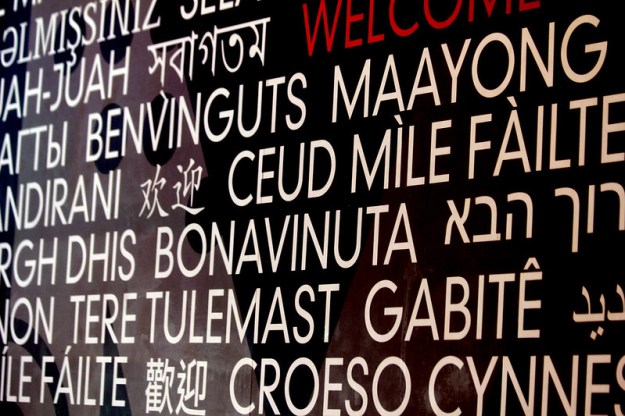
Whatever brought you here… ‘ceud mìle fàilte’, that’s ‘one hundred thousand welcomes’ in Gaelic. (Gaelic was one of many new things which I took up during lockdown and have promptly forgotten more than ninety per cent of)

I’m an author based in Perthshire in Scotland. I primarily write children’s fantasy/ dark-fantasy books. However, my most recent first drafts have been teen and adult sci-fi and fantasy. This blog started off as a way to communicate with fans of my Jack Reusen books (and later, this would include talk, and samples of other writings too).

You can find a full draft copy of my dark fantasy book ‘Marcus’ in the menu above (for readers 10+). You’ll also find sample stories involving a tribe of ogres who wandered into our world from Fey as it appears in my ‘Jack Reusen’ books (these are suitable for children aged 5 years and up).

However, through multiple school visits and workshops, the content on this site has evolved to include book recommendations, writing tips, and information on the process of self-publishing (for those who might be interested).

As I say, I have no idea what brought you here but if you happen to read this post please pop a comment below and say hello. If you feel like asking questions as well, or if you’d like to request more of a particular topic, please feel free to add this too.

Thanks for stopping by,

All the best, John

setting a scene young writer children stories

Writing tips for kids: Setting the scene

An Example of a Two-hundred Word Short Story:

Photo by Ylanite Koppens on Pexels.com

She pulled the blanket around herself, steadying her hot chocolate and sinking into the soft cushions. She reached for her book and balanced it on her knee, creasing open well-worn pages. Both hands now free, she clasped her mug, enjoying the warmth as it flowed into her fingers.

The crash from upstairs was sharp. Sudden.

Chocolate stained her book and splashed over her blanket as she lept up.

She left the mess on the floor and crept to the door. A deep pounding, like ocean waves, thrummed in her ears.

Photo by George Becker on Pexels.com

She reached for the door handle, releasing her stifled breath.

The hinge squeaked. She stopped, dreading another sound from upstairs. Silence.

She entered the hallway. The gasping rhythm of her breath the only sound. Feet stretching in shaking tiptoes, she took the stairs.

A single creak. That traitorous step announced her, and a crash from upstairs answered the call.

She stopped in horror as more crashes followed. Then thumps. Fast, rhythmic beats.

Photo by Francesco Ungaro on Pexels.com

They grew closer. Her throat tightened. She could feel her pulse in every breath. Then she saw it.

A pair of huge ears popped up over the top step.

The rabbit had escaped from its cage again.

Share your Storytelling Talents and Win a BRILLIANT Prize

The above story is one hundred and ninety-nine words long. I chose this wordcount very much intentionally as I’ve been invited to judge a local short story writing competition for children (I live in Crieff, which is the largest town in Perthshire, Scotland).

The maximum word count for entries is two hundred words (hence my own demo). Entries can come from any child aged from five to fourteen. Entries are separated into three age categories (5-7, 8-11 and 12-14) and the deadline is this coming Monday. Click here to find more information about Crieff Hydro’s National Storytelling Week Competition.

Perhaps you are one of the hundreds of children looking to enter the competition or a parent of a child who intends to enter. Alternatively, you may simply have arrived here because you like telling stories and are looking for writing advice. Either way, I thought I might offer a few hints and tips to help you set the scene in your writing.

Setting a scene

There are tons of different ways to set a scene but today I’m going to concentrate on three: pace, mood, and direction. Strictly speaking, these things aren’t simply connected to setting a scene but knowing about these will help you understand good ways to make a scene more interesting and easy to follow.

Setting the Pace

As a writer, you are in control of a few unusual things outside of your story. One of these is the fact that you have a small amount of control over your reader’s breathing.

Even when someone reads inside their head, the placement of commas and full stops (and any other types of punctuation), controls how they will breathe while reading.

You can use this change in breathing to influence their feelings in relation to your writing.

Short sentences, fast pace

Photo by Sourav Mishra on Pexels.com

If time is passing quickly, then a short, sharp sentence will help move things along much better than a long one. You can still be descriptive but use description sparingly and concentrate on really powerful descriptive terms.

In the sample story above you feel the story’s speed increase partly by experiencing the shorter sentences. Even if you don’t read it out loud, a short sentence will make you think of breathing quickly. Short sentences are good for suspense, action, and excitement.

Long sentences, slower pace

Photo by David Dibert on Pexels.com

Longer sentences (like the paragraph at the start of the story) can be a good way to make a reader feel relaxed (though it can also be used to show off different emotions). Longer sentences slow the reader’s breathing. This can be relaxing, but really the sentence length is a simple way of helping a reader feel that time is moving slowly.

Be careful not to make a reader take too long on each sentence though, or they might get so relaxed that they lose interest in your story!

Not a hard and fast rule

As with so many things relating to anything artistic, rules like these don’t always work. People can always find interesting ways to break rules or simply bend them.

However, it is hard to deny the influence that a writer has over a reader’s breathing, and it would be a shame not to remember this simple trick when writing. It’s a really easy and clear way to ensure that the pace of your story is the pace you want.

Setting the Mood

The mood of a story can be hard to show but there is one simple thing to look at when testing out a scene. What a character does is shown in the verbs you choose but there are hundreds of different ways of describing a movement. Take walking as an example:
A character can stride into a room. Right away we know that they are relaxed and confident.

Alternatively, they could slip into a room. In this case, we imagine that they are quietly trying to enter without being noticed. They may be shy, or scared, or both.

Another possibility is that they could creep into a room. This character sounds sneaky, but you would need to add other things in your sentence to help the reader understand whether they are being devious or careful in their movement.

With just one word you can help draw focus onto the mood that you want your reader to feel. Verbs are doing words but the right verb can also be amazingly descriptive.

Adjectives are the words we normally think of as ‘describing words’ (words like ‘blue’, ‘warm’, ‘smelly’). However, sometimes a sentence with one good verb and no adjectives can do a lot more for your story than a sentence with a basic verb and two or three good adjectives. This can be even more important when you have a small word count (like you might find with a word limit of two-hundred words).

Setting the Direction

Photo by Ekrulila on Pexels.com

You always know more about the direction or plot of your story than your reader does. This is yet another thing that gives you control over how someone will experience your story. You can choose to let a reader in on a secret that your main character doesn’t know or you can keep the reader in suspense alongside your main character.

In the story example above, the ending would be less impactful if the reader knew about the escaped bunny at the start of the story. they wouldn’t feel the fear and panic of the ‘intruder’ along with the main character if all along they knew that the noises were just a rabbit.

However, there are times when knowing more than the main character could help make the story more enjoyable.

Maybe your main character doesn’t know that they have a winning lottery ticket in their pocket and you tell the reader in line one of your story.

Now, every time your main character worries about how much something costs, or complains that they hate their job, you can let your reader enjoy knowing that lovely secret for the whole story until the big reveal at the end. It should still be fairly easy to get the reader to feel that excitement along with your character. In fact, they may even enjoy it more as they know how much the main character needed that money.

Go Write Your Story!

There are so many other factors that go into writing a story but hopefully, the tips in this post have helped you a little. Whether you are away to write your short story for Monday’s competition, or if you are simply reading this for general storytelling tips, I wish you the best of luck.

I would also love to hear about your stories so please leave a comment and tell me about what you’ve chosen to write. (Feel free to ask me questions too)

Thanks for popping by my site,

all the best, John