Category Archives: reading and literacy

Aye!

It looks as though there’s going to be a wee free men movie! If you haven’t encountered the NacMacFeegles/wee free men before pop over to this post to get filled in.

The wee free men and their ‘Hag’ (a young witch by the name of Tiffiny) are some of my favourite Terry Pratchett characters from the whole of the Discworld. They’re tenacious, fearless, and more than a little crazy.

The news on who’s producing the movie makes it even better. As a child of the 80s I was exposed to a huge range of Jim Henson creations from Sesame Street, to the muppets, to Fraggle Rock, to Star Wars, and the Labyrinth. Jim Henson Studios are apparently developing the movie and I can’t imagine it being in better hands.

Henson’s son Brian is producing the film and Pratchett’s daughter Rhianna will be writing the screenplay so here’s hoping both can continue their parent’s legacy.

It doesn’t sound like there’s an expected date for release yet but fingers crossed they get it out to us soon.

Are you a Pratchett fan? What other Pratchett characters do you think deserve big screen treatment (keeping in mind the Sky TV creations from a few years back)?

As always thanks for reading, all the best, John

*Information for this post came from an article in the Independent.

Fitting in (Crieff Writer’s evening/ literary open mic night)

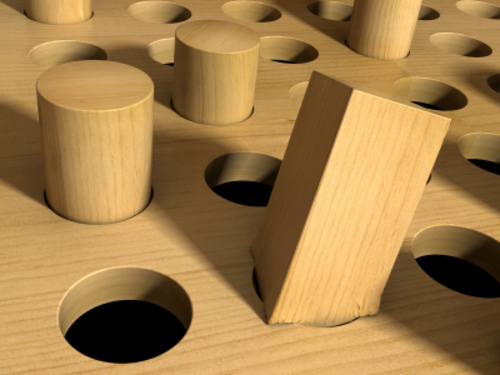
It doesn’t matter how confident we are, sometimes we will inevitably feel like a round peg in a square hole (or a square peg in a round hole even). It’s a simple fact that we are all individuals and that even where a number of us find common ground someone will feel excluded.

Odly the barriers we hit aren’t always what we expect. Back when I was working on my MPhil thesis I came accross a study on second generation Portuguese immigrants in Paris who faced an unusual barrier.

When speaking French they sounded hip, urbane, youthful, and cultured. They spoke to contemporaries in Paris in this way and seemed to fit in comfortably.

However, their experiences of Portugal appeared so different that they sounded like genuinely different people.

You see, the Portuguese they knew came from their parents who spoke a rural and provincial dialect. This meant that their behaviour and speech in Portuguese simply couldn’t match the way they behaved when speaking French. Without the urbane, inner-city language they became very different and found it difficult to act like ‘themselves’ in Portugal.

What binds us can vary drastically, we might think that our tastes arethe simplest connection to share but sometimes we instead find kinship in our behaviours and aspirations. I found that last Saturday.

I had just completed a day of talking about the Jack Reusen books along at Fun Junction and remembered that there was a literary open mic night in the Strathearn Artspace 9as part of Crieff Arts Festival).

As a student I made it along to plenty musical open mic nights but I had never come across a literary one. To be honest it left me expecting something pretentious and a little clique-ish. I know Crieff already has a solid writers community so I couldn’t help worry whether I would fit in.

The atmosphere was extremely laid back, and the overall attitude from the audience was open-minded and welcoming. It meant that those reading for us were relaxed too and showed their work at its best.

The work itself was eclectic, including readings/performances of music, poetry, prose, and biography. I enjoyed it a lot more than I expected to and the only negative I could take from the night was a slight annoyance that I hadn’t prepared something to read.

I genuinely think we could make a monthly event of this (and not just because I’m itching for a chance to get up). I don’t know how we would go about it but I’d love to hear from others who might be interested.

Have you found a place that you fit in in surprising ways? Do you think creative environments are typically inclusive, or have you encountered clique-ishness in such groups?

As always thanks for reading, it means a lot to have people pop by to read these posts. All the best, John

Filling in the shadows

the_open_door_by_la_duqueBeing immersed in a book is very different to a movie; as events unfold right inside your head, they can elicit much more visceral responses. There’s something so weird (considering you’re just looking at some shapes on a page) but also something completely amazing about the whole process.

However, I’ve always run into problems when it comes to thrillers and/or horror stories. On a recent camping holiday where all tech stopped, I decided to pick up a wee collection of short stories based around ghost tales of Scotland.

During the day it was an enjoyable read and it helped fuel some ideas for the darker elements of future books. Then night fell, and the family went to sleep, and with wind howling around the tent I made the mistake of jumping back in. The horrors in the stories bled out of the pages and into the inky black night outside the tent. I jumped at the slightest sound. At one point the sound of an inconsiderate passing sheep mutated and left me gulping back bile.

It’s safe to say that my imagination likes to run with things at night. As a child reading famous five books the wind rustling leaves in the garden below could be nothing but lurking smugglers or other ne’er-do-wells. In my teens I read alien conspiracy stories and watched the faces of prowling cats distort in midnight lights to become malicious grey aliens preparing to abduct me (or had they already abducted me and wiped my memory?).

It took till adulthood for me to realise that a good night’s sleep would not be mine if I read this style of book. All the same I still forget sometimes and once again my mind will reel as the shadows take form and watch me, always behind my shoulder or just at the peripherals of my vision. Slowly creeping closer whenever my attention lapses.

I thought I’d be safe when I started reading the next book in Lari Don’s ‘Mythical creatures’ series, but no. There is one component perfectly crafted to leave children uneasy but to creep parents out to their core.

Don uses the old myths of celtic ‘Faerie folk’ (also used as part of the inspiration for the Fey folk of my books). However, Don stays closer to the legends as these faeries are far from benevolent; they are notorious stealers of children. Their technique is the worst bit; not only do they take your sleeping child from their bed but they replace them with a ‘changeling’ or ‘glimmer’ enchanted to look identical to the missing child. Your child is gone but you don’t notice, you walk into their room in the morning to find them unresponsive and clearly unwell, then over the next few days this replacement will either ‘die’ or disappear themselves.

What’s more is that by now it’s too late for you to claim your child back, as they have now been sentenced to a life in the land of the faerie folk; by eating their food they are doomed to never be able to eat human food again. Even if you somehow found your child and took them home the first bite of human food would turn them to dust. So..yeh…that’s some nightmares for parents right there.

The creepiest bit of ‘Wolf Notes’ (Don’s second ‘mythical beasts’ book) so far has got to be a wee boy’s little sister telling her mum that the boy in her arms in not her son but is instead a ‘doll’, a copy of her big brother. Somehow this got me worse than anything I’ve read by Stephen King.

Does horror in books get to you worse than horror in movies/on TV? What hides in the shadows in your house?

Feel free to share in the comments below. As always, thanks for reading, all the best, John

Skulduggery Pleasant

So far I’ve written reviews of books that would appeal to children within the suggested age range of readers of the Jack Reusen books. Derek Landy’s Skulduggery Pleasent series is definitely  not that sort of book.

However, for the parents (and older siblings) out there I feel the need to share my excitement about the re-opening of the Skulduggery’s world.

After a series of nine books no one was surprised when Derek Landy declared the end of the series. We had all followed the sardonic, magic weilding, skeleton detective and his sidekick/partner Stephanie to what felt like a very natural conclusion. Books series end. These things happen, it can’t be helped. 

With a sigh that avid readers will know well I said goodbye to some well-loved characters and looked on to find the next book series. 

That was two years ago and just last week Landy announced a change of heart that isn’t particularly common of writers who have left old book series behind them. Skullduggery’s world is back!

Landy has expertly interwoven the literary styles of noir, fantasy, horror, a lot of comedy, and a good bony handful of other stuff too. These books aren’t for kids but they are most definitely for everyone else.

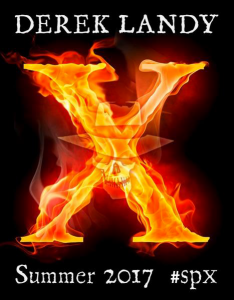
If you get stuck in now you’ll be in time for the summer 2017 launch of book 10.

Are there any other Skulduggery fans out there? Are you happy to see him (and Valkerie) back or do you think it was best left alone?

As always, thanks for reading, all the best, John

Writing advice this Saturday

Are you three chapters into writing that novel but on the twentieth edit? Do you have extensive notes planning out a whole book but still haven’t written one paragraph? Have your writing efforts left you with a folder full of half finished chapters and sprawling notes? Well so have mine.

I’ve been trying to ‘be a writer’ since I was a kid. I started to take it more seriously in high school and actually made a solid attempt to write a novel while I was at uni.

However, I fell foul of a myriad of problems that I’ve come to recognise like old friends. I would over-plan, spending all my creative energy and leaving nothing for the writing itself. Then, to compensate, I would try to write in a free-flow style only to find my direction-less flow of words draining into stagnant puddles with no hope of turning into anything.

If this isn’t common of all writers I’d be very surprised. It seems like a necessary part of what we all go through. We all need to find the right pace and discover ways of retaining the creative spark in our writing whilst ensuring that our text actually means something (even if it is just to ourselves).

On Saturday I’ll be doing book talks and chatting about writing for most of the day. It’s part of Crieff Arts Festival hosted at Fun Junction in Crieff, and since I write kids books I expect I’ll be giving a lot of early advice (‘pay attention to your favourite authors’, ‘keep observing the world around you’, etc.). However, I’m also more than happy to offer advice (or even simply to mutually commiserate) to grown-up would-be writers.

I am not a break out success but neither are most successful writers (even J K Rowling still had to do the rounds with school talks to get the word out about Harry et. al.). I can’t be sure whether the Jack Reusen books make me an official ‘writer’ or not but that’s something that doesn’t bother me as much any more. I write and some people read it, and even better some of them seem to like it (at least that’s what they tell me). For me that’s enough.

If you’d like to come and bend my ear about writing you are more than welcome. I’m also considering putting together a sort of combined digital & ‘real world’ writers support group in the town. I’m aware that there are a few such groups already but I figure it can’t hurt to have more support for writers, plus developing the digital angle would make it easier to stay in touch.

I’ll be in Fun Junction from 11 until around 3 or 4 (depending on how busy it is). If you would like to talk writing, please pop along for a chat. All the best, John

George’s marvellous medicine

For over a year I’ve struggled to get my eldest to read independently. To be honest that’s not entirely true as he’d happily jump into reading Star Wars encyclopaedias at the drop of a hat. However, with the encyclopaedia, he’d put them back down after a page or two. It was pretty clear that we needed to track down a book that really spoke to him.

With p4 and the step-up in reading it brings on the horizon I realised that he’d need to get more accustomed to longer stretches of reading than he had before. I hunted for books that would pique his interest but every time we simply find another story for me to read to him and his brother (not that that’s necessarily a bad thing).

We hunted and hunted, I trailed him through a serious number of bookshops over the past few months. Then, about a month ago we took a trip to Glasgow, walked into Waterstones, and with the promise of a comfy seat and a hot chocolate he finally reached a decision; George’s Marvellous Medicine.

Picking the book in person had its own charm to it and I think the setting definitely helped. However, the general idea of a boy messing with a grouchy granny seemed to catch him straight away.

It was a favourite of mine when I was his age but I’d forgotten how good it was. George is precocious and empathetic, and also a bit of a chancer. To be honest I think it was a good match for my son’s personality. On top of this the granny (the recipient of the medicine) is a whole new character once you look at her from an adult’s perspective.

My son read the first few chapters aloud but he’s starting to just grab his book, curl up, and read. Last night he skipped bedtime story and just brought the book into bed with him to read by torchlight. The book geek in me couldn’t be happier, but on top of this, I know that what he’s doing will make the change in reading level this year all the easier to keep up with.

It’s a simple book that has been expertly crafted by one of the greatest storytellers I’ve read. Our new challenge will be to find the right book to follow it, but I’ve a feeling that the Roald Dahl back catalogue will keep him occupied for a while.

What were your favourite books when you first started reading? Can you remember any of them still? Let us know in the comments below.

As always thanks for reading, all the best, John

School visits

apple-256261_1920I think we may now have officially hit the point where all local school children have returned from their holidays (or thereabouts). In light of this I thought I’d put out a quick reminder to any teachers reading about school visits. I’m available for book talks and writing workshops and I currently have a fairly clear calendar (though it is starting to fill up with other things).

I’ve never charged for school visits but I do normally bring along books for sale at a special price (I’ll figure out pricing long in advance of a visit to leave teachers time to get information out).

In the past I’ve hosted book talks for whole schools, for individual classes, and for middle-sized groups sorted by age. I’m also happy to spend a little more time with older children who might want to learn more about the writing process in a workshop setting.

If you think you’d be interested please get in touch. For those who want to do a more focussed book talk I can provide class copies of the Fey flame to give you/ your students a chance to read it in advance (either to review it or to let pupils get to know about the books before I come along).

If you are interested in arranging something please get in touch by e-mail (click this link) or by messaging below. I hope to hear from you soon,

All the best, John

We didn’t have TV so we all read a book together (it was amazing!)

first aid for fairiesI recently wrote about our lack of connectivity on holiday but another side effect was a complete lack of TV. No cartoons, no youtube minecraft videos (OK they were hard to miss, sorry Stampy, no offence meant), basically no falling back on TV at meal times and other times that we wanted to chill out. This made us fall back on an another old favourite; reading.

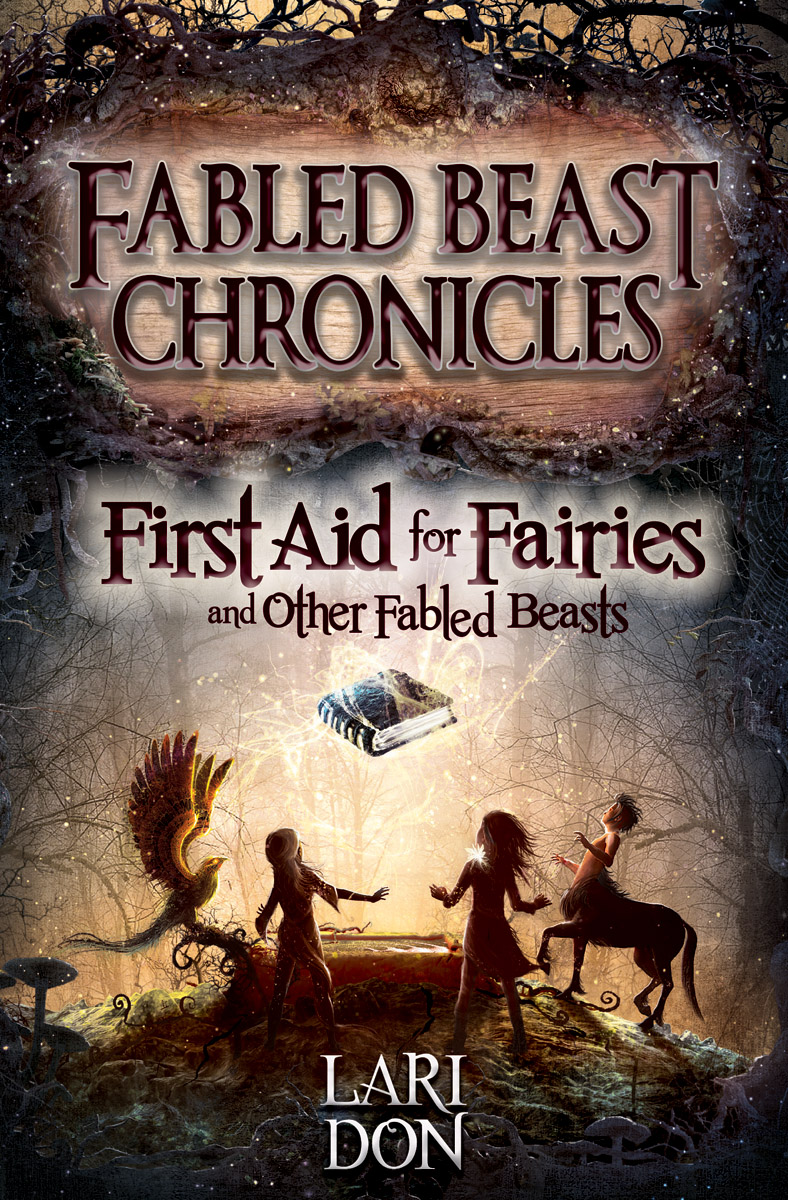
Even when we’re at home we read a story together every night, often this becomes a family occasion (like we had with Pugs of the Frozen north). However, this time round I ended up reading myself hoarse as we discovered Lari Don’s ‘First Aid for Fairies and other Fabled Beasts’. We normally read for about twenty minutes to a half hour each night but I’ve been reading for hours to the kids. We read at meal times, we read in the tent, I read in the car on the way home, and of course we read at bed time.

Back home technology has jumped back into our lives (I’ve found my way back on here as well) but we’re still hooked. We’re so close to the end and I’m at that ‘scared to read because it’ll be over soon’ stage. However, with three other books to go in the series I can relax a little.

The first of the ‘Fabled Beasts’ series follows Helen as she discovers that the world of story book creatures is all too real when a centaur appears on her doorstep.

The pace is fast and adventurous whilst giving you a chance to get to know the characters and the stakes get higher as we find out more about the quest that Helen is being drawn into.

It’s a book that has entertained two full grown adult-type people, an eight year old, and even a five year old (who normally still needs a picture or two during a story). No pictures are necessary and it’s been a joy to read the dialogue as well. I can’t recommend this book enough. Please go and check it out.

I’m always interested to hear about good kids books so if you’ve come across any please let me know (I can count it as ‘product research’ 😉 ). Feel free to tell us about it in the comments below and as always, thanks for popping over to read my blog, all the best, John

Where authors are heading in the next 5 years

pocket-watch-598039_1920

When I was a kid my favourite authors were distant entities, the idea of talking to them or even meeting them didn’t even cross my mind. I don’t remember one author visit to my school or even seeing them on TV very much.

The one time I saw something close to an interview was a Blue Peter special featuring Roald Dahl in his writing hut (I’ve written a little about how much the idea of writing huts affected me previously).

However, a children’s author is a very different creature now. The chances of talking to a favourite author are increased massively by social media. Along with this grows a sense of accessibility that simply didn’t exist when I was a kid.

J K Rowling is commonly in the news for her twitter activities (my favourite being her twitter-inspired spontaneous trip to a library on Orkney). It’s easy to see that the next few years are set to see changes to the way authors behave and the way the public feels about them.

Another huge change is the increase in the respectability of self-published authors. We don’t call it ‘vanity publishing’ any more (or at least less people use the term). ‘The Martian’, ‘Legally Blonde’, and the children’s/teen fantasy book ‘Eragon’ all started life as self-published works. Overall, people seem more willing to try out books published in non-traditional ways.

So what does this mean for the next five years? From my own experience, I have to admit that interacting with readers has an undeniable effect on my writing. We’re not talking ‘choose your own adventure’ but there’s certainly a level of reader influence that I hadn’t expected when I started writing. If this is the same for other authors I think we’re likely to see books change significantly over the next few years.

If we combine this with authors who blog (as many of us do) this could develop into serial-style writing becoming a more common approach to getting a story out. We could see books shaped in (almost) real time by the responses of readers. This might take the form of pandering, as authors draw attention to characters with more of a following. However, it could just as easily go the other way, as authors take a slightly sadistic delight in drawing out plot lines, leaving questions achingly unanswered in ways that would put the writers of ‘Lost’ to shame. (George R. R. Martin anyone?)

Add to this equation a touch of fan fiction and we might even see the emergence of a completely new form of fictional world. If authors decide to nominate some fan-fiction writers as ‘cannon’ writers, then the in-universe exploits could grow exponentially; further blurring the lines between traditional books and role-play.

To be honest author ego would probably get in the way of this becoming a reality but it’s easy to see how this could transform things for writers and readers alike.

Rather than having to wait a year for the next book, we could have a new in-universe book to read every week. Children’s fiction has been doing this for years with ghost writers. One of the most obvious examples being the ‘Beast Quest’ series of books. However, even these struggle to release more than one a month.

As an avid reader (and someone who tends to get absolutely hooked on certain fictional worlds, ehem…geek!) I have to say that the prospect of getting access to weekly books is like a dream come true.

Writing styles would no doubt differ but if it’s put together well this might not be too much of a problem. Imagine subscribing to a weekly Harry Potter book and you get a rough idea of what we could see.

Alongside all of this, traditional publishing will no doubt continue along on it’s merry way. However, the prospect of regular updates will have a marked effect on the way avid readers will interact with books.

I’ll predict that in the next five years (for readers at least) we’ll see less TV consumption (it’s becoming more disappointing every year any way) and more readers turning to regular updates in their favourite universe.

What do you think? Is the world of reading about to change for good? Is social media and self-publishing poised to provide a literary revolution? or am I being too optimistic?

As always, responses are welcome in the comments below. Thanks for reading, all the best, John

The words are Magic

Word magic quote Fynn Jack Reusen and the Fey FlameOK this is an idea that I’ve been running in the background of the books for a while but I wanted to touch base on what people thought to the concept and whether it’s an easy thing to follow. Here’ s the general idea behind the way that magic works in Jack’s world:

  • Characters in the book are characters in a book
  • The worlds in the book are worlds in a book
  • …you get the idea
  • Somewhere deep inside their bones some of the characters know these things, and they can train themselves to change the words in the story around them.

I haven’t made this clear very often in the books for fear of making a children’s book like its overly intelectual. The books are just adventure stories with bad guys and fate-of-the-world stuff but the philosopher John that hides in my head and over-thinks things (here I’ll flap my BAHons, MLitt, and MPhil around) needed some highfalutin stuff to keep him occupied. For the most part this is all this is but I still thought it might be iteresting to share.

If you’re looking for subtext then you might also get the idea that the Wishmaster is a representation of Stalinist communism, the Reusens began their days trying to enact something like Rawl’s ‘veil of ignorance’ (a perfect world with equal opportunuties for all), and there’s even a bit or rationalism vs. impiricism hiding in there (magic: you believe what you can logically think up, matter-world: you believe what you can see). If you read into them deeply enough the first three books basically work as a Philosophy 101 course.

But in essence the books are suppposed to get kids thinking about the power of the words they say. The very first scene in the very first book finds Jack lost and alone because he told his parents he hates them, in Jack’s world (and in many ways in ours as well) words have power.

As always thanks so much for reading and feel free to leave any questions or comments you like in the comments below, all the best, John